Ayatollah Khamenei’s False Statements About Freedom of Speech in the Country and His Unfair Treatment of Critics
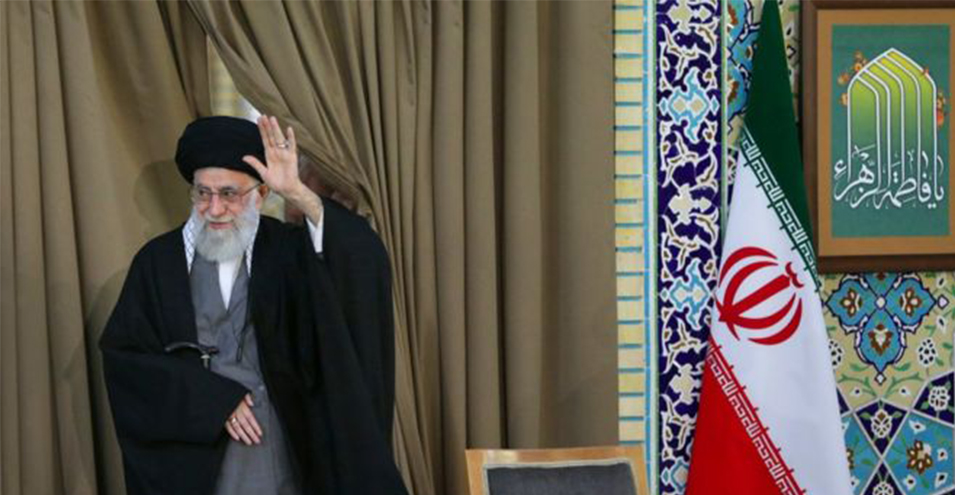
Ali Khamenei, leader of Iran, spoke during his New Year address on the first day of 1397 (2019) in Mashhad about the existence of freedom among the Iranian people and said that in Iran “no one is persecuted or pressured because their opinion differs from the government’s view.” He continued, “Whoever makes such a claim is lying and there is no basis for anyone to protest against this.”
Khamenei spoke about freedom of speech in the country while currently three government critics named Mir Hossein Mousavi, Mehdi Karroubi, and Zahra Rahnavard have been imprisoned for more than seven years without access to fair trials. Furthermore, during the gatherings known as nationwide protests in December, more than six thousand people were arrested. Additionally, dozens of civil and political activists are currently imprisoned with lengthy sentences for peacefully expressing their opinions.
The leader, in his address at the Holy Shrine of Imam Reza in Mashhad, which according to tradition hosts the New Year address every year, claimed there is freedom in Iran and called those who disagree with this view liars and unjust.
Iran’s leader, referring to the fortieth anniversary of the Islamic Revolution in the New Year, said that in Iran there is “freedom of thought, freedom of speech, and freedom of choice.” He claimed that some people “act unjustly” and “use the existing freedom while saying there is no freedom in the country.” He then referred to “foreign radios” that “echo the statements of unjust people about the lack of freedom in the country.”
Ayatollah Khamenei in his next sentence described freedom in the republic as being in accordance with “constitutional law and the laws of the country and Sharia.” He said: “The framework of freedom in the Islamic Republic is ‘the constitution and laws of the country,’ all of which are inspired by Sharia.” Laws and Sharia that have effectively limited and constrained freedom.
Khamenei also spoke about independence and justice in the country. Stating that “no country in the world today can reach the independence of the Iranian nation,” he said: “All nations in the world are subject to some form of consideration against powers. The nation whose will is not influenced by any other nation is the Iranian nation.”
Iran’s leader, also referring to his previous speech on the 30th of Bahman, said “I said a few weeks ago that we are behind in justice. This is my belief, but ill-wishers used it differently and interpreted these words as meaning the country has done nothing about justice.”
He considered the evidence of justice to be comparing Iran with forty years ago and said: “Well, if you compare our country with the period before the revolution or with many other countries, you will see that there is less class difference here, the capabilities of the weak class are greater, the universality of education and health and other things are certainly more than many other countries.”
Ali Khamenei had said on the 30th of Bahman: “Regarding justice, we are backward; there is no doubt about this; we ourselves confess, we acknowledge it.” He had elsewhere apologized to the people, saying: “We must apologize to Almighty God and to the dear people. We have a problem regarding justice and God willing, with the efforts of capable and believing men and women, we will make progress in this area too.”
However, a month later, on his first day of Farvardin address, he said that ill-wishers had misused his words.
Khamenei continued his remarks on the first day of Farvardin month about how Iran’s situation is better than other places by also referring to the economic sector and said: “Another statistic, which is also related to the World Bank and among international statistics, is this: the absolutely poor class before the revolution was 46 percent of the Iranian nation, meaning almost half of the Iranian nation were among the absolutely poor classes. In 1393, this number reached 9.5 percent. That means this much work was done.”
Nevertheless, the arrest and heavy sentences for various protesting classes such as workers, students, political and civil activists, women, and lawyers, as well as the lack of right to hold peaceful gatherings and protests for groups that opposed the system’s views and protested their rights, are in clear contradiction with what Ali Khamenei said on the first day of Farvardin 1397.
He also made claims about a good economy and few poor classes in society, while about three months earlier the lower-income classes took to the streets and nationwide protests formed due to bread prices and other economic problems. In these protests, at least according to official statistics, 25 people were killed and nearly five thousand were arrested. According to statements by Ministry of Science officials, legal cases have been filed for many arrested students due to protests and opposition views, and they are awaiting their trials.
Source: Iran Human Rights Campaign