German Ambassador: Iran’s Exports to Europe Have Increased Tenfold Since JCPOA
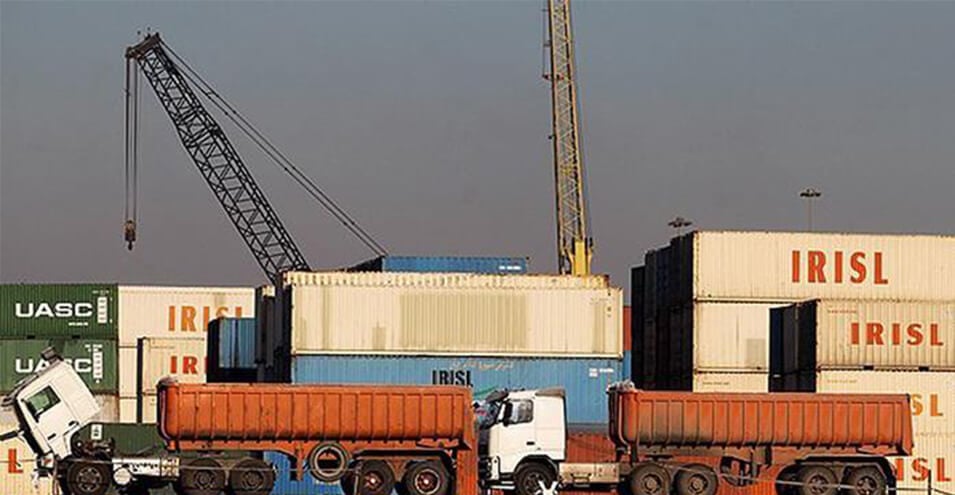
According to the German ambassador in Tehran, Iran’s trade exchanges with Europe have shown significant growth following the JCPOA. Iran’s ambassador in Berlin also stated that three Iranian banks are opening branches in Germany, while criticizing the politicization of economic tools in the Islamic Republic.
Michael Klor Berchtold, Germany’s ambassador to Iran, stated at the “Iran-Europe Trade and Banking Conference” held in Tehran that European exports to Iran have increased by more than 60 percent since the implementation of the JCPOA, and Europe’s imports from the Islamic Republic have increased tenfold.
Klor Berchtold further emphasized that among the prerequisites for Iran’s full integration into the global economy is improving the country’s position in the “Financial Action Task Force” (FATF).
This international institution, whose primary responsibilities include combating money laundering and financing terrorism, has prepared a list of countries that do not support its objectives and are consequently unsuitable for investment.
Iran’s name was first added to this “black list” in 2009, and was later placed in a worse category than the “black list,” joining countries with which the “Financial Action Task Force” calls for “countermeasures.”
The Rouhani government is working to improve Iran’s status on this institution’s list, but government opposition groups are against this effort. They believe Iran should not be obligated to answer to international institutions in economic matters.
Currently, 198 countries follow the recommendations of the “Financial Action Task Force,” and if Iran joins them, it could strengthen the incentive for investors from some of these countries to invest in Iran.
“Economic Pressures Are More Effective”
Ali Majedi, Iran’s ambassador to Germany, also speaking at the “Iran-Europe Trade and Banking Conference,” criticized the “politicization” of economic tools while emphasizing that his country’s monetary and banking system must be modernized. He stated: “For example, the Financial Action Task Force is an economic tool, and I don’t know why we politicize it.”
Majedi stated that political tools in the international arena have “comprehensiveness,” but economic tools are more effective. In this regard, he raised the issue of sanctions, which affect the situations of sanctioned countries, but in contrast to United Nations resolutions, which are the most important political body in the world, they are not as effective.
Iran’s ambassador to Germany, who is also considered an economic expert, expressed hope that Europeans could reduce their dependence on the U.S. dollar and “should think about establishing banks that only work with the euro.”
He also referred to European countries’ fear of U.S. punitive measures and said: “I spoke with German officials in this regard, and they essentially said they have no tools or means to counter American sanctions in the monetary and banking sector and cannot take any action in this area.”
Establishing Branches for Three Iranian Banks in Germany
Majedi, emphasizing that Iran has not achieved success in banking matters during JCPOA negotiations, stated: “We have been able to convince banks with a low dollar share, which are mostly small banks, to work with Iran.”
According to Iran’s ambassador in Berlin, the main burden of approximately 85 percent of Iran’s monetary and banking exchanges is currently borne by the “Iran and Europe Trade Bank” in Hamburg, Germany, and a branch of the National Bank in that city.
He said that Iran’s “Middle East” Bank is scheduled to open a branch in Munich, “Saman” Bank in Frankfurt, and “Sina” Bank in another German city.
Source: DW