Judicial Commission of Parliament Requests Judiciary: Stop Executing Drug Traffickers Until New Bill is Finalized
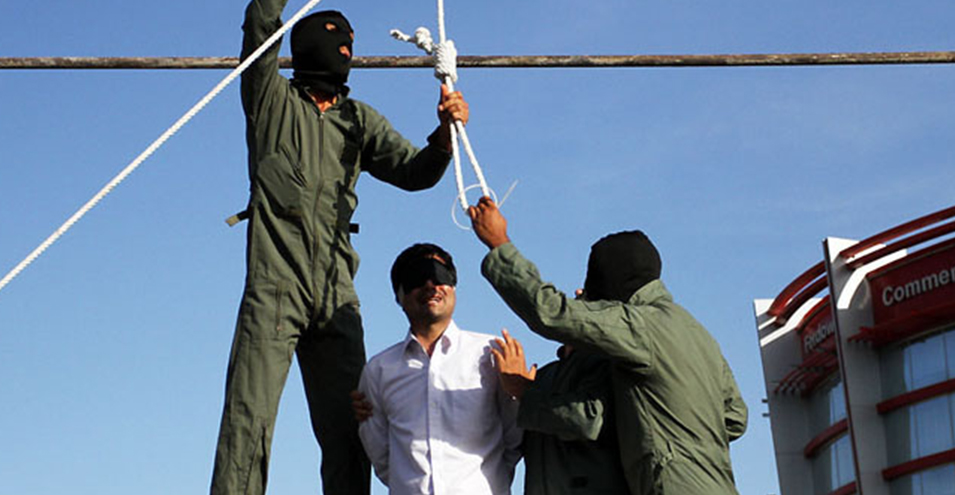
Members of the Judicial and Legal Commission of Parliament have requested that the judiciary suspend execution of individuals who did not play a key role in drug trafficking, until the “Drug Control Law Reform Bill” currently under review in Parliament is finalized.
Mohammad Kazemi, Vice Chair of Parliament’s Judicial Commission, stated to the newspaper Shargh on the 14th of Tir: “The majority of Parliament members support the bill to amend the drug control law, which is why it will receive a high vote in the chamber. However, the issue is that until then, some people’s lives are shrouded in uncertainty. These are individuals who, if this bill is passed, will no longer face execution sentences, which is why we informally requested the judiciary to halt execution of these sentences.”
This Parliament member made no reference to the judiciary’s response to the representatives’ request.
Since December of last year (1395), members of the Islamic Consultative Assembly of Iran have been finalizing a bill that, if passed, could save the lives of four to five thousand people sentenced to death on drug trafficking charges. However, its passage has been delayed due to opposition from the police force, the judiciary, and the Anti-Narcotics Headquarters, and executions of drug offenders have continued during this period.
Hadi Norouzi, spokesman for Parliament’s Judicial Commission, stated in December 1395 that if the bill is passed, it would also have “retroactive effect” and its passage could save at least five thousand people currently awaiting execution on drug-related charges: “Currently, approximately 5,000 people are in line for execution, 90 percent of whom carried drugs for the first time, with ages ranging between 20 and 30 years old.”
Hasan Norouzi held those responsible who obstruct the implementation of this bill accountable for the execution of some of these defendants if there is a delay in its passage: “This bill was again scheduled for printing on the 21st of Khordad this year, and if delays occur and people are executed, the error and its consequences fall on those who wrote such a letter.”
The drug crime sentencing reform bill was scheduled to be put to a vote in Parliament’s open session on Wednesday, the 17th of Khordad 1396, but was halted due to opposition from “a government security institution.”
Mohammad Kazemi, Vice Chair of Parliament’s Judicial Commission, told Shargh newspaper that the bill has been placed back on Parliament’s agenda but added that due to criticisms from the judiciary, the Anti-Narcotics Headquarters, and the police force, it needs more consultations and “fine-tuning.”
The Legal Director General of the Anti-Narcotics Headquarters announced in Bahman 1395 that the headquarters’ priority is to stop the drug control law reform bill, and if representatives insist on the bill, given its judicial nature, the judiciary’s opinion must also be obtained.
Ali Mozaffari, Chief Justice of Razavi Khorasan Province, also joined the opponents of the new bill on the 14th of Tir 1396, stating that “the death penalty should not be removed from anti-drug laws to please Western governments and imperialist institutions”: “Even if we change ourselves in a thousand ways, it will not reduce their (Western governments’) opposition and hostility to the Islamic Republic of Iran. The Quran and traditions are the basis for the death penalty in combating drug trafficking, which is considered as spreading corruption on earth. Execution for these crimes is because of considering the interests of human society.”
General Mohammad Masoud Zahedian, Chief of the Anti-Narcotics Police, also reiterated his opposition to Parliament’s new bill on the 14th of Tir, stating that “removing the death penalty for drug offenders is not beneficial and creates problems.”
However, Parliament’s new bill does not seek to completely abolish the death penalty for drug offenders. Mohammad Ali Pourmokhttar, one of Parliament’s representatives, told Shargh newspaper in this regard: “The proposed bill does not say that the death penalty should be definitively abolished; rather, our emphasis is that there should be no extremism in the bill and that sentences should be issued in such a way that major traffickers face execution, not minor ones.”
The drug control law reform bill was introduced in Parliament on the 3rd of Azar 1395 with urgency to be discussed in the Legal and Judicial Commission and then presented to the open chamber. In this bill, an article called “Article 46” has been added to the drug control law, according to which criminals who are not recognized by the court as “spreaders of corruption on earth” will have their sentences changed from death or life imprisonment to imprisonment for more than 30 and 25 years. This bill limits the death penalty for drug crimes to “organized and gang crimes and leaders,” “armed drug trafficking,” “criminals with prior records,” and “child exploitation in trafficking,” and replaces it with imprisonment in other cases.
This is not the first time the debate on limiting execution related to drug crimes has been raised in Parliament, and two other bills and legislation on reducing or abolishing drug penalties had previously been proposed but never reached the voting stage for unexplained reasons.
In the Parliament session on the 3rd of Azar 1395, Ezzatollah Yousefiyan Molla, designer of Parliament’s new bill, asked: “What results has the execution of so many drug trafficking sentences produced?” He stated: “Currently, a large portion of executions are related to drug trafficking, which unfortunately Western and international countries use for political purposes, a matter that incurs enormous costs for the country. Yet those sentenced to death are not true traffickers in the real sense; the actual traffickers are those who manage these matters in hotels in Ankara and Istanbul.”
After review and preparation in the Legal and Social Commission, the new bill will be put to a vote in Parliament’s open chamber, and if finally passed in Parliament, it must also be approved by the Guardian Council to become law—an institution that reviews Parliament’s approved laws for compliance with the Constitution and Islamic law.
High execution rates in Iran are considered a human rights violation that has drawn widespread criticism from the international community and human rights organizations, in addition to opposition from Iranian civil society and human rights activists against Iran’s judiciary. This is despite the fact that, according to the Deputy for International Affairs of the Human Rights Headquarters of the Judiciary, 93 percent of executions in Iran are related to drug crimes, which are not considered “serious crimes” under international law and are classified as “discretionary punishments” under Iranian law, meaning their extent and form can be changed and can be altered based on the opinion of judicial authorities.
Over the past year, statements about execution, particularly of drug offenders, by judicial officials within Iran have increased. Although most of these official statements share a common defense of the principle of execution, they differ and sometimes contradict each other on the deterrent effect of execution for drug crimes, the necessity of reviewing laws, reducing executions, and how alternative punishments might work.
Ayatollah Sadegh Larijani, Chief of Iran’s Judiciary, stated in Mehr 1395 while emphasizing the need for serious implementation of the death penalty for drugs: “The judiciary’s policy is not to abolish the death penalty for drug crimes, and the claim that execution has not been beneficial is unfounded. If the judiciary had not been strict, the situation would have been much worse, and drugs would have even been sold in spice shops.” While the Chief Judiciary did not rule out the possibility of changing these laws in the future, noting that “drug-related laws are not divine revelation.”
Mostafa Pourmohammadi, Minister of Justice of the Islamic Republic of Iran, one month after the Chief Judiciary, in Aban month, arguing that the death penalty for drug crimes has not been a deterrent, spoke of the necessity of changing laws in this field and reducing execution rates: “We are pursuing what type of punishment, in what place, and against what individuals would be more effective so that we can consider it as an alternative punishment to execution. Of course, preserving the death penalty is still on the agenda, but not at the level it is currently being carried out.”
Source: Iran Human Rights