Pompeo Discusses ‘Increasing Pressure on Iran’ with NATO Members
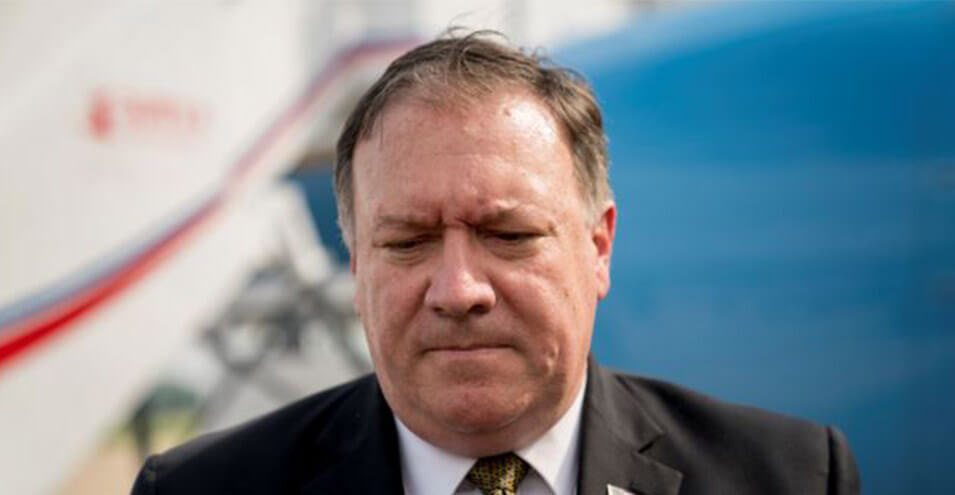
According to Reuters news agency, citing a U.S. State Department official, Mike Pompeo is discussing Iran during his meetings with foreign ministers of Britain, France, Germany, and other NATO member states. According to the American official, on Iran, there are “more areas of agreement than disagreement” between Washington and European powers.
Mr. Pompeo arrived in Brussels, the capital of Belgium, on July 10, where foreign ministers and leaders of the North Atlantic Treaty Organization (NATO) are gathering for talks. As Reuters has reported, the U.S. Secretary of State is scheduled to discuss “increasing pressure on Iran” with his European counterparts on the sidelines of the meetings and negotiations.
Before traveling to Brussels, the U.S. Secretary of State said in the United Arab Emirates that his country is pursuing a series of sanctions that will “make it clear to the Iranian regime that its sinister behavior is unacceptable and carries a very high real cost for them.”
Since Donald Trump announced that his administration would withdraw from the nuclear agreement reached during Barack Obama’s presidency with Iran and five other countries, activities of U.S. officials related to sanctions against Tehran have increased.
European powers party to negotiations with Iran are attempting to preserve the “JCPOA.” However, given repeated warnings from the United States about the consequences of conducting business with Iran, it is still unclear whether their joint actions with Tehran officials will lead anywhere.
During the U.S. Secretary of State’s trip from the UAE to Belgium, an unnamed State Department official told accompanying journalists that in addition to Pompeo’s meetings with Emirati officials, a high-ranking delegation also met and held talks with Saudi officials. The purpose of these negotiations was also described as finding “new ways to prevent financial circulation” of the Islamic Republic.
As the U.S. State Department official stated, Washington and Riyadh officials have discussed “reducing potential disruptions in the oil market and helping partners find alternatives for oil imports” from other countries instead of Iranian oil.
The U.S. State Department announced in early July that it is working “to convince as many customers as possible to completely stop buying oil from Iran.” These measures are described as part of the overall U.S. policy toward Tehran, and the aim, as Washington states, is to force the Islamic Republic to change its “threatening” behavior and return to new negotiations. Tehran, on the other hand, has shown no formal indication of willingness to negotiate again with the United States, saying that it cannot trust Washington while agreements made with America lose their credibility with changes in government in that country.
In addition to the Islamic Republic’s nuclear program, the U.S. government says Tehran is the world’s leading state sponsor of terrorism, has pursued the development of its missile program, and its actions have led to instability in West Asia.
Tehran has rejected accusations of supporting terrorism and has leveled similar accusations against America’s allies in the Middle East.
Although Europeans have repeatedly supported the nuclear agreement with Iran, they have aligned with Washington in criticizing Iran’s missile program and regional activities.
A U.S. State Department official who spoke with journalists on Tuesday also said “regardless of how much people write about tensions in transatlantic relations between America and Europe, on Iran there are far more agreements than disagreements.”
Source: Radio Farda