A Major Decision in America
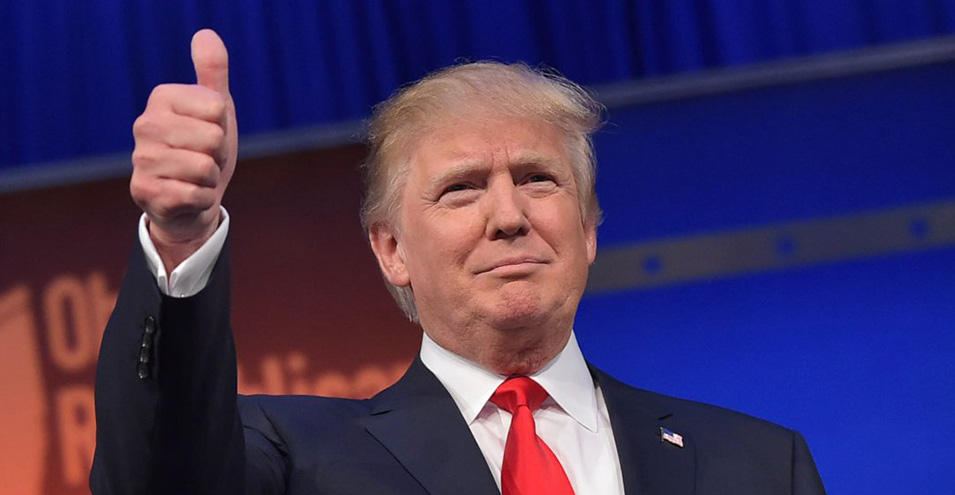
Based on the text of this draft that US President Donald Trump is set to sign in the coming days, entry of Syrian refugees to the United States will be banned, and the issuance of immigrant and non-immigrant visas for citizens of Syria, Iraq, Iran, Yemen, Sudan, Somalia, and Libya will be suspended for 30 days.
In one section of this order, it is stated that this 30-day ban can be converted into a permanent measure, and of course, it does not affect the status of individuals who hold a green card or US citizenship.
Trump has announced in this order that if the mentioned countries do not provide the information requested by the US, the visa issuance suspension can be extended.
In fact, based on this decree, the White House is asking the US Department of Homeland Security to request information from the officials of the 7 mentioned countries regarding visa issuance to their citizens, and if governments do not cooperate in this matter, their names should be reported to the White House.
Trump has also suspended the acceptance of non-Syrian refugees through the United Nations and other international organizations for 120 days, claiming to defend national security.
The US President announced on Tuesday evening, by posting a message on his personal Twitter account, that Wednesday would be “a great day” for American national security.
Trump, who has taken over the reins of the White House since Friday, had said during his election campaign that he would prevent Muslims from entering the United States.
Donald Trump is set to sign this week an order prohibiting refugee admission to the United States and visa issuance for citizens of certain countries that he considers potentially dangerous. The name of our country is seen among the countries whose visa issuance has been temporarily suspended and recognized as a country with the potential to issue terrorists to America.
In the prepared draft, refugee acceptance procedures for the fiscal year 2017 will be carried out up to a limit of 50,000, which is less than the 110,000 population that registered for refugee status during the Obama administration. American informed sources have stated that in the draft of this order, the countries targeted by Trump for visa bans are: Syria, Iraq, Iran, Libya, Somalia, Sudan, and Yemen, all of which are countries with Muslim populations.
Details of the sections of the draft law on preventing refugee and visa issuance:
In the preamble of this draft law, Trump identifies himself as responsible for implementing the US Constitution and laws, and states that this draft law is in line with the enforcement of the nationality and immigration law and Article 301 of the Constitution concerning protection of American citizens against dangers arising from terrorist attacks by foreign nationals.
The first section of the draft, in addition to individuals connected with terrorists, also includes religious extremists and those with a history of violence against women and religious bigotry under the rule of prohibiting entry to the United States.
Second section: Policies related to this law, which state that American policy is to support American citizens against foreigners likely to commit terrorist attacks in the country and to prevent entry of foreigners who use American immigration law for nefarious purposes.
Third section: Describes the conditions for suspending visa issuance and other immigration benefits for citizens of specific countries. According to the draft:
The Secretary of Homeland Security, the Secretary of State, and the head of the National Intelligence Organization must prepare a report on the information needed for screening. This section does not include foreigners who travel to America on diplomatic visas or NATO visas or C-2 visas to visit the United Nations.
In this section, it is stated that to facilitate screening and reduce the workload, for 30 days, the entry of citizens of foreign countries previously identified as harmful to American national interests will be suspended.
It is also stated that all countries will be requested to submit necessary information, and if they do not provide the required information within 60 days, by presidential decision, their citizens will be banned from entering the United States.
Fourth section: How to implement unified standards for immigration programs, stating that this program should include uniform processes such as interviews to create a database of identity information of visa applicants and modification of registration forms such as questions asked in these forms and mechanisms to ensure that the person applying is who they claim to be and processes to evaluate the likelihood of the applicant becoming a positive and productive member of society as well as mechanisms through which we can become aware of potential criminal tendencies of the applicant.
Fifth section: Redefining programs for granting refugee status in America for fiscal year 2017. On this basis, for 120 days, America’s refugee admission program will be suspended. During these 120 days, application forms must be reviewed along with inspection processes to determine what additional procedures should be added. These new processes must prove that granting refugee status will not lead to a threat against American security and welfare. Refugees who were in the process of having their refugee applications reviewed will also likely be reviewed after completing the revised processes.
Once the refugee admission program begins, priority will be given to those who are religiously oppressed in their own countries and it is proven that their religion is a religious minority in their country.
This section also emphasizes that only 50,000 of the refugee applicants in fiscal year 2017 will be given refugee status after reviewing the refugee screening processes, and this is also in light of human rights concerns for America.
Sixth section: Establishing a safe zone for vulnerable Syrian population, whereby according to this draft, Trump has decided to formulate a program within 90 days to establish safe zones in Syria.
Eighth section: Accelerating the completion of the entry and exit screening system. It is stated that the Secretary of Homeland Security should accelerate the implementation and completion of the screening system for travelers entering and leaving the United States.
The ninth section of this draft law also refers to visa security interviews, according to which the program of “waiving visa interviews” should be immediately suspended. On this basis, anyone seeking a non-immigrant visa must have a personal interview.
Tenth section: Addresses reciprocal visa validity, according to which the Secretary of State should review mutual non-immigrant visa agreements to ensure they are truly reciprocal based on visa classifications in terms of visa fees and visa validity periods. If a country does not treat American citizens based on reciprocity in visa matters, our country’s Secretary of State should also treat them in the same manner.
Eleventh section: Data collection and transparency, according to which every 180 days information related to the status of foreigners should be given to the American people. This information includes the following:
Information on the number of foreigners accused of terrorism-related crimes in the United States or expelled from the United States for this reason.
Information on foreigners who have radicalized after entering the United States.
Information on the number of foreigners who participated in terrorist acts or expressed their support for terrorist organizations.
Information on the number and type of gender-based violent acts against women by foreigners.
In the first section: The purpose of implementing this law has been described as the key role of visa issuance in the entry of “people connected with terrorists,” and it is stated that this law will prevent the entry of such people. On the other hand, there is no better evidence than the September 11 attacks, after which the State Department accompanied visa issuance with thorough screening of citizens of the country.
Donald Trump signed this controversial order as part of what he calls combating the entry of terrorists into the United States. In addition to Iran, the names of Iraq, Sudan, Libya, Syria, and Somalia appear on Trump’s ban list.
A thought-provoking point is that Trump in his controversial order did not mention any countries that have been the primary source of terrorism in recent years. For example, who does not know that the Taliban’s religious schools in Pakistan are the birthplace of thoughts of religious terrorism?
Currently, thousands of Taliban schools – which have spread in a network even to the most remote villages of Pakistan – exist in that country, where a large number of children from poor families study and are being prepared for or promoting violence. Saudi Arabia is also the financial sponsor of these schools.
However, Pakistan, whose citizens have even been involved in terrorist acts within the United States, is not on Trump’s list.
The September 11 attacks were carried out by 19 people: 15 Saudi Arabian citizens, two Emiratis, one Lebanese, and one Egyptian.
It should be known that Iranians are present and successful in all countries of the world and are very successful in scientific and commercial fields. By looking at these statistics, one can understand the depth of this issue:
Statistics of Iranians living in America:
Geographic distribution: Most Iranians living in America are concentrated in California. Among these, Tehrangeles is well known among Iranians. However, very large groups of Iranian Americans are also located in the states of New York, Texas, Virginia, Maryland and in the cities of Seattle and Atlanta, and almost every major American university has an Iranian student club or Iranian or Persian-speaking association.
Success: Iranians living in America are considered the most educated ethnic group in the United States.
According to one MIT calculation, this migrant group earns 50% above the average household income in the United States and is considered among the successful groups in American society. According to some sources, Iranians’ share in the US economy is $400 billion.
According to the US Census Bureau in the 2000 census, nearly 27% of Iranian Americans held a master’s degree or higher, which ranks first among American immigrant groups. And more than 56% of Iranians living in America hold a bachelor’s degree, which ranks second among 67 immigrant groups in America. However, on the other hand, according to another report, the number of Iranian students in advanced university programs has been declining in recent years.
Active presence in society: Apart from famous Iranian-Americans such as Sohila Vahdat, Pierre Omidyar, Bijan Pakzad, Firuz Naderi, Lotfi Asker-Zadeh, Shohreh Aghdashloo, Andre Agassi, Ali Javan, Kamshad Kushan, Sina Tamaddon (Apple computers), Omid Kordestani, Rudabeh Bakhtiar (CNN), Christiane Amanpour, Katherine Bell, and Anousheh Ansari who are known in the news, many Iranian Americans have had a very active presence at the city level and in their places of residence.
For example, in 2006 in Texas, Giti and Ali Sabourians, residents of Houston, donated $10 million to MD Anderson Cancer Center at the University of Texas. The mayor of Houston declared June 26, 2005, as Keeper Day in honor of the film “The Keeper: The Legend of Omar Khayyam” made by Keyvan Meshkati, a Houston native.
In 2004, Hushyar Ansari and Shahlah Ansari, with a donation of $15 million, established a stem cell research center at Cornell University.
In Los Angeles, the University of Southern California also received a $17 million donation from an Iranian engineer in 2007, while UC Irvine received a $30 million gift from Mr. Moeraj.
In San Francisco, San Francisco State University received the largest donation from another Iranian couple named Neda and Mani Meshul for $10 million, and Swedish Covenant Hospital in Chicago received a $4 million donation from another Iranian philanthropist.
Portland State University even renamed its engineering school after a $8 million donation from Dr. Fereydoun Mossayegh.
In the field of film and filmmaking, one can mention Dariush Khanjani, director of photography for many successful Hollywood films, Amir Makari, director of photography for the Transformer film series, Farhad Safinia, screenwriter, and Ramin Djawadi, famous Hollywood composer and composer of the TV series Prison Break, Game of Thrones, and Bob Yari, a Hollywood producer and owner of four film production companies in the United States.
The official population statistics of Iranian Americans in the 2000 census were more than 370,000 people. This number includes people who voluntarily identified themselves as “Iranian” (or of Iranian descent). However, in the official 2010 census, this number decreased to 289,465 people.
However, it is said that the Office for the Protection of Iran’s Interests in Washington, DC claims to hold 900,000 passport files of Iranians in America. The National Council of Iranian Americans believes that the Iranian-American population exceeds one million people.
In any case, Iranians have been present in American society for many years, so much so that the first Iranian who formally accepted US citizenship was Mirza Mohammad Ali Haji Seyyah, who also participated in the Constitutional Revolution.
The level of international respect for Iranians before and after the revolution is very thought-provoking:
The Iranian passport was a passport accepted everywhere. Its color and appearance were always respected and admired.
Akbar Hashemi Rafsanjani, former head of the Expediency Discernment Council, in a gathering of members of his election campaign staff for the 2013 presidential election, said that Iran, both before and after the revolution, had honors that cannot be hidden, and Iran was a respected nation.
“I myself have driven across all European countries with my car. From one country to another whenever I wanted to go, I only showed my passport. But now Iran has reached a point where people are afraid to take their spouses on international trips because they are disrespected.”
The 1979 revolution and the plan to export the revolution and events such as the US embassy hostage-taking, Iran’s international behavior both in the region and in the world, non-compliance with international laws, immediately brought the value of the Iranian passport close to zero and severely diminished it.
It should be noted that from an international perspective, until the hostage-taking occurred, Iran’s international image was not too bad. It had become revolutionary and for many Western countries it was interesting that a great revolution had occurred in a country. But when Western televisions showed that some Iranians were climbing over the wall of the American embassy and blindfolding the eyes of American hostages and being disrespectful to them, the image of the Islamic Republic completely changed, and many in the West concluded that extremists had taken over Iran’s revolution.”
Mr. Lambert, in response to the question of what the issuance of US visas for Iranians was like during the time of Mohammad Reza Shah Pahlavi when he was working at the Iranian embassy, says: “At that time we usually gave Iranians 4-year, multiple-entry visas. The Iranian passport had great credibility. Iranians who came to America with student visas and Iranian tourists helped our economy.”
During Ahmadinejad’s presidency, Iran’s foreign policy became very dire. Countries like Kyrgyzstan and Turkmenistan and Central Asian countries that had signed visa-free agreements with Iran re-established visa requirements. During this period, because of the nature of his rhetoric, Holocaust denial, dealings with neighbors, participation in Iraq, Afghanistan and Syria disputes, and interference in neighboring countries and circumventing sanctions, the value of the Iranian passport had severely declined.
Current situation:
According to the classification of Henley & Partners (an international company active in the field of residence and citizenship that annually prepares and publishes reports on the credibility of passports of different countries of the world, which is recognized as a measure of the credibility of these countries in the world), in 2013, last year, Iran’s passport among the passports of 93 countries in the world ranks 86th in terms of credibility. Pakistan, Somalia, Iraq, and Afghanistan are at the bottom of this table.
This issue circulates frequently in some mouths. To the extent that even Hassan Rouhani, to get votes from the people alongside other crude and strange slogans (none of which materialized), promised that I will restore credibility to the Iranian passport! It is clear that this statement has more value for propaganda than anything else. Meaning it serves to collect votes and make slogans.
Know that… some Iranian government officials also hold American passports but keep it secret:
The story of the green card of another member of the Resistance Front in the eleventh presidential election took on color. With the introduction of Bagheri Lankrani as the main candidate of this front, news of his American green card and the presence of his father in the United States was raised.
Bagheri Lankrani, in response to these comments, said that they rumored that our family is ceremonial in order to discredit me, while we are a virtuous family and consider this a blessing from God, they even said again why do you keep in touch with your father. For the first time I’m saying this, that after becoming a minister in the margin of a session, Ayatollah Golpaygani saw me and said now that you’ve become a minister and your father is also out of the country, don’t think you should cut your relations but your relations should increase and religious duty dictates this action, therefore I, according to religious duty, have maintained my relationship with my father !!!!!!!!!!!!!!
Circumventing American laws
Muhammad Nahavandian’s green card, who is the Chief of Staff of the President, was first discussed in 2006. This was when he, as a senior advisor to Ali Larijani, the then Secretary of Iran’s Supreme National Security Council, traveled to the United States, and the Financial Times newspaper claimed he met and consulted with American officials and senators.
The trip took place under conditions where it had been announced that Iran-US negotiations were taking place over Iraq, and some believed that Nahavandian went to the US to lobby on Iran’s nuclear issue and was able to establish good relations as well. At that time, Ali Larijani explained his advisor’s trip to the United States, saying “Since the United States does not grant visas to Iranian diplomats, we used Muhammad Nahavandian’s trip to the United States to convey our intended information to Mohammad Javad Zarif, Iran’s representative to the United Nations.” The Iranian Foreign Ministry officially announced that Nahavandian’s trip was personal and had no relation to relations between the two countries. The Washington Times revealed that Nahavandian holds an American green card, and the US Department of Homeland Security wrote: there was no reason to deprive Muhammad Nahavandian of entry to the United States last month.
At that time, Condoleezza Rice, then US Secretary of State, when faced with questions about the presence of Muhammad Nahavandian in Washington, referred to Nahavandian as a high-ranking diplomat and said that his government would try to find legal grounds for this matter and take appropriate action. Rice’s statement probably meant that the United States was seeking to revoke Nahavandian’s green card.
Muhammad Nahavandian was a revolutionary activist in his youth. At age 26, after an explosion in the Islamic Republic Party office, he became deputy coordinator of the Ministry of Commerce and then deputy of planning and budget of the ministry. But later he left there too due to disagreement with others and went to Qom to continue his Islamic studies. And 2 years later, that is in 1982, he went to the United States. In the United States, he established an institute called Islamic Research and Information in Washington and established contact with 40 Islamic centers in America for cooperation between them. As a result, a council called the Islamic Cooperation Council was formed that held meetings every month in a different state. He spent 8 years with his family in America and earned a master’s degree and doctorate.
Muhammad Nahavandian is not the only figure whose green card rumors have recently surrounded in Hassan Rouhani’s team. The Atomic Iran website recently published a report and wrote that one of the key members of Mr. Rouhani’s foreign policy team, a few months ago, intended to completely leave the country and settle in America. According to this report, about 3 months ago he appeared at the American consulate in one of Iran’s neighboring countries and conducted the necessary interviews to obtain permanent residency permission.
This claim was not proven, but Muhammad Zarif, Hassan Rouhani’s choice for Foreign Ministry, was questioned in the National Security Commission sessions about the rumor of him having a green card. Zarif in his explanation said that I have never had a green card and do not have one, while I have had the conditions to obtain one for 10 years; my family and children live in Iran while they could live outside of Iran, after returning to Iran I have never traveled to the United States while I was invited to teach from three prestigious American universities !!!!!!!!!!!!!
In conclusion, it should be said that this decision by Mr. Trump not only deprives many families of seeing each other but will also have a negative effect on the process of reviewing the files of many refugees from Turkey.
Based on Trump’s new draft plan, refugee admission to the United States will be suspended for 4 months. Only after this period can refugees be admitted after careful examination by US government and security and intelligence agencies and only from certain countries. Entry of refugees from the war-torn country of Syria will also be prohibited.
Many Iranians who left Iran in the months and years following the Green Movement went to Turkey and from there applied for refugee status to the United States. Some of them are still waiting in Turkey for permission to enter American soil.
“This issue will probably only benefit traffickers with their astronomical prices and will increase illegal entry of refugees to Europe. The bigger picture of the story is that America’s human responsibility toward refugees will be shifted to Europe, particularly Germany.”