Water War and Land Revenge Threaten Iran
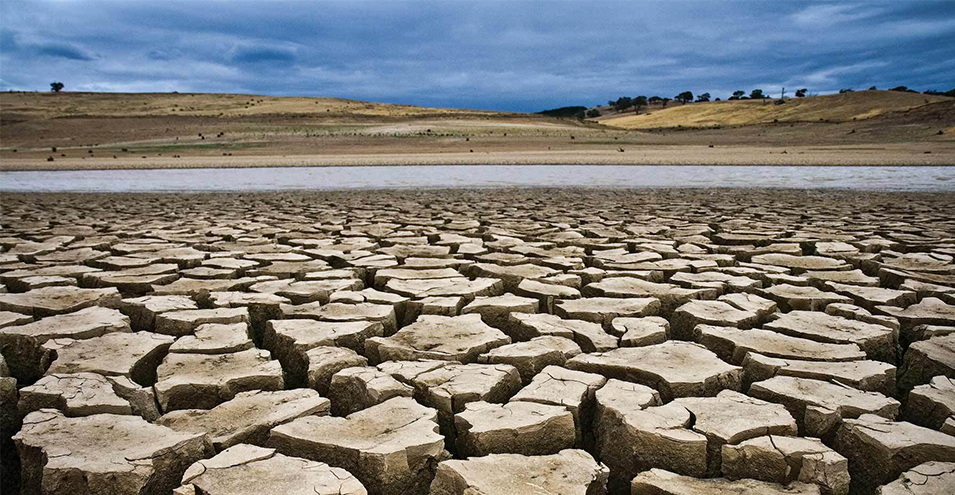
Sohila.Sh, FCN news agency: While the ominous phenomenon of water war and its consequences threaten Iran, the officials of the Islamic Republic continue to be preoccupied with power struggles. Meanwhile, it seems that Iranians either remain indifferent or consider leaving the homeland as their only salvation.
In this situation, a number of compatriots in conversation with FCN emphasized that the increasing sin and corruption among the leaders of the Islamic Republic government is the main cause of these problems.
They believe that the negligence of regime officials and public indifference in these crisis conditions stem from this same corruption, and they maintain that the war to preserve power and negative competitions among government leaders is a clear example of this corruption.
The Insignificance of Resolving the Crisis for Regime Officials
Omid Azarnoutkishan Christian in conversation with FCN referred to research indicating the outbreak of “water war” or “hidden war” in 18 countries in the Middle East and North Africa, with Iran also on this list.
Omid Christian spent this Christmas in the corner of his house engaged in family prayer and worship, and in his collective prayer he asked God for deliverance from the crisis in Iran.
According to this compatriot, Iranian officials have been talking about this crisis for more than two decades but have not taken any effective measures to prevent it. Because they do not attach importance to this matter and prefer to spend money elsewhere. While the consequences of this crisis are not insignificant, and we are already witnessing extensive land subsidence in various parts of our country due to uncontrolled extraction from water resources.
Omid continues: “For example, although according to statistics more than 90 percent of the country’s water resources are spent in the agricultural sector, officials have done nothing to optimize water management. Farmers continued to waste water through traditional irrigation methods and even refused to refrain from cultivating water-intensive crops.”
Omid believes that the government sector also did not help the farmers. While it was expected that in previous decades, modern irrigation schemes or land leveling would be implemented without imposing costs on low-income farmers to preserve existing water resources.
Omid sees the failure to prioritize such measures as a result of the power-seeking nature of the leaders of the Islamic Republic. Especially since during these same decades, the money of Iranian people was spent repeatedly in countries supporting the Islamic Republic to preserve this regime’s power inside and outside the country.
Domestic Media Are Also Responsible
Hamideh, another compatriot, holds Iran’s media responsible and believes that if the leaders of the Islamic Republic did not have the cooperation of visual and audio media, they would not have been able to oppress people to this extent.
She emphasizes that the lack of accountability of Iranian officials for their shortcomings and weaknesses stems from the poor performance of these same media outlets.
This compatriot continues: “In recent decades, whenever media wanted to address solutions to prevent the water crisis from worsening, they targeted people and asked them to conserve. While Iranian people do not directly and intentionally play a large role in the country’s water crisis. People use only 7 percent of the water available in the entire country, and a 20 percent reduction in this consumption only affects 1.5 percent. For this reason, media should address uncontrolled extraction and drilling of illegal wells and the land subsidence resulting from them, which started two decades ago and now threatens several cities including Tehran.
Of course, the dimness of such coverage among media that question the regime leaders is hardly surprising. Because the proprietors of most media permits in Iran are connected to the main powers of the Islamic Republic. Even apparently independent individuals are using media permits to pursue profit and income sources that neutralize information dissemination. This entire atmosphere causes compassionate media individuals to be sidelined or their voices lost in the noise of opportunists. This media rubble day by day makes the Islamic Republic regime more robust and the people more emaciated.”
Indifferent People and Fugitives Are the Main Culprits
Mojtaba Noutkishan Christian views the intensification of the water crisis and its roots in Iran from a different perspective.
He considers public indifference the main cause and believes that Iranians, by the method they have adopted, are actually pouring water to the mill of the corrupt leaders of the Islamic Republic.
Mojtaba criticizes the increasing number of Iranians leaving the homeland and emphasizes that this group is also responsible for the destruction of their ancestors’ land and has succumbed to the wishes of the regime’s leaders.
He refers to recent statements by Ali Akbar Nategh Nouri, head of the office of inspection of the leader of the Islamic Republic of Iran, and says: “The corruption of government leaders has reached a point where Nategh Nouri called it humiliating and admitted that the perpetrators of corruption are all managers, officials, and members of government factions who are not dealt with due to conflict or expediency.”
This is at a time when the Islamic Republic of Iran has dropped from rank 86 to rank 136 in terms of corruption.
Mojtaba views this situation as so serious that the indifference or escape of people cannot be tolerated and makes the ground more favorable for the corruption of the regime’s leaders. Of course, this compatriot also sees public distrust of officials due to corruption as creating conditions for them to shirk their civic responsibility.
Mojtaba continues: “The officials of the Islamic Republic, by stealing people’s property and ignoring the rights of Iranians while suppressing every protest and criticism, sealed people’s indifference to the future of their land and deprived them of national identity. On the other hand, trapping people in daily affairs such as feeding themselves or providing shelter and health has also fueled this general indifference.”
Some Regime Leaders Want the Destruction of Iran
Land subsidence in the country is among the consequences of the water crisis in Iran. But this phenomenon has not prompted any effective preventive reaction from the regime’s leaders, and its extent has expanded year after year.
Ibrahim, an urban planning expert, in conversation with FCN claimed that officials and authorities of the Islamic Republic have been monitoring these subsidences for years and are witnessing them. But their negligence regarding prevention is to such an extent that sometimes it seems intentional, and some implementers and leaders of the regime want the destruction of Iran.
According to this expert, the fundamental reason for subsidence in the known plains of the country is the drop in groundwater level, which results from lack of rainfall and uncontrolled extraction of groundwater, and those in charge have done nothing to counter it.
Ibrahim says: “Officials in recent decades sat outside the pit and just made slogans. Without speaking of their duties and taking action. Moreover, they did not even protest against the harmful actions of others, such as the construction of unprofessional dams that began during the presidency of Rafsanjani. While it was clear what theft from the credit resources of these dams flowed into the pockets of officials and what lands gained added value. While land subsidence in the country was preventable and can still be prevented from expanding now.”
Now we witness that subsidences in Tehran itself and its southern and southwestern lands are expanding, and it is said that such a process at an annual rate of 36 centimeters is unprecedented in the world, which according to Ibrahim makes the indifference of government leaders to such dangers unacceptable by any justification.
This compatriot continues: “At a time when every day we hear news of Iran’s money being poured out and spent in other countries, how can we believe that the leaders of the Islamic Republic care about Iran and have done nothing to prevent the destruction of this land.”
The Revenge of the Land Awaits Iran
According to FCN’s report, historical evidence shows that Iran has struggled with water scarcity since ancient times.
The existence of the goddess and temple of Anahita in the country and the prayer of Cyrus the Great that God keep this land from the evil of drought is one aspect of this evidence.
Moreover, the digging of qanats and the construction of various water reservoirs in Iranian cities shows that Iranians have always been concerned with obtaining water.
But the identity-based and ancient beliefs of Iranians have come to their aid in this predicament in such a way that they have always considered water a sacred and divine element and spontaneously managed its consumption. Today, however, while news speaks of bitter realities, there is no trace of those beliefs.
For example, we have seen that the per capita renewable water in our country in the year 1921 was about 13,000 cubic meters, and at present this amount has been reduced to about 1900 cubic meters, and it is predicted that in the future the situation will be much worse. Moreover, of Iran’s 600 plains, 230 of the country’s fertile plains have faced water scarcity crisis, and more than 60 Iranian plains are in critical condition. As a result of these conditions, the phenomenon of subsidence and sinkholes threatens life in more than 7 provinces of the country. Yet we witness that uncontrolled extraction of water resources and negligence regarding the necessity of managing the consumption of this vital element continues.
And there is fear that Iran in the not too distant future may face a fate that will be a tangled knot, and one can only name it the revenge of the land.