Iran News
Tehran’s air quality remains unhealthy for the thirteenth consecutive day
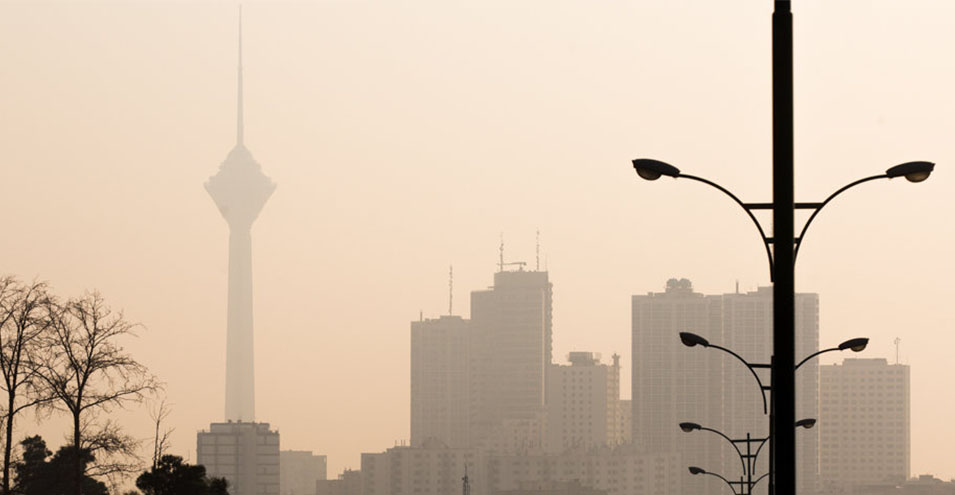
Kindergartens, preschools, and elementary schools in Tehran were closed on Monday, November 24, following air pollution in Tehran and all cities in the province except Damavand, Firouzkouh, and Pardis due to air pollution.
Meanwhile, according to the state news agency IRNA, based on a resolution by the “Tehran Air Pollution Emergency Committee,” this closure has been extended to Tuesday as well.
In this regard, according to Tasnim News Agency, Hassan Abedi, deputy chief of Tehran’s traffic police, said on Monday that these restrictions would remain in effect until further notice.
The Tehran Air Pollution Emergency Committee also made resolutions on Saturday to reduce air pollution in Tehran, including a plan to halt operations of sand and gravel mines until air conditions normalize, and the cancellation of school sports bells in Tehran and public sports in parks and sports complexes in the city.
According to France’s news agency report, the “particles less than 2.5 microns” index in Tehran on Monday reached 156, which is considered three times the safety level set by the World Health Organization.
Based on the “Air Quality Index Health Significance Level Standard,” the level of “concentration of suspended particulate pollutants with a diameter of less than 2.5 microns in the air” in the range of 101 to 150 is announced as “unhealthy for sensitive groups” (orange) and in the range of 151 to 200 as “unhealthy” (red).
Tehran’s air and several major Iranian cities had also reached “red” status on some days last winter, during which time the odd-even traffic plan was implemented in Tehran, and kindergartens, preschools, and elementary schools in this city and the cities of Isfahan, Tabriz, Arak, and Karaj were closed several times.
Mohammad Rostaghary, deputy for environmental monitoring and supervision of Tehran Province, announcing that Tehran’s air is unhealthy for all groups, said: The “particles less than 2.5 microns” index in Rey city at 200 indicated the highest level of pollution among the monitoring stations in Iran’s capital.
Regarding the possibility of school closures on Tuesday, he also said: “Currently, we cannot comment on this issue and we need to review the numbers received from air pollution monitoring stations.”
Meanwhile, Hassan Abbasi, spokesman for Tehran’s Emergency Services, announced the deployment of four ambulances and 22 motorcycle ambulances across the city following the escalation of air pollution.
He noted that emergency response teams are also on standby.
According to news agencies, the issue of air pollution in Iran’s capital has also been raised in the Islamic Consultative Assembly.
According to Khaneh-ye Mellat news agency affiliated with the parliament, Mohammad Dehghan, parliament representative from Chenaran, referring to the fact that mortality rates increase by 20 percent during severe air pollution, asked the government: “Why have you allowed the air pollution situation to reach the alert and emergency stage, when forecasts were made fifteen days ago and it was also announced that this year’s rainfall would be 25 percent less than last year?”
He also demanded the prevention of vehicle activity and some factories that are sources of air pollution.
Mohammad Javad Fathi, Tehran’s representative in parliament, announced on Monday that Tehran’s parliamentary representatives have sent a letter to the president to solve the air pollution problem in Tehran and major cities, saying: “We are in the process of collecting signatures for this letter, and after collecting signatures, it will be delivered to the president.”


Source: Tabnak, Radio Farda, ISNA