Khamenei: I have not and will not interfere in elections
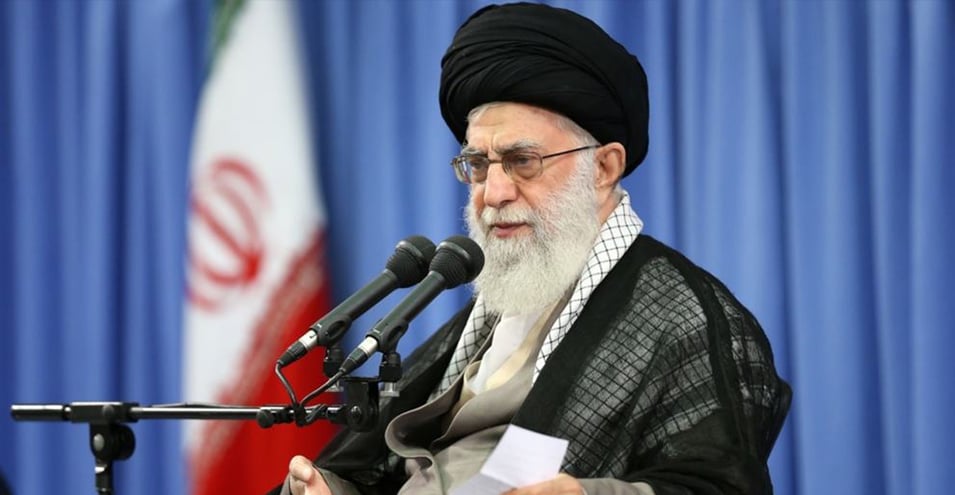
Supreme Leader Ayatollah Khamenei says he does not interfere in elections unless, as he puts it, some people want to stand against the people’s votes, a situation he claims has occurred before.
Ayatollah Seyyed Ali Khamenei, the leader of the Islamic Republic of Iran, stated on Tuesday, the first day of Farvardin, in a speech in Mashhad that he has never interfered in elections throughout various periods and has never told people to vote for or against anyone.
He referred to those who protested the results of the 1388 presidential election as people who wanted to break the people’s votes, saying this matter has historical precedent but some of these cases went unnoticed by the people.
The major portion of the Islamic Republic’s leader’s speech was devoted to economic issues, and while alluding to matters such as the necessity of fighting smuggling and weakness in macroeconomic management, he once again emphasized the “resistance economy” policy and said: “The import of goods that are produced domestically should be recognized as a religious and legal prohibition.”
The significance of Khamenei’s remarks on election integrity lies in the fact that the presidential elections in Iran will be held in Ordibehesht this year, and opponents of the Rouhani government, citing the Supreme Leader’s economic criticisms, have stated that Hassan Rouhani will be the first single-term president of the Islamic Republic.
Mir Hossein Mousavi and Mehdi Karroubi, candidates in the 1388 presidential election, had questioned the integrity of the elections, but Khamenei considered Mahmoud Ahmadinejad as president even before the Guardian Council confirmed the election results and explicitly stated that his views were closer to Ahmadinejad’s.
Mousavi and Karroubi, along with Zahra Rahnavard, have been under house arrest since the winter of 1389, and some officials such as Ali Motahhari, the Vice Speaker of Iran’s Parliament, have said this decision was made on the direct order of Ayatollah Khamenei.
The unlawful and biased performance of institutions under the Supreme Leader’s oversight, such as the Guardian Council and the Islamic Revolutionary Guards Corps, in past election cycles has been subject to extensive criticism and protest.
In the 2016 United States human rights report released by the U.S. State Department, it stated that “Iranian citizens face restrictions in their ability to determine their government through peaceful means, free and fair elections.”
Source: Voice of America