Zarif Responds to Trump’s Criticism of Iranian Government
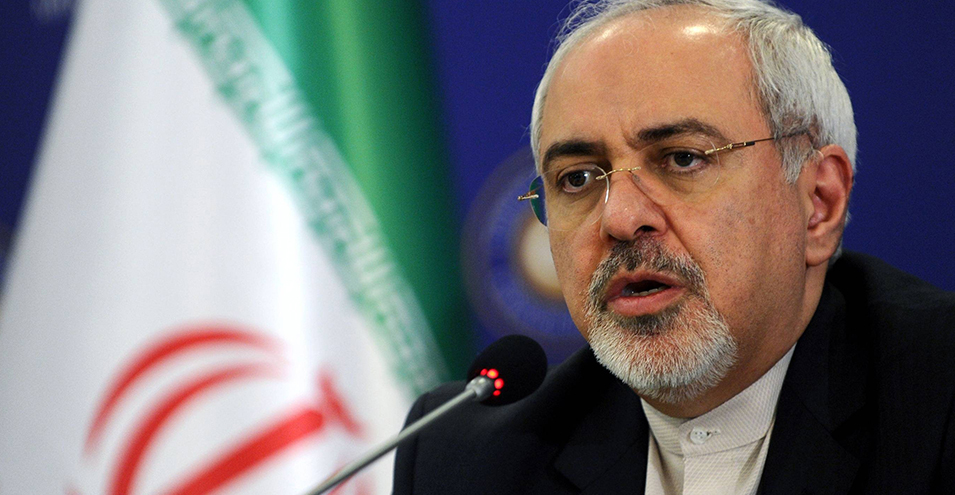
Following remarks by Donald Trump, the U.S. President, who leveled severe criticisms against Tehran during his speech in Saudi Arabia, Iran’s Foreign Minister responded on his Twitter account.
Donald Trump, the U.S. President, on Sunday, May 21, in Saudi Arabia, criticized Iran for “training armed groups in Syria, Yemen, and Iraq,” and described the Iranian government as one that “provides safe harbor to terrorists and offers them financial support.” The U.S. President also emphasized that there is a distinction between “cultured and wealthy” Iranians and the Iranian government.
Mohammad Javad Zarif, on the same day, referring to Mr. Trump’s severe criticisms, wrote sarcastically on his Twitter account: “Iran—which has recently gone through genuine elections—has been targeted for attack by the U.S. President in [a country that claims to be] the cradle of democracy and moderation.”
Iran’s Foreign Minister added: “[Is this] foreign policy or simply milking Saudi Arabia’s $480 billion?”
The Foreign Minister’s reference to “recent elections” concerns the presidential elections in the country. In the twelfth round of Iran’s presidential elections, Hassan Rouhani won with over 23 million votes. The electoral process in Iran faces criticism both domestically and internationally. International non-governmental organizations, including reference to the Guardian Council’s role in “disqualifying” numerous candidates and “escalating human rights violations” ahead of the elections, describe the process as falling short of standards such as freedom of choice and competitiveness.
In a recent ranking by the international non-governmental organization “Freedom House” of political and civil freedoms in over 190 countries and regions, both Iran and Saudi Arabia rank at the bottom of the table; Iran is ranked 23rd and Saudi Arabia is the eleventh country from the end of the rankings.
Mr. Zarif, hours before his Twitter post, also wrote in an article for the “Al-Araby Al-Jadeed” website in London: “If the U.S. President considers himself a friend [of the Saudi government] and is loyal to his campaign slogans, he should engage in dialogue with them to prevent terrorists and takfiris from igniting fires in the region, and to prevent another September 11 being repeated by their agents in Western countries.”
Saudi Arabia has denied any connection between its government and perpetrators of attacks such as the September 11, 2001 attacks in the United States.
Iran and Saudi Arabia, in a number of widespread conflicts in the West Asian region from Syria to Yemen, support opposing parties against each other. Saudi Arabia is an ally of the United States and has repeatedly accused Iran of interfering in Arab countries’ affairs. Iran currently has neither diplomatic relations with Saudi Arabia nor with America. The Iranian government has rejected accusations of interference in Arab countries’ affairs.
Source: Radio Farda