Following Two Missile Strikes at US Warship, America Attacks Houthi Radar Centers in Yemen
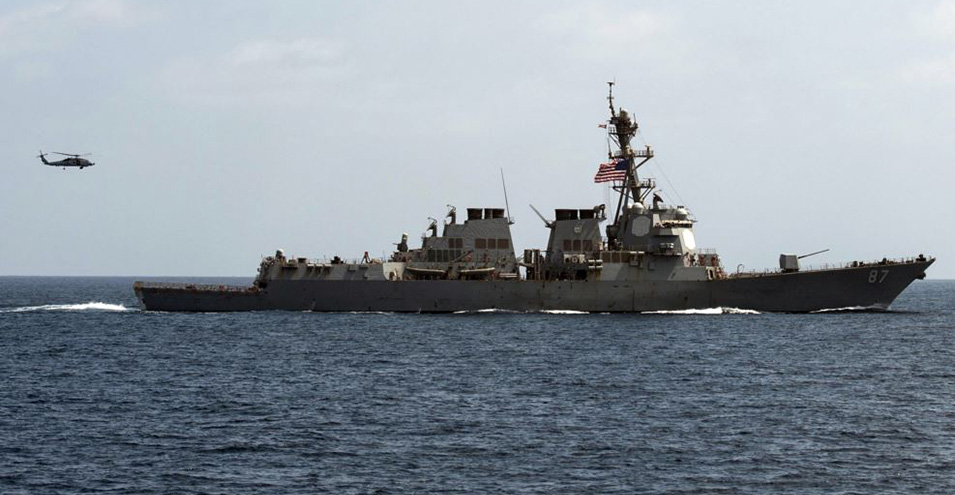
Just hours after a second failed missile strike against a U.S. destroyer in the Gulf of Aden, the United States launched a missile attack on sections of radar centers controlled by Iranian-backed Houthis on Yemen’s southern coast.
The U.S. Department of Defense confirmed the attack on radar centers on Yemen’s southern coast on Wednesday evening, October 12. The U.S. strike came just hours after the second failed missile attack against the American destroyer.
Earlier, the U.S. Defense Minister responded to the missile strike against the destroyer by saying that Yemeni rebels should not underestimate American military capabilities.
On Wednesday afternoon, Yemeni Houthis for the second time in a week fired missiles at an American destroyer in international waters.
According to Reuters, Yemeni officials said on Wednesday that Houthi forces in the country, which are backed by the Iranian government, fired missiles for the second time this week at the USS Mason, a guided-missile destroyer, an attack that like the previous days was unsuccessful.
The USS Mason, which was operating in waters around the Bab al-Mandab Strait in the Red Sea, was also targeted earlier in the week by several missiles fired by the Houthis that fell into the water and caused no damage to the destroyer.
The destroyer responded by firing several missiles at the attackers’ positions.
The renewed Houthi attack on the American destroyer has put the U.S. military under pressure for retaliation, a step that would mark the first instance of direct American intervention against the Houthis in Yemen’s civil war.
According to the Associated Press, the Pentagon on Tuesday made reference to a possible retaliation in response to threats against the American destroyer.
According to Reuters, the Pentagon said on Wednesday, after the Houthis’ second attempt this week to target the American destroyer, that it would respond to these attacks “at the appropriate time and in an appropriate manner.”
Iranian Missiles?
As tensions in Bab al-Mandab escalate toward direct American intervention against Houthi-controlled areas, a Houthi official told Reuters on Monday, after the first missile strike at the American destroyer, that the group did not fire the missile at the American military vessel in Yemeni waters.
The Houthis have not yet commented on the second missile strike at the American destroyer, but this is not the first time missiles have been fired from areas under their control at foreign ships.
On September 30, a missile was also fired at an Emirati vessel, and unlike the two strikes against the American destroyer, that missile hit the Emirati ship.
The United Nations condemned the attack on the Emirati vessel and considered it a threat to shipping in the strategic Bab al-Mandab Strait.
Fox News claimed the missile fired at the Emirati ship was “made in Iran,” but in response, Iran’s Foreign Ministry spokesman rejected the claim, with Bahram Qassemi calling it a fabrication.
Some media outlets describe the missiles fired from Houthi-controlled coasts as a type of Chinese missile that Iran had previously used to produce a missile called “Noor.”
Since the tensions in Yemen, Iran and Saudi Arabia have been on opposite sides of this conflict. The Islamic Republic of Iran supports the Shiite Houthis, while Saudi Arabia supports Yemen’s legitimate government.
In the past year, Yemen’s civil war has been accompanied by Saudi Arabia’s military intervention and its allies. Iran opposes Saudi attacks and counters by saying Tehran is responsible for equipping the Houthis.
In recent years, reports have been published about Iran sending weapons to groups such as the Houthis and Hezbollah in Lebanon near Israel. Iran implicitly confirms its strategic alliance with these groups, does not consider their activities terrorist, and says they are defending themselves.
Source: Voice of America