Culture Minister: Withdrawal in Mashhad Has Created Problems in Other Cities
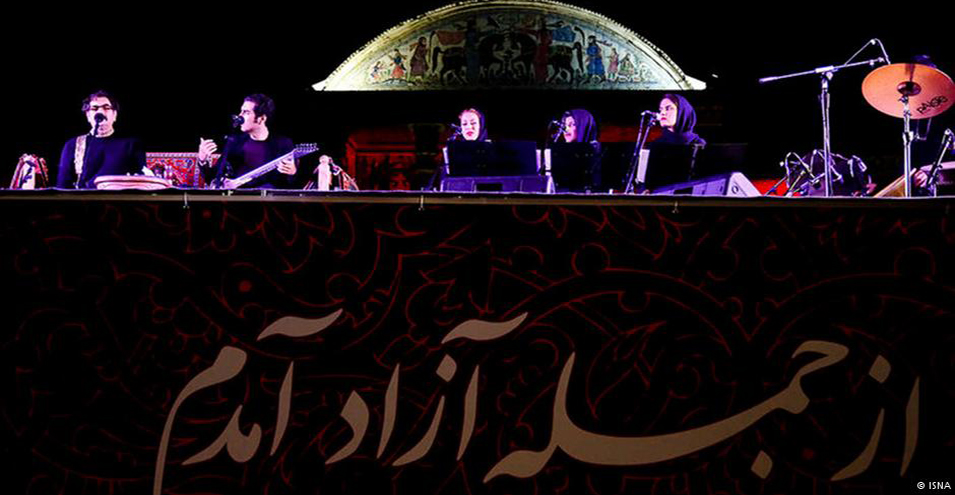
According to Ali Jannati, the Culture Ministry’s approval to cancel concerts in Mashhad has created problems in Sabzevar and Nishapur as well. Three thousand music professionals have called the Culture Ministry’s withdrawal in Mashhad a “disaster” in an open letter to the president.
Ali Jannati, Iran’s Culture Minister, says that the Friday Prayer leader of Mashhad believes “the entire city is like a blessed sanctuary of Imam Reza and for this reason, by exerting pressure on the judicial system, they prevent concerts from being held.” He added that for 11 years, no concerts have been held in Mashhad due to the Friday Prayer leader’s opposition, and the Culture Ministry’s recent approval of this practice “unfortunately has led to interventions in some cities, including Sabzevar and Nishapur, which we cannot accept.”
Although the Culture Ministry’s withdrawal before Mashhad’s Friday Prayer leader faced criticism from President Hassan Rouhani, no change has been made to this decision so far.
Nevertheless, Seyyed Reza Salehi Amiri, an advisor to the president, has claimed that “there was essentially no withdrawal by the Culture Minister regarding holding concerts in Mashhad, and this was the media’s interpretation of his statements.”
“We Are Seeking the Rights of an Ordinary Citizen”
Meanwhile, a judicial official in Khorasan Province, while implicitly defending the judiciary’s action in preventing concerts, described the government’s attention to these issues as a distraction from people’s economic problems. Hojatoleslam Mozaffari, the head of the judicial administration of Khorasan Province, said: “Unfortunately, some statements are not befitting of senior officials, and the main priorities and concerns of society and people, such as economic problems, should not be neglected.
It is the duty of the judicial system to maintain security and prevent crime, and these principles apply to all areas and ceremonies, and it makes no difference to us in what ceremony the crime occurs.”
Alam Al-Hoda and his associates have considered music concerts as venues for “criminal behavior and practices contrary to Islam” and have called for canceling concerts.
Meanwhile, three thousand Iranian music artists have warned President Rouhani in an open letter about the danger of the Culture Ministry’s approval to cancel concerts in Mashhad. Among other things, they wrote: “This event, which used music as a pretext, began through the denial of unified and legal sovereignty and normalizing regional despotism.” The letter’s authors, while criticizing the president’s delayed and indecisive response to the Culture Ministry’s decision, “demand the government and the Islamic Republic system’s practical, clear, and binding action to revive the aforementioned violated right and also seriously ensure this situation does not recur.” While emphasizing the need for “rehabilitating the music community and restoring the dignity of musicians,” they demanded to be recognized at least as “an ordinary citizen who has the right to earn a living.”
A Bestselling Film That Was Banned
In a recent move described as a sign of lawlessness and regional despotism in Iran, the film arts sector has banned a licensed film from being shown in cinemas under its supervision. As a result, in cities where the film can only be shown in private cinemas in some cities, but since some cities lack private cinemas, parts of the population are actually deprived of watching this film. This is while, according to ILNA news agency, the film has broken box office records these days despite the film arts sector’s boycott.
Source: DW