Testimony of “Maryam Jalili,” Christian Citizen: From Life and Evin Prison Detention to Immigration to America
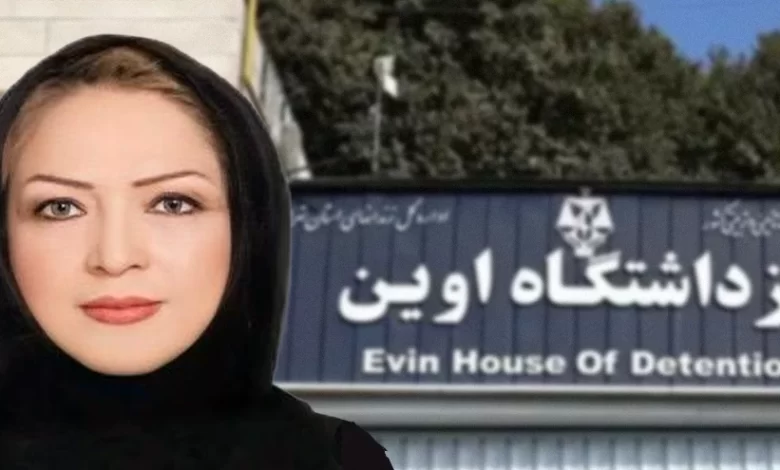
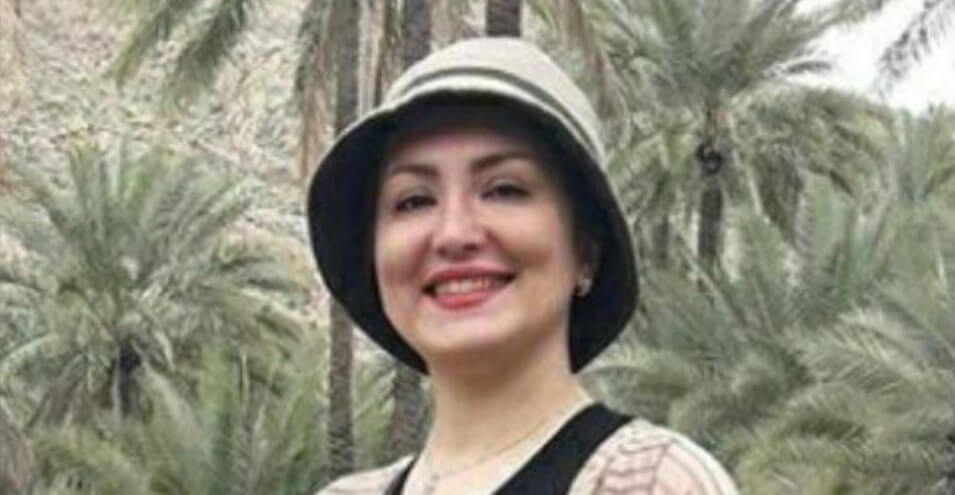
“Maryam Jalili,” a Christian citizen, testified about her life, her imprisonment in Evin Prison, and her immigration to America in an interview.
Maryam Jalili, born in 1343 (1964), in an interview with “Article 18 Organization” and confirmed by her on August 17, 2024, recounts her testimony of life and the time she was imprisoned in Evin Prison. Her testimony concerns the suffering she endured before faith in Jesus Christ and the conditions in the prison, during which she discussed Jesus Christ and her faith with many people, including Baháʼí individuals, lawyers, and political detainees who were her cellmates.
The aforementioned interview, prepared by “Article 18 Organization,” is presented below:
“I am Maryam, born in 1343 in the city of Nishapur. My name is Maryam and I was born in the year 1343 in the city of Nishapur. I had four sisters and two brothers. My father was a military officer and for this reason was very strict in raising his children. Our home was like a military barracks. I wanted to escape the home environment, so I decided to marry the first suitor who came. At age 13, I married one of my mother’s relatives and had my first son when I was 15 years old. When I was seventeen, my son suddenly contracted meningitis, and this disease led to his death. This incident was very painful for me. I could not understand why my son was born and why he died. Many questions occupied my mind. In private, I asked God: ‘You knew my son was going to die, so why did you give him to us in the first place only to take him away?’ A few years later, at age 21, I had another child and my second son was born.
When I was 38 years old, my sister Farzaneh, who was 26 at the time and had a three-year-old daughter named Hasti, was returning with her husband and daughter from a pleasure trip to Nishapur to attend the wedding ceremony of my sister and brother, whose ceremony was held one night. Near Nishapur, they had a bad accident that resulted in my sister’s death.
Farzaneh’s death was the second devastating blow to me. In the mortuary, with lamentation and crying, I said to God: ‘Why did Farzaneh die at this age? What will become of her three-year-old daughter?’ For a long time, I had many questions about God’s justice and wisdom in my mind, and because I had no answers for them, they troubled me. I was very confused and restless. I participated in many Islamic gatherings and sessions, but I found no solace.
I read the book “Four Works by Florence Scovel Shinn” and the references it made to the Bible interested me. One of my relatives was studying English literature at university. I noticed that part of their lessons involved studying the Bible in English. I became curious and on the fifth day of Ramadan in 1383 (2004), I asked him questions about Christianity and the Bible. He read this passage from the Gospel to me: “Come to me, all you who are weary and burdened, and I will give you rest.” (Matthew 11:28) When I heard this verse, my heart found peace. It was as if I had found what I had been searching for for years.
From Nishapur, I went to the Jama’at-e Rabbani Church in Tehran and bought a Farsi Bible from the church bookstore. I read the Bible with great eagerness and found answers to questions that had occupied my mind for years. A few more times I went to the bookstore of the Jama’at-e Rabbani Church in Tehran and obtained the Bible and other Christian books. Together with my sister-in-law Najma, I studied the Bible simultaneously for about 8 months.
My father was a member of the board of trustees of the mosque and seminary in the city. My mother was a Hajji lady who regularly went on pilgrimage trips and held gatherings for recitation of elegies in our home. In the meantime, I also became Christian. Gradually, I discussed Christianity with my mother, sisters, brothers, my son, and my sister-in-law, and in total, 19 members of our family became Christian.
One of my relatives had become Christian before us. One year before discussing Christianity with us, he was arrested by the Ministry of Intelligence. Although the Ministry of Intelligence was monitoring him, he would still come to our home with caution to teach us more about Christian beliefs. We had home church worship gatherings on Fridays.
I had a women’s clothing store and usually worked from morning until evening away from home. However, I had decided to stay home for a few days for personal prayer and fasting. During those days, we had also put our home on sale. One morning, around 10 or 11 a.m., the doorbell rang. I answered the intercom. My son from behind the door said: “Mom, they’ve come!” I thought a real estate agent had arrived. I calmly said: “Let me get dressed.” My son said again with an anxious voice: “Mom, I’m telling you they’ve come! They’ve come to take you.” When the door opened, five plainclothes male officers entered the home. There was no female officer with them. When they entered, I only then realized they were officers from the Ministry of Intelligence.
I was not prepared and did not have much information to confront security officers, so I did not know I should ask them to show a warrant for the search or arrest, and they did not show any warrant. They searched the entire home for two hours. They even searched the rice bucket and all the freezer drawers. I was amazed at the nature of their search. There were some Islamic books I no longer read, which I had placed in the basement of the home. When the officers saw the books, they became very angry and said: “Why did you put these books here? With this action you have disrespected Islamic sanctities.”
After a complete search of the home, they asked me to contact my husband by phone and ask him to come home. After he arrived, they handcuffed both of us and took us with them. They put very tight plastic handcuffs on me. They took me inside the car and asked me to lower my head. I did not know where they were taking us.
When we arrived at the detention facility, they took me to a solitary cell. The cell was very small and like a cage, but the walls between the cells did not reach the ceiling. For this reason, I first heard my sister-in-law Najma’s voice and then Elaha’s voice singing a worship hymn. The guard rudely ordered them to be quiet. In this way, I learned that my other Christian friends had also been arrested.
Around midnight, they took me to the office of the assistant prosecutor who was a war veteran. He said to me: “I know your family and know what background you come from. I just want to know what happened—you set aside Islam and became Christian?” While I was shedding tears and speaking about God’s love, I told him: “These tears are not from weakness or that I want you to release me. But when I speak about God, my tears flow involuntarily.” He replied: “I understand.” I emphasized to him: “My faith is heartfelt and even if you put me under pressure, you cannot take my faith from me. Even if I die, I will go to my God.” In this meeting, he treated me with great courtesy and respect.
At one o’clock in the morning, they sent us by van to Vakil-Abad Prison in Mashhad. When we got in the van, I saw Mojtaba, Elaha’s brother, who had also been arrested. Later I learned that the operation by Ministry of Intelligence officers was in five stages. First, they arrested my sister-in-law from her father’s house, then they went to Mojtaba’s house and arrested him along with his sister Elaha. Then they came to our house. In total, the officers arrested five people at four different locations.
I had a fearful personality, but God gave me strength to endure in those circumstances. I had taken a loan from the bank to start the store. I did not know how long I would be detained and was mostly worried about my financial obligations and checks. But when I was in the cell, I would pray and sing hymns.
The night before my arrest, my son and sister-in-law were guests at our home. The interrogator recounted all the conversations we had had together, and I realized they were eavesdropping on our conversations in the home. They asked many questions, for example: “Who evangelized you and first spoke to you about Christianity? Do you have contact with foreign countries?” I honestly told them that no one evangelized me. I was seeking God, and I was not deceived by anyone. How could I ask God for guidance while on a prayer mat and He would deceive me?
The interrogators insisted that “You are a Christian Zionist missionary. You receive money from the government of Israel and America.” They made many baseless accusations against me. They accused with such certainty that after my release, I learned that even my brother had believed their accusations against me—that I had received money from the American government for the people I had discussed Christianity with. I did not know the meaning of evangelism at all and said that I had not evangelized anyone. The interrogator replied: “You discussed Christianity with your family!” That is when I realized they considered this action to be evangelism.
I had heard from Christians who had experienced arrest that the Ministry of Intelligence forces people to repent and return to Islam before release. I asked God not to put me through this trial, and fortunately they did not ask such a thing of me. Until after eight days of interrogation at the Mashhad Ministry of Intelligence detention facility, they asked me for a business license as collateral, and one of my relatives provided this collateral.
After my release, we felt fear and terror at home. We were in complete silence because we were afraid that our conversations would be overheard. We naively assumed that only our home was under surveillance, and we held home church meetings at my sister’s house, and sometimes I would spend the night at my sister’s home. Ministry of Intelligence officers would contact my brothers and say: “Tell your sister to not stay in this city, otherwise we will arrest her again.”
In this regard, I prayed and sought guidance from God, and ultimately I went to Isfahan with the father of my children. I thought Nishapur was near Mashhad and a religious city, but Isfahan was a city of freedom of thought because of the residence of many Armenians. Within just a few months, my home became the site of home church meetings. Among us were both longtime believers living in the city and new believers joining us. In our meetings, we prayed for each other and read the Bible.
One day, a woman suffering from cancer came to our home to attend the meeting. At the meeting, we prayed for her healing. Excited that someone had prayed for her, she returned home and happily told her husband, who was a member of the security office of the governor’s office in Isfahan: “Today in the home of a person named Maryam, I had prayer made for me.” Two or three days later, someone from the security office of the governor’s office contacted me and said: “You must introduce yourself to the security office of the governor.”
I was frightened, so I fled from Isfahan to Shiraz and then to Ahvaz. In Ahvaz, I met with Pastor Farhad Softruh. I also lived in Kermanshah for a while and finally went to Tehran.
In Tehran, I attended meetings at the Jama’at-e Rabbani Central Church, at the intersection of Taleghani and Quds streets. There I met a Christian named Mitra. Mitra was single and older than me in age. At Mitra’s home, I met a lady from the church named “Zaghgoush,” one of the teachers of the Jama’at-e Rabbani Church. “Sister Zaghgoush” taught us Christian theology in her home.
Mitra and I would fill our backpacks with Gospels and pray in parks and streets. We would talk to some people about Christianity and give them the Gospel as a gift. Since the church was an open building and meetings were officially held for Farsi speakers, we were not afraid.
Christmas of 1388 (2009) coincided with Ashura and Tasu’a. We decided to celebrate the birth of Christ two days later than the official Christmas date to show respect for Muslim mourning ceremonies. Thus, on Tuesday, December 29, 1388, we held a Christmas celebration at the home of one of the church members named “Farzan” in Pakdasht. A few people from Tehran and a few from Pakdasht gathered together, and our group totaled around 12 people.
Farzan wanted to play the organ and I was going to read a chapter from the book of Psalms. Around 5 p.m., the doorbell suddenly rang. When Farzan went to open the door and came back, his tie was loosened and crumpled in his hands. He said: “They’ve come!” We asked: “What? Who?” He wanted to say “officers,” but at that very moment, about 30 officers stormed into the home. Two of the officers were women and the rest were men. One of the officers who treated us roughly carried a gun and a walkie-talkie.
The female officers, fully covered in chadors, stood on one side and did nothing. One of the officers was filming everyone with a camera. Another officer was taking photos and videos of me with his personal mobile phone. I knew this was illegal, so I objected and said: “You have no right to film us with your personal phones.” My objection was futile, and he continued his work with very indecent looks. After filming, they told the women: “Come on, put on your headscarves!” They wanted to film our lack of headscarf in a Christian gathering as evidence to document our participation in an illegal gathering by their standards.
The officers searched Farzan’s home and confiscated many items, including cell phones and Bibles of all those present. Mitra’s mother was around 80 years old. One of the officers asked her: “What is your religion?” She answered courageously: “I am Christian.” The officers’ reaction was a mixture of anger and surprise, but they did not arrest her. However, they arrested the rest of us—9 women and 3 men.
Farzan’s home was at the end of a dead-end alley. The officers handcuffed us and put everyone on a van. Neighbors looked on in surprise. They thought we had committed a serious crime that so many officers had come with many vehicles to arrest us.
They first took us to a secret detention facility and then took Mitra and me separately with two officers by car to our homes in Tehran. Two officers searched my entire home and confiscated a large number of Bibles, books, and Christian CDs. Two other officers also took Mitra by car to her home and searched her entire home as well. From Mitra’s home, they confiscated her personal Bibles and Christian books along with a frame containing a picture of Jesus Christ, family albums, and even her brother’s computer hard drive. Then they took us back to Pakdasht.
The officers took all 12 of us to a semi-finished, brick building. Entering that strange, scary building was terrifying. The officers’ faces showed violence and they constantly threatened us. An officer called out the detainees’ names one by one. My main interrogator “Tehrani” was one of the interrogators from the Tehran Ministry of Intelligence. He asked me: “What happened—you believed in Christ and changed your religion?” I explained to him, and it soon became clear that he could not convince or force me to return to Islam.
At night they took us to the Pakdasht police station. Staying at that station was the most difficult days of my detention. The police force officers worked there during the days, and at night a number of soldiers were on guard. This place was in no way suitable for holding female prisoners. I think the officers at the Pakdasht station were also surprised by our arrival. Therefore, the day after we arrived at that place, a female officer came to arrange the room where we were being held, but in general, it was not a suitable space for holding humans.
We women were taken to a very small room. The upper part of the room’s wall had a window with broken glass, and the cold winter air entered the room. The floor was tiled and there was no carpet spread on it. For this reason, the floor was very cold, and we used a blanket as a mat. There was no heating equipment in the room. They gave us one small blanket, and we 9 people had to huddle together to stay warm with one blanket. The space of the room was so small that we had to sleep side by side.
The room had no lamp, and from 4 p.m. when the sky darkened until sunrise the next day, we were in complete darkness. We were allowed to go to the toilet twice a day. The toilet was at the end of a corridor that led to our cell. I think that toilet had not been used in years. It smelled very unpleasant, and the water tap, which appeared to be broken, was constantly running and water was flowing from it.
They did not give us food and water. They said if you want water, you have to buy it yourself. Most of the girls did not have money with them. I had a small amount of money in my coat pocket, and we bought water with it. Nevertheless, hunger did not bother us, because when we entered the station, we decided to fast. Even if they gave us food, we would not eat it and maintain our fast. They intended to torture and harass us by keeping us in this place under such conditions.
About three days later, they took us to the Pakdasht prosecutor’s office. The judge spoke to me as the head of the detained group and asked me some questions, which I answered. At the end, he said: “I do not see any crime or accusation in you.” He pointed to the thick books on his desk and said: “I am a man of law. Whatever you want from these books, ask me! I can talk to you about them, but I cannot talk about the topics you discussed regarding Christianity and your beliefs. But based on the conversations you have had, I can understand that you have not committed a crime. However, you must justify to the Tehran Ministry of Intelligence officers, otherwise from the perspective of the Pakdasht judiciary, you have not committed a crime.” He tried to release us, even arguing with the Ministry of Intelligence officers that “If the crime occurred in this jurisdiction, you do not have permission to enter this case, as this is not your protective area.” But his efforts were futile.
Women who were younger were frightened and crying. One of them was “Marjan,” who was an employee of the Pakdasht City Council. She was single and was afraid that her father and brother would find out about becoming Christian and her arrest. Pakdasht is a small city, and she feared disgrace and notoriety. One day after our arrest, Marjan’s father and brother were allowed to visit her. Her brother slapped her, and we could hear the sound of her being slapped. Another woman was married and had two children. In addition to fear of disgrace and notoriety because of her arrest, she was worried about her children. To strengthen each other, during that time we prayed and sang hymns together. One day the interrogator told me: “We arrested you so you would stop doing these things, but I was informed that you are singing songs here?” I, thinking there had been a misunderstanding, replied to him: “We were singing worship hymns in praise of God. If you want, I can sing them so you can hear.” He also said in a scolding tone: “No! Not necessary.”
We were regularly put on an old, dirty, and worn minibus and taken from the Pakdasht police station to the judiciary building on Moallam Street to the prosecutor’s office. They wanted the investigator to issue an indictment for us so they could later transfer us from Pakdasht station to Evin Prison. This action was completely illegal, and the investigator at the Tehran courthouse was also reluctant to write an order to transfer us from Pakdasht station to Evin Prison.
The interrogator, who was called by the pseudonym “Tehrani,” came with us. He knew we were fasting. One day on the way back from Tehran to Pakdasht station, he ordered pizza, but no one was willing to eat pizza. Tehrani became angry and said to me: “You are leading these people.” I said: “Who am I to lead them? They are fasting of their own volition.”
Finally, Judge “Masallah Ahmadzadeh” issued an order for our transfer. But before the transfer, the head of the Pakdasht courthouse asked the Ministry of Intelligence officers to temporarily release us for one day under his guarantee. Thus, we were temporarily released. We had not bathed for six days, and our entire bodies smelled bad. When we got home, we first bathed. The next day, Mitra and I went to the home of Elaha’s father, who was a lawyer. But at that same time, the head of the Pakdasht courthouse called and said: “The intelligence officers have come looking for you. Hurry and turn yourselves in.” Thus, after six days of detention at Pakdasht station, we were transferred to Evin Prison.
We returned to Pakdasht and introduced ourselves at the courthouse building. From there, they took us by bus to Tehran and inside the Evin Prison compound. It was night; men and women were separated. We were taken to a hall for fingerprinting. The staff there were awakened to do our fingerprinting work. Tags were hung around our necks and photos were taken of us. Then they took us to a small cell. During those days, due to protests following the 1388 (2009) presidential election, there were many political detainees arrested in Evin Prison, and there was no empty space there.
Interrogations began. I am a person of few words, but the hours of interrogation were very long overall. One of my interrogations lasted from 8 a.m. to 10 p.m.; my cellmates were worried about me. Once an interrogator said with displeasure: “This won’t work, Ms. Jalili. I’ll tell you what I know, and then you’ll be forced to confess to the same. So whatever I ask, you must provide complete information.” In Evin Prison, from the voice of my interrogator, I realized he was the same interrogator Tehrani. At one point when he wanted to vent, he said: “We are the anonymous soldiers of the Imam of the Age. My chest is full of pain. I went to the front and am a war-injured veteran.”
When interrogation ended, I had to be returned to my cell blindfolded. Therefore, the interrogator would hand me a rolled piece of paper. I had to hold one end of it and the other end was in his hand. Thus, without him holding my hand, he would guide me out of the room. Previously, when I was in Vakil-Abad Prison in Mashhad, even a female officer would not hold my hand. I had to hold her chador because she believed I was ritually unclean and the moisture of my hands would make her unclean.
Each time one of us returned from interrogation, we would ask them about the interrogator’s questions and the answers they had given so that our statements would be consistent. But the interrogators were trying to turn us against each other. Creating division is one of the interrogators’ methods of torture. The interrogator had falsely told two of our detained friends: “Poor things! Maryam used to receive money for every person she made Christian, and you had financial benefit from her.” They believed this lie.
In the interrogation room, I had to sit on a chair facing the wall, blindfolded and handcuffed. Once I felt the presence of three or four officers behind me in the interrogation room. I was wearing a coat and a chador over my clothing. The interrogator would shout: “Fix your hijab! Cover your hair.” I objected: “The chador is slipping off my scarf. How can I pull the chador forward when you’ve handcuffed me?”
They had made prints from the family photos that had been confiscated from Mitra’s home. The interrogator showed me the photos and arrogantly said: “You must explain in detail about each person in these photos—who they are, what moral characteristics they have, and what they do.” I told the interrogator: “We only saw each other once a week in meetings, and we did not know much about each other.”
The interrogator said: “From under your blindfold, look at the acoustic insulation of the room, which is partially broken. This is where the head of an accused person is who did not cooperate in interrogation. If you don’t cooperate, the same thing will happen to you.” The interrogator said angrily to the others in the interrogation room: “If they had interrogated her properly the first time she was arrested in Mashhad, she wouldn’t be here now.” The interrogator would shout and say: “This place is called Evin; God does not exist here. If you don’t cooperate, we know what to do with you.”
The interrogator made many baseless accusations against us. It was as if he did not even need documents and evidence. He would say “You are loose and have unhealthy sexual relationships with each other” or “You are in contact with foreign countries.” It seemed they were trying by any means to add to our case file to make it thicker. Another accusation the interrogator raised was that “You held an illegal gathering.” I thought naively that the problem was not having formal permission, so I asked: “So if we had gotten permission, you wouldn’t have arrested us?” The interrogator did not answer and just lowered his gaze.
The interrogator also frequently used threats. He would say: “I will hang a noose around your neck and pull the chair from under your feet myself!” During that time, my son was planning to go to Canada to continue his studies. The interrogator even used him to threaten me, saying: “We will not allow your son to leave this country.”
One day, that same harsh interrogator gave me a paper to write complete explanations about the names written on the paper, or in other words, to “write a detailed account.” He who had said “God does not exist in Evin” began to pray behind me in the interrogation room. I wrote my answers very briefly. During his prayer, he glanced at the interrogation paper from behind me, and when he saw my answers, he hit a thick stack of papers hard on my head and said: “What have you written? You must write the way I want.”
When they took us before the judge, I criticized the interrogator’s treatment of me and another person from our group who had been slapped, and said: “Interrogators have no right to be disrespectful to us. We have not committed a sin that deserves such treatment. The interrogator can voice his objections verbally. Why should he hit me with a bundle of papers in his hand, or allow himself to slap one of my sisters in the face?” They did not respond to my complaint again.
The interrogator did not refrain from cursing and insulting us. One day when I was in interrogation room 209, I heard the interrogator addressing Mitra with very obscene and disgusting sexual language. Mitra was in the adjacent room, and I could hear her objection. At that moment, I prayed and said: “God, I really don’t want these insults and ugly curses to be directed at me as well, and I don’t want my ears to hear them.” Fortunately, they did not speak to me in such a disrespectful manner.
Another technique of the interrogator was an attempt to bribe me. In one interrogation session, he asked me to spy for them. He clearly said: “Do you want to get out of prison? There’s a condition! You must go to the Jama’at-e Rabbani Church and see who comes and goes, and spy for us.” I said: “I am not such a person at all. I don’t want to do this work, and in general, I don’t have the ability to do this work. You have many officers; you even pay them salaries; tell them to do this work.”
Some time later, with some other friends, we again decided to fast. During this period, they took me one day to the prison office. The interrogator said: “Why did you go on a hunger strike? You became the leader of the group, you are agitating the others, and you are forcing everyone into revolt.” I said: “I did not go on a hunger strike. I am fasting and plan to drink only water and tea for 40 days.” After some time, they took me to the prison office again. The interrogator said: “You went on a hunger strike.” I explained again that I was fasting. This is where he asked me to explain about Christian fasting. When he heard that we can drink tea while fasting, he brought me tea and put two sugar cubes in it to make sure we were not going on a hunger strike.
Once the interrogator asked: “What do you expect from us?” I said: “I ask you, please do not make Iran a second Evin for us. Now that you have understood that I am just a simple Christian, please allow us to worship and pray and allow us to go to church.” He said: “No! You should actually undertake not to go to church and not to be in contact with your Christian friends.” In response to him, I said: “I will go to church and I will be in contact with my friends, unless they themselves don’t want to be in contact with me.” He did not respond, and it seemed they were smelling fear. If they understood that you were firm in your belief and not afraid, they would back down, but if you were afraid, they would make more noise and threats.
Tehrani asked: “Which church do you want to go to?” I said: “Jama’at-e Rabbani Church and Nilo Church.” In reply, he said: “My heart aches for you! You have been completely misled and gone down a beaten path!” I said: “Brother, you say I have been misled, well, pray for me, and I will pray for you too, but one day in heaven we will see where each of us stands.”
I asked him to return my notebooks and books, but he said: “We want to read your writings so we can become familiar with your thoughts.” It was clear they were trying to understand the morale of the prisoners and torture them based on their understanding. The interrogators had understood that I like solitude and privacy, and conversely, Mitra dislikes loneliness. For this reason, they took Mitra to solitary confinement and me to the general ward.
The general ward had two floors. On the first floor were those arrested for unhealthy sexual relationships or prostitution. On the second floor were financial prisoners or those accused of murder. I was on the second floor, and in our room, three prisoners convicted of murder were serving their sentences. About a week before my temporary release, they also took Mitra to the first-floor ward. But one of their other methods of torture was not allowing us to be together.
We thought that like during the detention at Pakdasht station, we would be released after a short time. For this reason, we did not have extra clothes with us. When I went to bathe, I would wash my winter coat and barely squeeze the water out of it. Inside the ward, they had stretched a rope with nylon thread from one bed to another, and we spread our clothes on it to dry. We were forced to sleep in that humid space. The room smelled unpleasant. The head of the ward was kind and gave me a set of clothes to wear while my clothes dried.
Throughout my entire detention, I was allowed to make only one telephone call to my mother, and that was in the last days. Most prisoners had to beg, plead, and implore for a furlough. Even regarding getting help from a lawyer, the interrogator would threaten and say: “If you go to a human rights lawyer, your case will get worse.”
Each of our bail amounts was set at 100 million tomans. Mitra’s mother put the deed to her home as collateral for me. We were arrested on the 8th of Dey and on the 27th of Esfand 1388 (March 18, 2010), we were temporarily released on bail. After my release, only Mitra and I were in contact. Other Christians in our home church were afraid to be in contact with us. During this period, my separation from my children’s father also occurred.
The legal proceedings were very prolonged. Finally, we were summoned to Branch 15 of the Islamic Revolution Court, which also took several sessions. In court, only I, Mitra, and Farzan were present, and the others had been released. Judge Ahmadzadeh raised many accusations against us. One of our accusations was “disrupting national security.” Mitra, who is from Kermanshah with a sweet Kermanshah accent, said to the judge: “Your Honor, I am very sorry that our faith in Christ has disrupted your security. Is the security of the country such that my and Maryam’s faith in Christ disrupts the security of the country?” The judge ignored this and left this insinuation unanswered.
Another accusation against us was “promoting the Christian religion,” or for example, for Mitra, “having a picture of Jesus Christ” on the wall of her home! When I heard these accusations, I laughed and said: “Is having a picture of Christ a crime?” The judge said: “Anything we confiscate from you Christians becomes evidence of your crime.” In a ruling that was finally issued on December 15, 1389 (January 4, 2011), and later served to us, it was written about our accusation: “Discovery of illegal books without ISBN related to the promotion and propagation of Christianity along with CDs of films and related films and the installation of a cross symbol and posters attributed to Christ on the walls of the home.”
Although we had celebrated the birth of Christ with a delay out of respect for Muslim citizens, the judge wrote in the verdict: “The accused, two days after Ashura, along with the main members and Muslims attracted to the deviant sect of Christianity, while holding a celebration and festivities and teaching the Bible based on the guidelines of discipleship pamphlets with inappropriate hijab in a mixed gathering, were arrested.” It was clear that their main problem was “promoting Christianity.” The other words and phrases were mostly to justify their opposition to our work in spreading the Gospel message. For example, all our accusations raised in the court hearing were grouped under one heading, and in the court verdict, it was written “Action against national security through the formation of an illegal group and the establishment of a group to deceive the Muslim sphere and promote the Christian religion.” Yet elsewhere in that same ruling, they described the formal and registered church “Jama’at-e Rabbani,” in which we participated, as “one of the main centers of propaganda and evangelism of the distorted sect of Christianity.”
Some time later, we were summoned to court to be served the ruling. We went to the office of Judge Salawati’s secretary. The secretary gave us the ruling to read and sign. The judge, based on Article 610 of the Islamic Penal Code, had sentenced each of us to 5 years of disciplinary imprisonment for “gathering and conspiracy” against the security of the system. I asked the secretary for the ruling. He allowed me to copy from the ruling and said you have twenty days and can appeal the ruling.
We went to the home of Elaha’s father, Mitra’s friend, who was a retired lawyer. But when he was informed of our accusations, he was frightened and said: “I will not get involved in these matters and was not even willing to give us legal advice.”
Mitra, Farzan, and I went to the office of a middle-aged lawyer on Doulat Street in Tehran. The fee he requested for the legal representation was very high. When he saw our surprise, he said: “I don’t want this amount just for myself. I have to give bribes to many people, including the judge underground, to convince them to change the ruling.” With surprise, we asked: “How do you plan to change the judge’s ruling?” He pointed to a tree on the street and said: “Even if you worship that tree, the government doesn’t care about you. Just don’t talk to anyone about your faith. I am friends with the judge in your case. I will go to his office and whisper in his ear that these people did not understand what they did; you forgive them and overlook it.” We said: “Well, if we are supposed to say we were wrong, why should we pay you money? We could do this ourselves. We are not sorry at all, and we will not abandon our faith.”
In the end, a lawyer named Mr. Shafi’i advised us to write an appeal defense statement. When Mr. Shafi’i saw a copy of the handwritten ruling that the court secretary had given us, he was surprised. Because in most security cases, no documents are given to the accused. He told us that you can go to various government offices and register your complaint. I also wrote a letter of about one and a half pages addressed to the head of the judiciary, Sadegh Larijani.
In April 1390 (2011), the court of appeal was held in absentia in Branch 36 of the Tehran Province Court of Appeal. The judge was “Seyyed Ahmad Zargar” and the advisor was also “Hassan Babaei.” The judge rejected our appeal but reduced the length of imprisonment to half. Thus, the sentence of 5 years of disciplinary imprisonment was reduced to two and a half years.
Mitra and I decided to go to Evin Prison to serve the two-and-a-half-year sentence. Farzan was summoned separately to serve his sentence. My biggest concern was to have a Bible in prison. During the three-month period when we were detained, all our belongings were taken from us, and I missed my Bible very much. With the suggestion of Reverend Robert Asserian, one of the leaders of the Jama’at-e Rabbani Church, I brought my Bible with me and placed it in my handbag. I also had a small cloth bag. In my bag, I had clothes, a towel, a sheet, and some necessary items. In the body search at Evin’s entrance and the search in the administrative hall, they only searched my bag but not my handbag. I entered the women’s ward. One of the female prison guards who was on duty shift was in her office. She opened my handbag and saw the Bible. She flipped through the book and asked: “What is this?” I said: “The Bible!” She gave me a look with her eyes and then said: “Take it, take it! But whenever I tell you to, bring it to me.” Apparently, she did not want her colleague to notice this.
During those two and a half years, every time this female prison guard’s shift was on, my name was paged. She would ask me to secretly bring my Bible to her office. She would ask her questions about the content of the book, and I would answer her as much as I could. At her request, I would secretly place the Bible on a bench in the courtyard. She would pick up the book, read it, and place it back on the bench for me to take. She was very eager to read the Bible and learn more about Christianity. The behavior of the other female officers towards me was also friendly; one of them even asked me to pray for her so she could buy a house.
Besides me and Mitra, there was another Christian prisoner named “Shahla Rahmati” in the prison. I talked to many prisoners about Christianity. With prisoners who were members or supporters of the Mujahedin-e Khalq, Baháʼís, and others. My cohabitation with Baháʼí women led me to become quite familiar with the Baháʼí faith. “Mahvash Shahryar Sabet,” one of the Baháʼí prisoners, wrote a poem about me on the occasion of my birthday and gave it to me as a gift. Sometimes I had conversations and discussions with “Faran Hassami,” a Baháʼí psychologist, and “Nasrin Sotoudeh.” We read the Bible and talked about it.
After a while, when the prisoners had some understanding of Mitra and me, their relationship with us became respectful. For example, during Ramadan, a woman named “Kabri” who was a elder prisoner asked me to distribute the iftar meal. I knew that according to traditional views of Islam, anyone who abandons Islam is considered a disbeliever and ritually unclean. I spoke with the elder about whether it was acceptable to the elder, a middle-aged Muslim woman prisoner, for me to distribute the food. She spoke with the elder, and heard the answer: “What kind of talk is this? Of course, she can.” Therefore, they agreed that I could distribute the iftar meal.
“Faezeh Hashemi Rafsanjani,” who had also been a member of parliament for a period, was there to serve a period of imprisonment in the prison. During that period, we became somewhat close to each other. I also talked to her about my Christian faith. Sometimes she had a request or plea for prayer; she would come to the side of my bed and say: “Maryam, apparently our God is asleep; your God wakes up! You tell your heavenly Father; your Father will hear you.” Her requests for prayer were mostly in the areas of political and social issues.
Through one of the prisoners whose husband was in the men’s ward, I learned that my brother-in-faith “Farshid Fathi” was in prison. I secretly corresponded with Farshid. During this female prisoner’s visits with her husband, by placing papers in socks or shoes, letters were exchanged between me and Farshid. After a while, Farshid brought me a series of Christian books. I gave the books to some trusted prisoners to read. One of them was a young girl, my cellmate, who, after reading the Christian book “Captive Thoughts, Healing Tongue,” wrote large portions of it on paper and stuck them on the wall next to her bed. But the time for keeping the books was not permanent, and I had to return the books to Farshid.
Prisoners were allowed to visit with their families once a week. But because my family was not in Tehran, my mother could only visit me once a month. My mother, who was over 60 years old and suffered from chronic knee pain, was forced to spend about 12 hours on a train to visit me in Tehran. She would visit me for one hour and then return to Nishapur. For this reason, she came to visit me once every seven months.
Once during a visit, she said: “Najma, your sister-in-law has been arrested.” I was very saddened by this. Because Najma had also been arrested once before during my detention in Nishapur. Mitra and I prayed for various topics together and had time to worship God together. Mitra prayed after hearing about Najma’s arrest. We prayed together for her, that God would protect her faith and prevent her from being forced to write and sign a repentance statement.
While Najma was in prison, the interrogators greatly humiliated and threatened my son Mustafa. They told him: “You are very shameless to allow your wife to become Christian. You had no honor to prevent your wife.” Mustafa was alone and endured great mental and emotional pressure during that period. I, his father, and now his wife Najma were all in prison.
My mother, in one of the visits, told the prison director, Mr. Lavassani: “My other daughter is getting married. Please allow Maryam to come and participate in her sister’s wedding ceremony.” Lavassani agreed and told my mother that if you submit a request, we will agree. My mother happily shared this with me. I told my mother: “It is likely that they will ask for a heavy bail.” With my mother’s insistence, I wrote the request. One day Lavassani came to the women’s ward, and I went to an office where he was. Female officers in brown and khaki were also in the office. I said: “I had written a furlough request. My sister’s wedding is coming up. Do you agree with my request?” He said: “Yes, I am aware of it. I agree with your request on one condition—that you be our spy in the women’s ward and bring us information!” I said: “You have cameras and eavesdropping in the ward. You have all these employees in the prison too. What do you want me to do?” He said: “You must do this work.” I replied: “Thank you, I will not do this work.” And then I left the office disappointed.
Prisoners had a series of legal demands. I did not have higher education and my essay writing is not good. I prayed and thought a lot, and at the end, I wrote a four-page letter addressed to the prosecutor’s office. I ended the end of the letter by writing the phrase “Is there an ear to listen?” One day my name was paged, and I went to the prison office. The prosecutor of Evin, Mr. Dowlatabad, had read my letter and had come to the prison. He told me: “You had written, is there an ear to listen? I want to say that yes, there is an ear to listen.” Regarding a female prisoner named “Basema,” I spoke to him. Basema was the director of one of the large hotels in Baghdad. An Iranian diplomat proposes marriage to her; she comes to Iran. She is accused of espionage and is not allowed to contact her four older sons in Baghdad. I raised her problem and when I returned inside the ward, I learned that Basema had been allowed to contact her children.
On September 18, 1392 (2013), about four days before the date of my and Mitra’s release, at 12 midnight, they came to our cell, turned on the lights, and said: “Wake up, pack your things, you are released.” Mitra and I had not finished packing our belongings and were not prepared. Mitra said unhappily: “You cannot arrest us whenever you want and release us whenever you want. Come on the designated date of our release and release us.” A female officer asked us to get ready and leave the prison. She warned that “if you don’t get out, the guard officers will come and drag you out by force.” At 2:30 a.m., we left the prison with a soldier. They dropped us off by taxi in front of Mitra’s home. Fortunately, Mitra had the key, and we entered the home. The next morning when her mother woke up, she was very happy to see us.
Long after my release, I was sad and troubled, and the faces of prisoners were before my eyes. The quality of the prison food was very poor. Of course, during those two and a half years I was mostly fasting and did not feel hungry. But prisoners sometimes longed for good quality and varied food. I would remember their wishes from the side of every restaurant and sandwich shop I passed, and I would cry.
Mitra is an athlete, and after Faezeh’s release, she was in contact with her, and they were preparing together for volleyball competitions. Faezeh, during the 6 months she was in prison, paid great attention to other prisoners. For the prisoners she knew after their release, she provided an opportunity to rest in a villa for a few days. Once she invited me and Mitra. She is a kind and compassionate woman, and my friendship with Faezeh continues.
After my release, the intelligence officers in Nishapur continuously contacted me and said: “You are under surveillance; if you want to carry out any activities again, we will arrest you again.” I could not go to church and had no permission to engage in any Christian activities. The duty officer, or the interrogator, in prison would tell me: “Ms. Jalili, you have been arrested twice so far. There is no third time. You’re just crossing the street, and a bullet hits your head! Or suddenly a motorcycle hits you.” I still remember all his threats and recall them. I was constantly afraid of passing by buildings under construction because I was afraid they would intentionally throw rebar on my head.
A few months after my release, someone contacted me and said: “Congratulations on your release from prison. If you want to resume your previous activities, I am the officer in charge of your case.” With this person’s contact, I saw myself in prison again. The Tehran file was closed, but the Nishapur file had not been finalized. I think for some reasons they did not want the case to go to court.
When I was in prison, Baháʼí prisoners asked many questions about Christianity. I tried to convey all the information I had from the Bible and my experience with God. But I felt I lacked some information about the Bible and a desire to study Christian theology. Mitra gave me a tablet as a birthday gift. Through Skype, I contacted an experienced Christian teacher and spoke with him about my situation and desire to study Christian theology. He advised me to leave the country to pursue this goal because the conditions for this were not available in Iran.
I never intended to leave Iran. But I was forced to escape the strict control of the intelligence officers and also the lack of opportunity to go to church and study Christian theology, so I left Iran in 1392 (2013) by train to Turkey.
I met a church in the city of Kayseri and its minister, and I went to that city. I was legally resident for three months with a visa and then applied for asylum. During all this time, whether in prison or even after, I was blessed with the friendship and support of Mitra. Mitra was a unique and extraordinary friend and sister that God gave me. We differ greatly in personality, but we truly love each other.
I thought during the time I was in prison that no one was thinking about us and no one was even praying for us. But when I was in Turkey, through our church leader in the city of Kayseri, I learned that the team of “Article 18 Organization” was working for me and Mitra and were in prayer. Upon learning this, I was very happy.
After a few years of asylum, I finally moved to America in September 1397 (2018) and settled in this country. I try to stay in contact with my Christian friends in Iran. They share their problems and difficulties with me; we pray together, and with the help of the connections I have in Iran, I send Bibles to my friends.”
Maryam’s testimony as a Christian citizen is one of the most noble and unique testimonies, as many other Christian citizens also have such testimonies of how, when imprisoned in government detention, the Lord has been with them and miraculously delivered them from prison, and they have remained faithful to God’s service and faith without fear.