Kermanshah: Water Scarcity and Devastated Environment
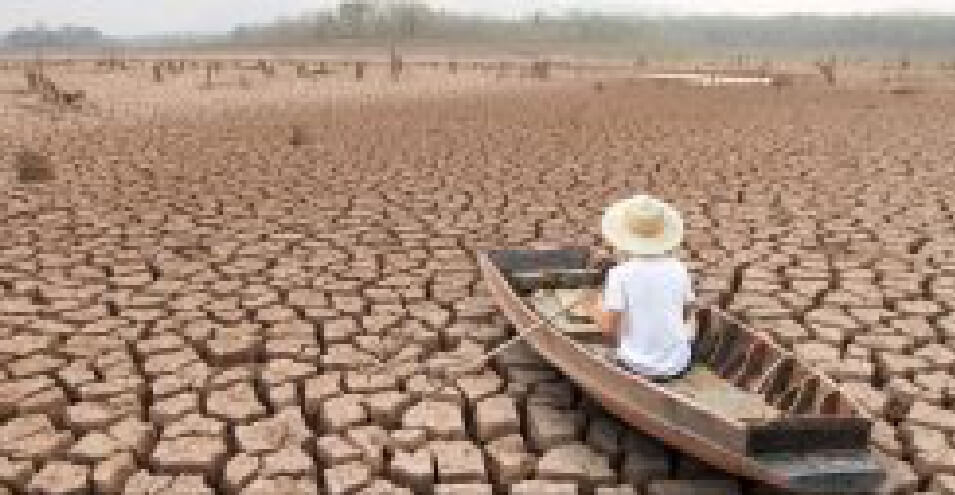
The vast province of Kermanshah, with an area of 25,009 square kilometers representing 1.5 percent of the country’s total land, has over the past 42 years been plundered and ravaged as if by the cruelest enemy, transformed into a barren, waterless, and desolate land. Kermanshah faces a severe water crisis, while the province’s environment has been destroyed.
All of the province’s rivers have dried up, and its springs have evaporated their last drops and disappeared. The province’s seven major rivers—Qarehsoo, Razavor, Garab, Morg, Gamasiyab, Deanor Aab, Simirreh, and others—have all dried up. Of all the beautiful and verdant springs that once existed in the province, nothing remains but cracked, dry soil at the bottom of their basins. Springs such as Taghebastan, Kheiralias, Sayab Yaavari, Khazarzandeh, and Sayab Niloofar, which were once believed to have no end and to connect to the boundless seas of the world, and which locals believed held the legendary cup of Jamshid thrown by Shiruyeh, son of Khosrow Parviz, and never found—have now dried up, with dust rising from their beds into the air.
With the drying of the province’s rivers and springs, the city of Kermanshah faces imminent danger of drinking water shortage. Currently, a significant portion of the city’s drinking water is supplied by the Gamishan Dam in Kamyaran, and if the dam’s water runs out, there will be no drinking water available in Kermanshah.
Throughout the province, there is no longer a single leafy tree to seek shade under to rest your tired body and find relief for a moment. Except for a few small areas that have managed to endure, the entire province appears as a scorching heat pyramid, with dry, sun-baked soil that torments your vision.
All this suffering has occurred only at the hands of incompetent officials and incapable, unqualified managers who, through negligence and irresponsibility, have brought calamity upon this province’s fate. They deprived it of its surface waters and exhausted its groundwater aquifers without measure for agricultural purposes, left its abundant natural forests unprotected, and discarded all planned environmental projects for the province’s future that had been considered before the Islamic Republic came to power to preserve the ecosystem. They forgot these plans, resulting in what should never have happened. A land where, according to experts, life will become impossible within less than two decades. Although this situation has occurred or is occurring in many other provinces of the country, Kermanshah province bears its own special suffering and compounded problems.
Kermanshah Province on the Brink of Water Bankruptcy
Kermanshah province, with a population of over two million people, was once one of the relatively water-rich provinces with vast fertile lands and plains. Due to the incompetence, negligence, and political maneuvering of Islamic Republic government officials in dealing with water, soil, and environmental issues over the past four decades, the province has now transformed into a dry, sun-baked region facing water bankruptcy and land subsidence—phenomena referred to as the catastrophe of the century.
Over the past forty years, due to faulty planning and negligence stemming from mismanagement and discrimination among cities for political reasons, all of the province’s surface waters—including seven rivers, dozens of springs, and marshes—have been diverted away from the province. Its waters have been taken out of the province, and instead, through digging deep and semi-deep wells, both legal and illegal, all groundwater aquifer reserves have been extracted over four decades. Kermanshah province has been transformed into a region of dry, empty lands, now facing the brink of a major water crisis and land subsidence.
An Overview of Kermanshah’s Water and Soil Conditions
The Morg River in Sarfirozabad, Razavor in Kamyaran, Garab in Ravansar, Gamasiyab in Bistoon, Deanor Aab in Dinor, Qarehsoo, and Simirreh in Kermanshah are seven major rivers that flow through this province. All these rivers form the source of the major Karun River, which ultimately flows into Lake Hawizeh. These seven rivers, along with numerous seasonal streams, marshes, and hundreds of springs, had made the province verdant, cheerful, and prosperous.
Over the past four decades, despite the fact that precise scientific studies and plans had been conducted for the rational and optimal use of surface waters for irrigation in the province, with a vision for the province’s water and soil future for decades ahead, all these efforts and scientific studies were abandoned when the Islamic Republic came to power. Unfortunately, the massive volume of water from the seven flowing rivers in the province, without a single drop being used within the province, was diverted to unknown destinations. The government encouraged and incentivized farmers to dig deep and semi-deep wells and use groundwater. Not satisfied with this, the government also supplied drinking water to the province’s cities and villages from groundwater aquifers.
This resulted in, after forty years have passed, Kermanshah province now facing a massive and intractable water crisis and land subsidence, with farmers and herders in the province going bankrupt, migration from villages to cities continuing and expanding, and cities facing a dangerous water shortage crisis.
The Fated Destiny of Germaab Dam in White Mountain, Kermanshah
Before the Islamic Revolution, a diversion dam project had been studied to irrigate the vast plains of Mahidasht—the province’s largest plain—as well as Sarfirozabad, Sanjabi, Guran, Qalkhani, and Ravansar in the south, southeast, and southwest of Kermanshah province, with over 25 percent of the dam’s construction work already completed. With the construction of this diversion dam, planned for an area called Tangeh Germaab in White Mountain, part of the Simirreh waters would be diverted to Sarfirozabad Spring, and flowing through the natural riverbed of the Morg River, after irrigating the plains of Sarfirozabad, Mahidasht, Kozran, Sanjabi, Guran, Qalkhani, Ravansar, and others—totaling approximately 1,200 square kilometers—the water would continue its natural path back to the Qarehsoo River in a circular flow, ensuring not a single drop was wasted, with excess waters returning to the main basin. This was considered one of the most unique and singular water harvesting projects in the world.
Unfortunately, with the coming to power of the Islamic Republic, this great and beneficial project was abandoned. With the abandonment of this project, new plans for controlling the major Simirreh and Karun rivers were placed on the Islamic Republic government’s agenda. Based on these plans, no basis was created for the people of Kermanshah province to use surface waters, and farmers were given no permission to extract even the minimum amount from the seven mentioned rivers. Yet, the waters of these rivers were completely and coherently directed away through the Simirreh River’s course. After passing through the province’s lands, at least 18 small and large dams were constructed on the Simirreh and Karun rivers. Most of these dams had defects and problems, completely disrupting the ecosystem along their course for various reasons, creating complex and insoluble problems.
Beyond this major project, a plan existed for fencing natural resources in the province and afforestation within the natural forests of this section of the Zagros range to preserve and develop the region’s natural ecosystem, covering vast areas. Unfortunately, with the Islamic Republic coming to power, all these plans and programs were abandoned. The Germaab diversion dam project was forgotten, all fencing was destroyed, barbed wires were stolen, and tender seedlings among the vast oak forests all perished. Shepherds grazed their flocks in protected pastures and forests, and anything related to environmental protection disappeared.
Pumps That Completely Emptied Groundwater Aquifers Over Four Decades, Turning the Region into Wasteland
Instead of all those beneficial and studied plans, unfortunately the dangerous project of digging deep and semi-deep wells and unrestricted use of groundwater aquifers became the focus of Islamic Republic governments, replacing previous plans. Based on this, deep and semi-deep wells, both legal and illegal, were dug throughout the province’s plains, and permission for groundwater use was increasingly granted.
Water pumps worked around the clock, and farmers, competing with one another, exerted all efforts to extract as much groundwater as possible without any oversight. Meanwhile, irrigation was conducted traditionally, wastefully using dozens of times more water than necessary. One or two decades later, semi-deep wells dried up, and this time permission for so-called “breaking the bottom”—deepening wells further—became common practice. Farmers, encouraged by government incentives and loans, dug deeper wells to extract the last remaining drops of groundwater from the earth’s depths. As this process continued, now after four decades, there is neither water left in the rivers nor in even the deepest wells, and in some areas of the province, neither surface nor groundwater remains.
The vast oak forests have withered, and nothing remains of the province’s once abundant fruit orchards. This process continues spreading to other regions. Over 80 percent of the province’s traditional livestock operations have disappeared due to destroyed pastures and forests and lack of water and feed for animals, with the remainder barely breathing their last. Meanwhile, all industrial livestock operations in the province have gone bankrupt due to faulty planning and uncontrolled inflation and rising costs, with their owners becoming fugitives or imprisoned due to bank debts.
Currently, after more than forty years of this chaos, what remains for the province is scorching heat, dry land, and other harsh and destructive phenomena that continue deepening this environmental catastrophe and consequently the human catastrophe in the region.
A flood of migrations toward cities from areas whose water has run out and where not even temporary shelter remains has been occurring for a long time and continues spreading so rapidly that it will not be long before all villages in Kermanshah province are emptied of their inhabitants.
Source: Hrana