Continuing Suppression of Free Speech in Iran Under the Pretext of ‘Propaganda Against the System’
What are the manifestations of suppression of free speech in Iran? Why does the ruling authority continue to block the path of expressing opposing views and opinions in the harshest ways possible?
The intolerance of the ruling authority in hearing voices of opposition and criticism paves the way for suppressing free speech and dealing with opposing views. Who are the victims of this suppression? Issuing severe judicial sentences against writers and political and civil activists, suppressing protests, imposing strict censorship, and dealing with any critical voice against the current situation are aspects of the ruling authority’s methods in suppressing free speech. Many writers and human rights activists face accusations of “propaganda against the system” merely for expressing views opposed to the ruling authority or criticizing the current situation, and the space for expressing opinions and criticism becomes narrower and more restricted day by day. Although existing laws have repeatedly emphasized citizens’ right to free speech, it appears that the ruling authority views this “freedom of expression” only within its desired framework and condemns any form of criticism or expression of opinion contrary to its taste to suppression and punishment. The fundamental question is whether the intensification of protests in society and the rise of critical voices expand the methods of suppressing free speech and dealing with civil activists beyond previous levels?
The Heavy Front of the Ruling Authority Against Free Expression of Opinion
Existing Iranian laws have repeatedly emphasized the issue of free speech; Article 23 of the Constitution explicitly states: “Thought investigation is forbidden and no one can be violated and punished merely for having an opinion.” Article 8 of the Constitution does not monopolize “enjoining good and forbidding evil” to the government and explicitly grants this right to the people against the government, and from this perspective, no critic should be prosecuted and punished. As for the publication of opinions and thoughts, Article 24 of the Constitution declares publications and press free in expressing matters “except when it violates the principles of Islam or public rights.” Of course, in practice, despite the fact that the criticism of many critics has neither violated the principles of Islam nor caused any disruption to public rights, it has not been tolerated by government officials and has faced judicial and security measures.
Although it seems that finding explicit legal examples in defense of recognizing opposing and critical voices in existing laws is not a difficult task, the ruling authority’s approach to the issue of free speech and the pursuit of suppression methods and security and judicial measures against writers, artists, intellectuals, and civil activists shows that relying on these legal provisions in changing the ruling authority’s outlook and dealing with its critics and opponents is ineffective.
The continuation of security and judicial measures against opposing and critical writers and intellectuals using the narrative based on the accusation of “propaganda against the system” shows that from the perspective of the Iranian judicial system, the expression of any opinion and view that is not pleasing to the ruling system is condemned to judicial action.
The dimensions of these measures appear in different groups of society and in various forms; from writers and poets and journalists to civil activists and some media figures who were accused of “propaganda against the system” for expressing their opinions.
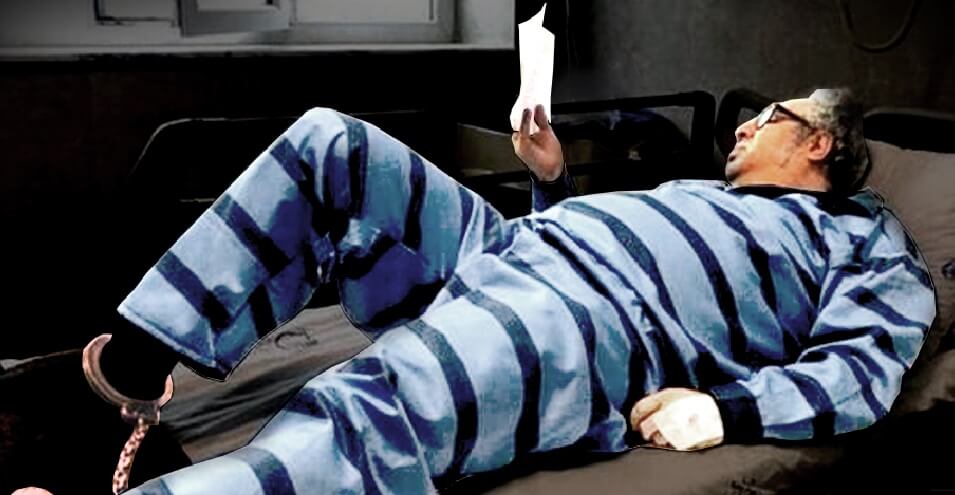
The continued detention of Baktash Abtin, Kian Bajeneh, Reza Khandan, and Arash Ganji, members of the Iranian Writers Association, who have been in prison since October of last year on charges of “propaganda against the system and action against national security,” is a clear example of the ruling authority’s approach to the issue of “free speech.”
Recently, the American PEN Association announced that it would honor three imprisoned members of the Iranian Writers Association—Baktash Abtin, Kian Bajeneh, and Reza Khandan—at its annual ceremony for defending free speech and peaceful opposition to government censorship. According to the American PEN Association, Iran ranks fourth among countries with the highest number of imprisoned writers and intellectuals in prisons.
Examples of dealing with artists and suppressing free speech have been repeatedly observed in different periods; recently, security and judicial forces arrested Tomaj Salehi, a young rapper whose some protest works had gained many supporters, at his residence and transferred him to Dastgerd Prison in Isfahan. This protest singer was released after a few days on bail. Amir Raisian, Tomaj Salehi’s defense lawyer, had said that judicial officials informally told Tomaj Salehi’s father that the charge against his son was propaganda against the system.
In recent years, with increased public criticism and opposition from various classes, the methods and tactics of the judicial and security apparatus in dealing with these critical and opposing voices have expanded. One can observe part of this approach in judicial measures against civil activists who, through disclosure and criticism of the current situation in cyberspace, recount aspects of the prevailing injustice. In recent days, Sepideh Gholia, a civil activist on leave from prison, wrote on her Instagram page about the deplorable conditions of the women’s ward of Bushehr Central Prison and about torture, abuse, and detention conditions of imprisoned women. Following the publication of this report, the General Directorate of Prisons of Bushehr Province filed a complaint against Sepideh Gholia, and the Second General and Revolutionary Prosecutor’s Office of Bushehr summoned Ms. Gholia on charges of “publishing computer lies and propaganda activities against the system.”
This measure, which shows increasing intolerance of the ruling authority toward the voice of criticism and opposition, is in a way one of the methods of the ruling authority’s confrontation with the issue of free speech.
Perhaps one can say that this explicit and harsh opposition to free speech is most evident in the arrest of lawyers who intended to file complaints against those responsible for the coronavirus situation in Iran; a situation where merely the “intention” to do something contrary to the ruling authority’s preference leads to the arrest of several lawyers and civil activists.
From Suppression of Protests to Censorship of Artists
Although various forms of the ruling authority’s dealing with the issue of free speech are evident in multiple fields, one can say that the ruling authority’s confrontation with the issue of free speech in dealing with the production of artistic and cultural works reflects the ruling authority’s approach more than any other sector; an outlook that reveals itself most clearly in the issue of “censorship.”
Some time ago, more than three hundred Iranian writers, artists, academics, civil activists, and journalists, referring to the continuation of suppression of free speech in Iran, warned in a statement that blocking any form of criticism and inquiry under the pretext of “action against national security,” especially with the existence of structural inefficiency and corruption, would lead to “major social collapse.”
Part of this statement reads: “Freedom of speech brings criticism, and society’s dynamism and development are possible within the scope of criticism. Criticism and freedom of speech are everyone’s right. Imprisonment of free speech and imposition of censorship and siege of social actors pave the way for violators, therefore standing against censorship is a kind of struggle against ignorance and destruction, and giving in to censorship spreads corruption and abnormality.”
The authors of the statement warned that if the senior leaders of the system ignore civil liberties and including freedom of speech, “rigidity and naive thinking in the form of sacred ignorance will lead to the institutionalization of corruption and further increase the grounds for the despair of the Iranian people.”
The coming to power of the Ibrahim Raisi administration has increased concerns about the intensification of the censorship process and dealing with artists and intellectuals. A look at Ibrahim Raisi’s background and certainly the programs of the Minister of Culture and Guidance of his administration clarifies the reasons for concerns among artists, journalists, and cultural figures more than ever before.
Perhaps one can say that the ruling authority’s persistent efforts to suppress free speech and impose censorship in Iranian artistic and intellectual circles, in addition to continuous censorship, have intensified various pretexts and strict measures for non-governmental and independent artists’ activities.
The involvement of a large section of society with common crises and foremost among them the “livelihood crisis” is one of the main reasons for the spread of popular protests in Iran. Protests that are expanding among various classes of society and are undoubtedly closely linked to the issue of free speech. Although the ruling authority has always tried to impose its narrative of economic protests and, through threadbare scenario-building, facilitate dealing with these protests, and in some cases, with excessive violence, put suppression of these protests on the agenda, the accumulation of problems and hardships has not silenced the cry of demands in various classes of society.
Although Article 28 of the Charter of Civil Rights of the Islamic Republic of Iran states that “citizens have the right to criticize, express dissatisfaction, call for good, advise on the performance of government and public institutions, and the state is obligated to promote and expand a culture of criticality, tolerance, and forbearance.” But it seems that ruling institutions, instead of “expanding a culture of criticality, tolerance, and forbearance,” are more seeking to find a way to justify the suppression and punishment of critics and protesters.
Forcing some civil activists and critics to the current situation to make television confessions such as Esmail Bakhshi, a labor activist, or illegal measures against some journalists solely for reporting and informing about a case or a specific event are examples of this approach.
Source: Human Rights Campaign