Ministry of Youth: Child Marriage Has Quadrupled in Some Parts of Iran
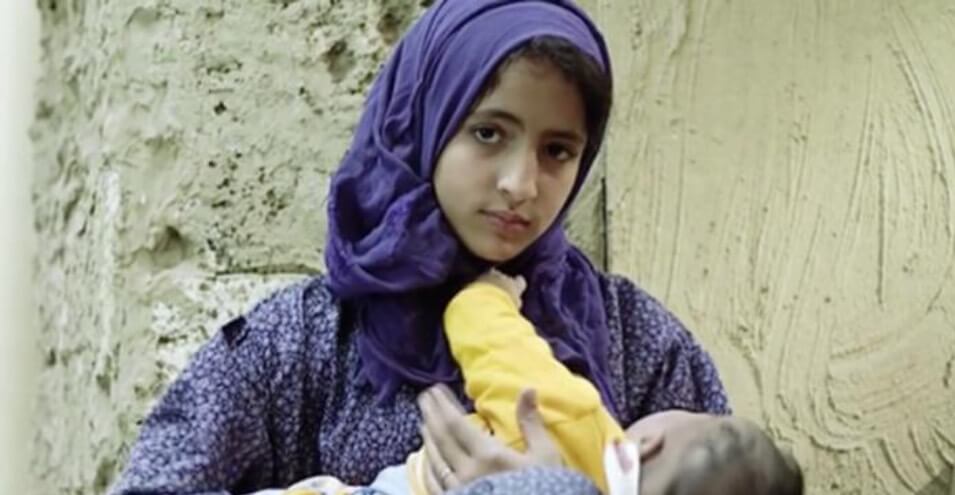
The Ministry of Sports and Youth has warned about a fourfold increase in child marriage and attributed it to increased marriage loans. No age restrictions have been applied for those benefiting from marriage facilities, leaving room for child exploitation.
A senior official at the Ministry of Sports and Youth has warned about a fourfold increase in child marriage in Iran, attributing it to increased marriage loans. This senior official does not consider marriage facilities a step toward increasing marriage in the country. This is while the institution providing marriage facilities has not applied age restrictions for benefiting from this loan and, according to experts, has opened the door to child exploitation.
Mohammad Mahdi Tandguyan, Deputy for Youth Affairs at the Ministry of Sports and Youth of the Islamic Republic of Iran, has reported a fourfold increase in child marriage in Iran following the increase in marriage loans.
According to Tandguyan, impoverished parents in deprived areas, who sometimes suffer from cultural poverty as well, are “trafficking” their underage children in the wake of increased marriage loans.
The Deputy Minister of Youth and Sports expressed his dissatisfaction on Tuesday, December 10, in an interview with ISNA regarding the increase in marriage loans and their repayment terms, adding that this measure has not only failed to increase marriage rates but has also created conditions for the growth of social harms.
Tandguyan warned of the misuse of marriage facilities and said: “Statistics show that following the increase in marriage loans, child marriage has also increased severely in some areas, and compared to last year [1397], this issue has increased up to fourfold in some parts of the country.”
According to information contained in the “Marriage Interest-Free Loan Facilities” system of the Central Bank of the Islamic Republic of Iran, newlyweds receive 30 million tomans in marriage facilities each after completing the registration process. Each couple must pay approximately 1.1 million tomans monthly in installments to repay this loan, a figure that according to Mohammad Mahdi Tandguyan exceeds the financial capacity of many young people.
Age Restrictions for Marriage Loans
The question that arises in this context is whether the law has considered a mechanism to protect children in deprived areas and whether age restrictions are applied for benefiting from interest-free marriage loan facilities.
Referring to the Central Bank’s system in the “Frequently Asked Questions” section shows that no age restrictions have been considered for benefiting from these facilities, and it is explicitly stated in this system: “Initially, each spouse registers individually in the marriage system, and after determining the branch and going through the relevant procedures, marriage facilities are paid to their legal guardian or custodian.”
What Do Statistics Say About Child Marriage?
Tayebeh Siavoshi, a member of the Women’s Faction in Parliament, stated in September this year, citing civil registration statistics, that in the first six months of 1397, the marriage rate of girls (ages 10-14) was approximately 7 percent of total marriages, meaning 17,486 cases.
Based on a report from the “Cultural Studies Office of the Research Center of Parliament,” between 1391 and 1395, between 4.9 to 5.6 percent of girls’ marriages were in the age group of 10-14 years. The Director General of Civil Registration of Kohgiluyeh and Boyer-Ahmad had previously reported the registration of 9 marriages of children under 10 years of age in 1396 in this province.
Since many underage marriages in Iran are not registered, there is no accurate statistics on them.
Society’s Sensitivity to Child Marriage
While a senior official at the Ministry of Sports and Youth warned about the fourfold increase in early marriages, society has become more sensitive to this issue compared to before and strongly opposes it.
The most recent case of underage marriage that became public and sparked public outrage on social networks was the marriage of an 11-year-old girl to a young man in “Behmai” city in Kohgiluyeh and Boyer-Ahmad province in September 1397, which was annulled following public pressure and the pursuit of civil activists and local authorities in that province.
In the final days of 1397, the story of a child’s life unfolded in the media; the story of an 11-year-old girl, a resident of Ilam, who was married to a 50-year-old man. According to the Imam Ali Society’s report, the girl’s drug-addict family gave her in marriage to a 50-year-old man with seven children and another wife for 15 million tomans. The pursuit of this non-governmental organization and the welfare organization bore fruit, and the girl, named “Raha,” was removed from this life.
Source: DW