Narges Mohammadi: Beginning Another Year of Unjust Imprisonment
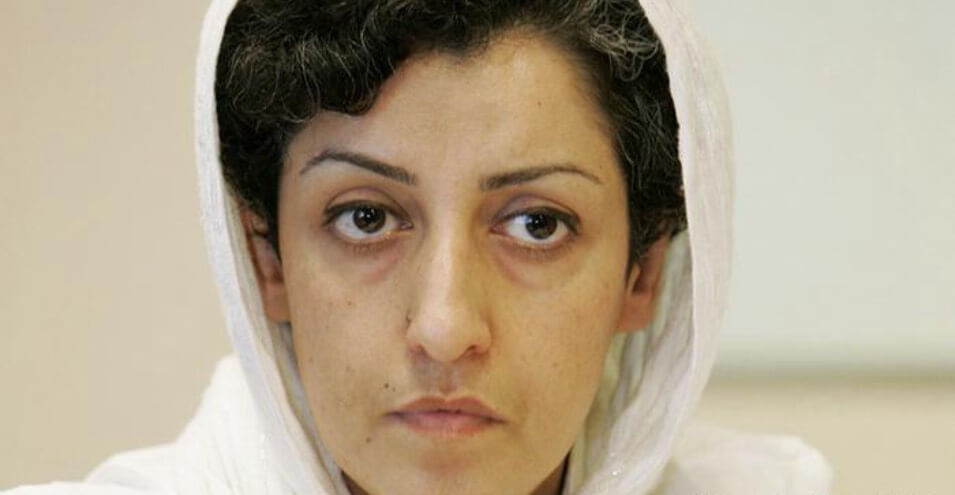
The spokesperson of the Defenders of Human Rights Center, in her fifth year of imprisonment, has described the condition of women prisoners in Zanjan Prison. She writes that judicial authorities have deprived her even of receiving books, and she spends her time listening to the stories of her cellmates.
The vice president and spokesperson of the Defenders of Human Rights Center has explained the condition of imprisoned women and her own situation in a letter marking the anniversary of her imprisonment. She writes that she is beginning another year of unjust imprisonment among the victims of poverty, corruption, and patriarchal laws: “… I spend my time among my sisters, those whose rights I have fought for, and alongside people whose poverty and hunger moved me to protest.”
Narges Mohammadi says that by order of judicial and security authorities, she is not even given books: “I wished they would give me a book on my birthday, but what a shame! This year’s gift for me is sitting knee to knee and looking eye to eye, and hearing the voice of colorless victims whose fate has brought pain to my bones and left me bare in the battlefield of suffering and love, so that I may understand what devastation stealing a pinch of salt for a hungry child brings, and what ruin prostitution causes to avoid sleeping on the streets, and how the lack of women’s divorce rights drags them to the gallows and the stoning pit.”
She has been imprisoned since May 6, 2015, to serve her 16-year sentence. Six years of this sentence was issued for propaganda against the system and another 10 years for her activism in the “Step by Step to Abolish Execution” campaign. She served her sentence in Evin Prison until December 2019, when she was forcibly transferred to Zanjan Prison with physical violence by the Evin Prison director. The reason for this transfer was her sit-in and several other prisoners’ sit-in in solidarity with flood and earthquake victims and November protests in the Evin Prison office. Evin authorities banned the protesters from visits and denied them the right to telephone contact with their relatives.
Ms. Mohammadi writes in her recent letter that witnessing the suffering and misery of imprisoned women has been a rebirth for her: “Here within these harsh and cold walls, brokenhearted yet cheerful and standing, I begin another year of unjust imprisonment. This living is difficult but reassuring, so that I may believe that the effort to realize justice, freedom, and human rights is worth losing everything I have, even not hearing the voice of my children Ali and Kianaye.”
Narges Mohammadi, a mother of two, suffers from pulmonary embolism and muscular dystrophy and has been deprived of telephone contact with her children for several months. Her children joined their father in France after their mother’s imprisonment. Taghi Rahmani, a political activist who himself spent 14 years in Islamic Republic prisons, has not seen his wife for eight years.
Two weeks before this letter, Ms. Mohammadi’s lawyer announced that her conditional release had been rejected and she is being held, contrary to the principle of separation of crimes, alongside dangerous prisoners and has been threatened with death by one of them.
Ms. Ezra Bazargan, Narges Mohammadi’s mother, also previously wrote in a letter to the head of the judiciary that the treatment of her daughter is cruel and inhumane. Instead of addressing the family’s concerns about the non-standard conditions in Zanjan Prison, officials threaten them: “My daughter has contracted multiple diseases in solitary cells and over the past five years in prison has undergone three major surgeries and in these years has only been granted one three-day furlough.”
After Narges Mohammadi’s transfer to Zanjan Prison, security authorities opened two new cases against her, citing events during her imprisonment as the reason. The Zanjan Prosecutor’s Office presents “publishing political statements, organizing educational classes, and protest sit-ins in the women’s ward” as evidence of new charges. She has been asked to write a letter of repentance in order to be released from prison alive.
Shirin Ebadi, Nobel Peace Prize laureate, has accused the Ministry of Intelligence of intending to kill Narges Mohammadi.
Source: DW