Prison Sentences for Manouchehr Bakhtiari and Omid Yousefi: Islamic Republic’s Response to Demands for Justice
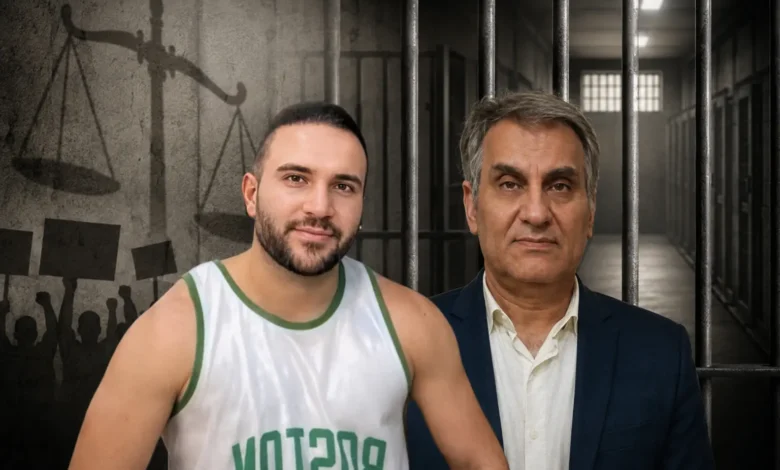
Continuing the judicial pressure on protesters and families seeking justice in Iran, Manouchehr Bakhtiari, father of Poya Bakhtiari who died in the November 2019 protests, has been sentenced to a total of 10 years imprisonment in a new case, with five years subject to enforcement. Simultaneously, Omid Yousefi, a 35-year-old wrestler and one of those detained during December protests, has been sentenced to four years in prison. These verdicts have once again intensified concerns about the Islamic Republic’s security and judicial treatment of justice-seekers and popular protests.
Two legal cases in Bandar Abbas and Karaj, in quick succession, have brought the issue of how the Islamic Republic’s judiciary treats families seeking justice, protesters, and critics back into focus. In one case, a father continues to face prison and legal proceedings years after his son’s death, and in the other, a young athlete faces a four-year prison sentence following his detention during December protests.
According to reports by Hengaw and Hrana, Manouchehr Bakhtiari, father of Poya Bakhtiari, has been sentenced to a total of 10 years in prison by the first branch of the Revolutionary Court in Bandar Abbas in a new case. The verdict was verbally announced to him at Bandar Abbas prison on Tuesday, September 1, 2025 (September 10, 1405 in the Persian calendar). Hearings in this case were held on June 4 and June 16, and the case was initiated by a complaint from the Bandar Abbas prosecutor.
According to the verdict, Bakhtiari was sentenced to five years imprisonment for “sending videos to foreign social networks contrary to national security,” four years for “inciting people to war and murder against each other with the intent to disrupt national security and create social unrest,” and one year for “propagandistic activity against the Islamic Republic system through media alignment with adversaries.” Under the law on aggregating sentences, the severest penalty—five years imprisonment—will be enforceable.
However, the significance of this verdict is not limited to the numbers five or ten years of imprisonment. Manouchehr Bakhtiari is a recognized figure among families seeking justice from the November 2019 protests; a family that, instead of receiving answers about their son’s death, has faced arrest, imprisonment, exile, and multiple legal cases in subsequent years.
His 27-year-old son, Poya Bakhtiari, died during the November 2019 protests in Karaj after being shot by government forces. A UN report on Manouchehr Bakhtiari’s case previously stated that after his son’s killing, he sought accountability for the death and, due to his activities, has faced arrest and imprisonment on security-related charges. The same document raised concerns about his physical condition, allegations of mistreatment during interrogation, and violations of his rights.
Iran Human Rights Organization, in a case file it published regarding Bakhtiari, states that despite his efforts to seek justice, no one has been arrested or tried in connection with Poya Bakhtiari’s killing; instead, multiple legal cases have been opened against his father. The organization also reported his deprivation of certain rights, including adequate access to medical treatment and fair justice proceedings.
After enduring more than four years of imprisonment in Qazvin’s Chubindar Prison, Bakhtiari was released in September 2025, but his release did not mean a return to normal life; he was immediately transferred to Bandar Abbas for exile enforcement. Iran Wire reported that security forces even prevented his attendance at a memorial ceremony marking the sixth anniversary of Poya’s death, forcing him to participate remotely from his place of exile.
Several months later, in January 2026, Bakhtiari was arrested again in Bandar Abbas. Iran International also reported, citing statements from his sister, that this arrest occurred while Bakhtiari was still serving his mandatory exile period.
From the perspective of international bodies, this is not merely a personal case file. In 2025, representatives of Benelux countries at the UN Human Rights Council characterized Manouchehr Bakhtiari’s arrest as arbitrary detention in connection with his efforts to seek justice and called for his immediate release.
In the second case, Omid Yousefi, a 35-year-old wrestler and athlete from Shaheen Villas in Karaj, has been sentenced to four years imprisonment. According to Hengaw’s report, the charges against him include possession of weapons and “leading” the protests. After being identified through CCTV footage from the December 18-19 protests in the Gohardasht area, he was arrested on December 23 during a security force raid on his home and is now serving his sentence at Qazlhessar Prison in Karaj. Security forces used violence and beating during his arrest.
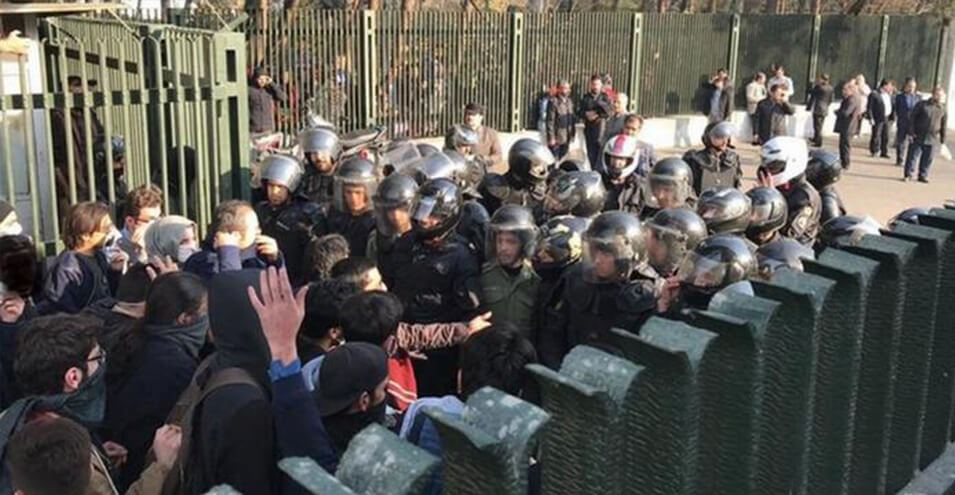
For this case as well, although no independent report specifically about Omid Yousefi was found in international sources, the security atmosphere surrounding the December protests has been extensively documented in reports by international human rights organizations. Amnesty International and Human Rights Watch reported in January 2026 on the unlawful use of force, widespread arrests, and arbitrary detentions during the suppression of protests. Amnesty International also spoke of the detention of thousands of people, including children, and increasing concerns about torture and enforced disappearance of detainees.
Human rights reports also show that Karaj and Alborz Province were among areas that faced widespread arrests during these protests. Hengaw reported multiple arrests in Karaj during that period, and Amnesty International has published reports on deadly repression in Alborz Province and security forces’ use of live ammunition and other suppression tools.
The common thread between the two cases, beyond the differences in charges, is evident in a bitter reality: within the Islamic Republic’s judicial structure, protest, sharing content, demanding accountability, and even connection with street demonstrations can become a security case and subsequently years of imprisonment. On one side of this equation stands a family still seeking justice for their son’s death, and on the other, a citizen who faces a prison sentence for participating in protests.
This situation becomes even more troubling when coupled with the fact that the fate of victims of suppression remains unanswered. Regarding Poya Bakhtiari, his family’s fundamental question remains: who was responsible for the fatal shooting of a 27-year-old young man, and why has his father, instead of receiving independent investigation into the matter, repeatedly faced imprisonment and legal proceedings?
From the perspective of human dignity and justice, imprisoning a justice-seeker instead of responding to their demands for accountability cannot solve the problem. Likewise, imposing heavy sentences on protesters without guaranteeing fair proceedings and effective access to lawyers only deepens the gap between society and the judicial system.
What is seen today in Manouchehr Bakhtiari’s and Omid Yousefi’s cases did not occur in a vacuum; these two cases are part of a larger picture of Iran where families of victims, protesters, civil activists, and even athletes can face security and judicial treatment. International human rights institutions have repeatedly emphasized that the response to protest and demands for justice should be within the framework of fundamental human rights and fair proceedings, not through arrest, exile, and severe punishments.
For people who have long faced economic crisis, social pressure, political restrictions, and suppression of dissent, the continuation of such verdicts is not merely a judicial news item; it is a sign of deepening rift between government and society. In such circumstances, the main issue is no longer simply the number of years of imprisonment, but this fundamental question: in a system that claims responsibility for administering justice, where is the place for the justice-seeker, the protester, and the demanding citizen?