Three Young Bahai Believers Detained in Shiraz; Religious Minorities Under Pressure from Islamic Republic
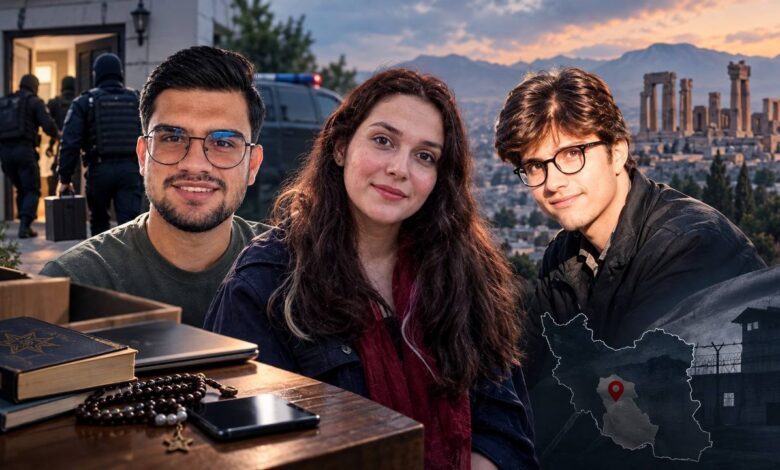
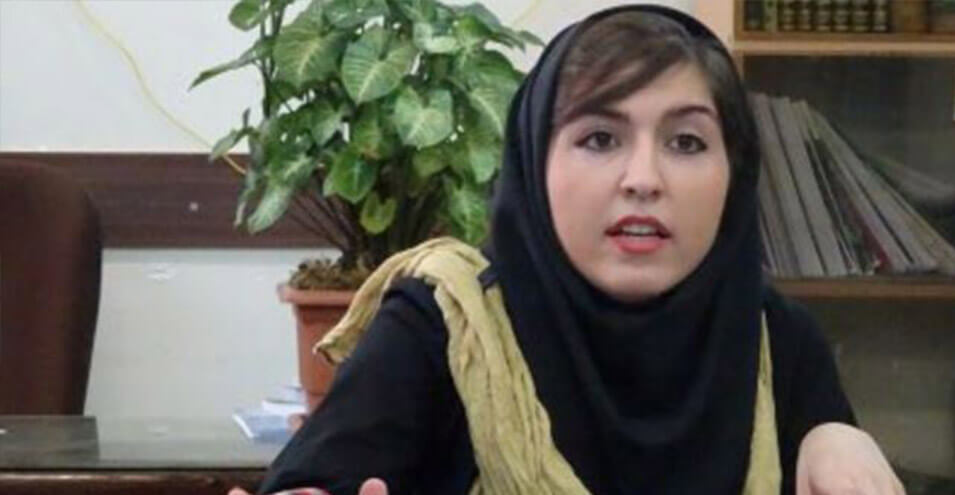
Sarina Zaeri, Barbod Sepahri, and Arshia Jaberi, three young Bahai believers, were arrested during simultaneous raids by government forces on their homes in Shiraz and transferred to an undisclosed location. Security forces, without presenting any judicial warrant, conducted searches of the residences and confiscated personal belongings and items related to their religious beliefs. No information is available regarding the charges against or the detention location of these three citizens, and the condition of Sarina Zaeri, who suffers from a chronic respiratory illness, has heightened her family’s concerns.
Sarina Zaeri, Barbod Sepahri, and Arshia Jaberi were arrested on Monday, September 23, 2026 (Shahrivar 23, 1405 in the Persian calendar) in Shiraz. These arrests once again highlight the record of suppression of religious minorities in the Islamic Republic.
Government forces conducted simultaneous and separate raids on the family homes of these three young people between 6 and 7 a.m., and after conducting thorough searches of the residences, arrested them. According to sources, security forces did not present any judicial warrant during this operation.
Personal belongings, electronic equipment, and items related to the Bahai beliefs of these three citizens were also seized during the searches. As of the time of this report, it remains unclear which security agency is responsible for their arrest, what charges have been leveled against them, and in which detention facility they are being held. The families of these three young people continue to await information about their fate.
Among these three detainees, the condition of Sarina Zaeri has raised particular concerns. This 20-year-old citizen suffers from a chronic respiratory illness, and the lack of information about her condition and the possibility of being denied access to specialized medications have caused severe anxiety for her family and loved ones. Given that her detention location remains unknown, her family does not know whether the medications and medical care she needs have been provided to her.
Denial of medications and proper treatment to ill prisoners is one of serious concerns in security detention cases in Iran; a concern that could become more serious if the lack of information about Sarina’s condition continues.
The arrest of these three young people cannot be considered an isolated incident. In its monthly report on the situation of Bahais, the organization stated that in August 2026 alone, at least 14 Bahai citizens were arrested in Iran. Additionally, prison sentences totaling more than 34 years have been handed down against 14 other Bahai citizens, and at least five Bahai residences have been searched with personal property confiscated.
The United States Commission on International Religious Freedom (USCIRF) also stated in its 2026 annual report that the Iranian government systematically targets non-Shiite religious minorities, including Bahais, Christians, Jews, and Sunnis. This organization has also reported an increase in pressures and the use of arrest, social restrictions, and harsh sentences against religious minorities.
Pressure on religious minorities in Iran is not limited to the Bahai community; Christians and other minorities are also at risk. Christians, particularly those who have converted from Islam and those active in house churches, have faced arrest, security investigations, imprisonment, and restrictions on freely practicing their religious rites in recent years. In 2026 as well, multiple cases of arrest and harsh sentences against Christians have been reported.
For example, USCIRF has documented the case of a newly converted Catholic Christian who in 2026 was sentenced to more than 9 years in prison on charges including “propaganda against the system” and “conspiracy against national security.” These pressures continue despite the fact that freedom of religion and conscience is a fundamental human right; that is, an individual should be able to hold their religious beliefs, worship, and practice their religious rituals without fear of arrest and punishment.
However, in the Islamic Republic, different religious beliefs can become grounds for arrest and the opening of a security case. What matters in the cases of Sarina Zaeri, Barbod Sepahri, and Arshia Jaberi is not merely three new arrests; rather, it is these cases placed alongside years of pressure on religious minorities.
Bahais in Iran are not even recognized as an official religious minority by the Islamic Republic’s constitution, and over the past decades have faced restrictions in education, employment, business, confiscation of property, destruction of religious sites, arrest, and imprisonment. The USCIRF report also documents the continuation of arbitrary arrests, home searches, property confiscation, and economic discrimination against Bahais. Christians and other religious minorities face various forms of pressure as well.
Under such circumstances, raids without presenting judicial warrants on the homes of three young people, confiscation of their personal and religious belongings, and their transfer to an unknown location is not merely a security operation; rather, it is another sign of an environment in which difference in belief can carry a heavy cost for citizens.
The fate of Sarina Zaeri, Barbod Sepahri, and Arshia Jaberi remains unknown, and their families await answers regarding the location of their detention and the condition of their loved ones.