Death Sentence of Siavash Jamshidi Carried Out; Protesters Heading to Gallows One by One
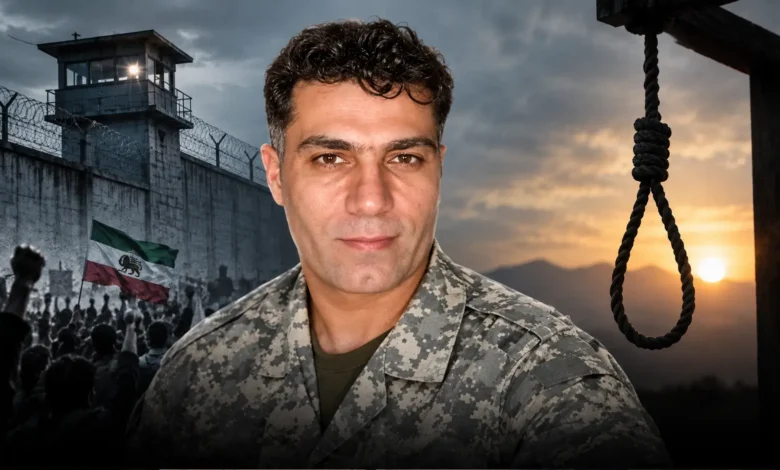
Siavash Jamshidi Kheirabadi, a Lur citizen from Shahrekord and one of those arrested during the December 2025 protests, was executed on Saturday morning, September 2, 2026, at Shahrekord Central Prison. This execution adds his name to the list of protesters who, following the widespread December protests, have been sent to the gallows not in streets or on battlefields, but after trials in the Islamic Republic’s judicial system.
According to reports by human rights organizations Hengaw and Hrana, the judiciary has confirmed the execution of Jamshidi. State media claims he was present on Nasserkhosrow Street in Shahrekord during the December 18 protests and was arrested two days later. The judicial system had brought charges against him including “waging war by brandishing firearms,” “assembly and conspiracy against the country’s security,” and “organizing anti-security activities in cyberspace.”
In contrast, government-aligned media outlets, following the execution, have presented a different narrative, describing Jamshidi as an “armed ruffian” with a criminal record. These claims have been made by official media, and independent information capable of fully verifying all these claims is not available. What is certain is the execution of his sentence following arrest in connection with December protests and the issuance of a death sentence on security-related charges.
Siavash Jamshidi’s case, however, did not occur in a vacuum. His execution takes place amid warnings from human rights organizations for months about the conversion of capital punishment into a tool for suppressing December protesters. Human Rights Watch has stated that between March 18 and the end of August 2026 alone, Islamic Republic authorities announced 29 executions in connection with the December 2025 and January 2026 protests, with at least 59 others executed in political cases and on vague security charges.
Human Rights Watch also states that many of these cases have been accompanied by extremely abbreviated and unfair judicial processes; in some cases, the time between arrest and execution has been only a few weeks, and in other cases, the entire process from arrest to execution has taken less than eight months. This organization has also reported the use of torture-tainted “confessions” and vague security charges against protesters.
Jamshidi’s execution follows previous executions of December protesters. Iran Human Rights Organization reported in July that with the execution of Erfan Esfahani and Gol Mohammad Mohammadi, the number of protesters executed in connection with the January 2026 protests had reached at least 23.
Amnesty International, in its report on the execution of protesters, including references to the cases of Amirhossein Safari and Abolfase Sepahi, stated that these individuals were sentenced to death following highly unfair trials in cases related to Isfahan protests. The organization has characterized the use of capital punishment against protesters as part of intensified repression following the protests.
Now Siavash Jamshidi’s name has been added to this list; a protester whom the Islamic Republic’s judicial system condemned to death on serious security charges and whose sentence was carried out today. For his family, protest and legal redress are no longer limited to a court case; with the execution of the sentence, the possibility of return and renewed defense of a human life has been lost forever.
What makes this process more disturbing is its continuation. Protesters arrested during December 2025 protests have been facing death sentences one after another for months, and many have been hanged. Human Rights Watch has explicitly stated that Islamic Republic authorities are executing protesters and political opponents weekly and has warned that dozens of others remain at risk of execution.
Under such circumstances, the issue is no longer just one case or one prisoner; it is the transformation of the gallows into a continuation of the same repression that began on Iran’s streets. If protest, followed by arrest, then security cases, and finally execution, becomes a recurring chain, the death penalty will effectively transform from a judicial sentence into a tool for creating fear in society; the very thing human rights organizations have warned about.
Siavash Jamshidi was executed today; but the question about the fate of dozens of other protesters who remain in Islamic Republic prisons facing death sentences or the risk of such sentences being issued persists. His execution is not the end of this case, but part of a chain that human rights organizations have warned will continue.