Reverend Jack Hibbs Meets Prince Reza Pahlavi; “Iran Can Become a Land of Gospel Revival”
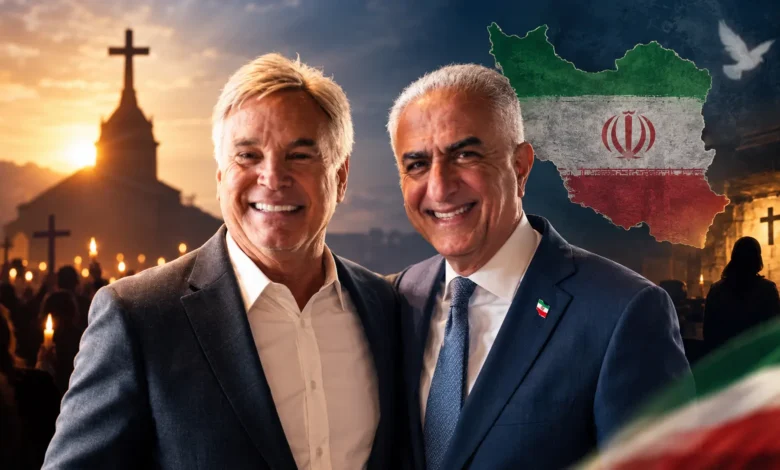
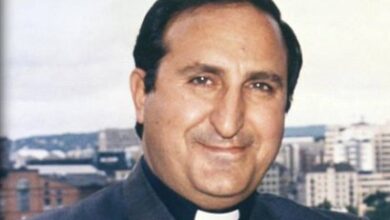
The release of a video documenting a meeting between Reverend Jack Hibbs, one of the most prominent leaders of evangelical Christianity in America, and Reza Pahlavi has once again drawn attention to how some American Christian leaders view Iran’s future and the status of the underground church in the country. This meeting, alongside Hibbs’s previous positions, demonstrates that for this pastor, Iran is not merely a political or geopolitical issue; he also follows developments in the country from the perspective of religious freedom, the growth of Christianity, and the future of the Iranian church.
Jack Hibbs, senior pastor of Calvary Chapel Chino Hills and host of the program “Real Life with Jack Hibbs,” has spoken repeatedly about Iran in recent months. In one of his programs on the TBN network, referring to the situation of Iranian Christians, he stated that Iran’s underground church holds special importance for him and emphasized that Iranian Christians need the support and solidarity of the global Christian community. Hibbs has also described Iran as a country that could witness a “spiritual revival” and expressed hope that the Gospel would spread from Iran to other countries in the region.
In this same series of programs, Hibbs also discussed the growth of Christianity in Iran and claimed that the church is expanding among Iranians. This claim is made despite the fact that the actual size of the population of converted Christians in Iran remains unclear due to the lack of official statistics and the hidden nature of a significant portion of house churches. Nevertheless, multiple international reports have documented the activities of house churches and the increasing security pressure on these Christian citizens.
The significance of Hibbs’s viewpoint becomes even greater when we place his positions on Iran’s future alongside his connection with Prince Reza Pahlavi. He has engaged in dialogue with Prince Reza Pahlavi and has spoken about his potential role in Iran’s political future in his television programs. In one TBN program, Hibbs, referring to Reza Pahlavi, discussed the possibility of his role in a period of political transition in Iran and emphasized the necessity for peaceful transition and the holding of free elections.
However, in Hibbs’s narrative, Iran’s issue is not limited to political change alone. He has repeatedly emphasized his belief that one of the most important developments possible following a change in Iran’s political conditions would be enabling the church to operate freely and facilitating the spread of the Gospel message. In one TBN program, he discussed the possibility that a future Iran could become a venue for disseminating Christianity’s message throughout the region.
Hibbs has a long history of following developments in Iran. In his discussions about the 1979 revolution and its aftermath, he has also referenced the religious restrictions in the Islamic Republic and the situation of Christians. In his programs, Iran has repeatedly been discussed in connection with the “underground church,” converted Christians, and the possibility of Christianity’s growth among Iranians.
This perspective is concurrent with human rights reports on the situation of Iranian Christians. The British government report for 2026 states that Christian citizens, particularly leaders and organizers of house churches, continue to face arrest and persecution, and in some cases, security-related charges and accusations of “propaganda against the system” have been used against them. Therefore, Hibbs’s emphasis on the “underground church” is not merely a media concept; some Persian-speaking Christians in Iran are forced to conduct their religious activities outside formal structures and in home gatherings due to concerns about security enforcement.
His meeting with Reza Pahlavi is significant from this perspective for the Iranian Christian community. The meeting demonstrates that the issue of Iran’s future and religious freedom has gained attention among some leaders of evangelical Christianity in America—leaders who, on one hand, follow Iran’s political developments and, on the other hand, view Christianity’s growth in Iran and the situation of Christians under pressure as part of the country’s future.
However, Hibbs’s view on the “rapid growth of Christianity” in Iran should be understood within the framework of his own statements and Christian sources, since due to severe restrictions on access to information inside Iran, there are no independent statistics that could determine the precise scale of this growth. What can be verified is the continuation of house church activities and, conversely, the ongoing arrests and pressure on some Christians and leaders of Persian-speaking churches.
For Iranian Christians, the significance of such meetings ultimately returns to a fundamental question: how much will Iran’s future, regardless of political developments, enable citizens to enjoy freedom of faith, worship, and the expression of religious beliefs. Jack Hibbs, in his positions on Iran, has placed this question alongside hope for political change and has spoken of a future in which the Iranian church can proclaim the Christian faith and pursue its church life without fear and pressure.