Medical Leave for Mohsher Parndein, Christian Citizen, Amid Health Concerns
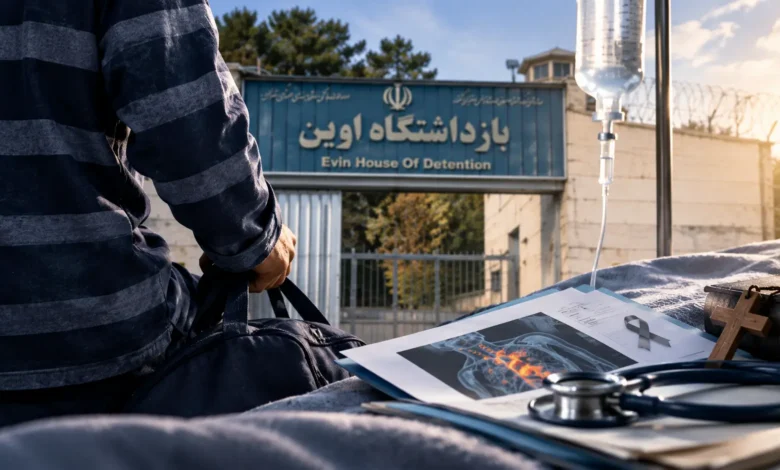
Mohsher (Mr.) Parndein, a Christian citizen and prisoner held at Evin Prison who, according to reports, suffers from lymphoma and other serious illnesses, has been granted a 10-day medical leave after being deprived of access to specialized treatment. This measure raises concerns anew about the health condition of prisoners and their right to medical care.
Mohsher (Mr.) Parndein, a 50-year-old Christian citizen, was released from Evin Prison on medical leave on Saturday, October 25, 2026. This 10-day leave was granted upon submission of a salary slip, even though previous reports indicated that despite serious illnesses and a physician’s insistence on the need for immediate treatment, he had been denied access to specialized treatment and medical leave for some time.
According to published information, Parndein suffers from lymphoma and, in addition, endures heart disease and the presence of tumors in the sub-laryngeal region adjacent to the cerebellum. Reports indicate disturbances in his balance, movement, and speech, with his speech accompanied by noticeable pauses and swelling in the sub-laryngeal area evident.
This condition raises serious concerns about the consequences of delays in providing medical care for his health. The 10-day medical leave may serve as an opportunity to pursue treatment, but alone it does not guarantee that continuous and adequate access to specialized care is ensured.
Mohsher Parndein is an artist and painter and head of a household. He is the parent of one university-age child. He was previously sentenced to two years in prison by the Revolutionary Court and is serving his sentence at Evin Prison.
The responsibility for the custody of prisoners inherently includes responsibility for the protection of their health and lives. When reports indicate serious illness, an urgent need for treatment, and delays in access to specialized services, granting short-term leave alone is insufficient to allay concerns. There must be provision for appropriate diagnosis, effective treatment, and medical follow-up commensurate with the patient’s condition.
The case of Mohsher Parndein also draws attention to the situation of Christian citizens who have faced criminal convictions because of their activities or religious beliefs. Sufficient information regarding the complete details of his legal case has not been provided in this report; nevertheless, no conviction should result in deprivation of necessary medical care.
Health and human dignity are fundamental rights, even during imprisonment. Now the most important matter is that Mohsher Parndein’s medical leave becomes a genuine opportunity to receive necessary care and that his health condition is followed up without delay and with respect for his human rights.