The Price of Bullets: When the Regime Takes Even Death as Hostage
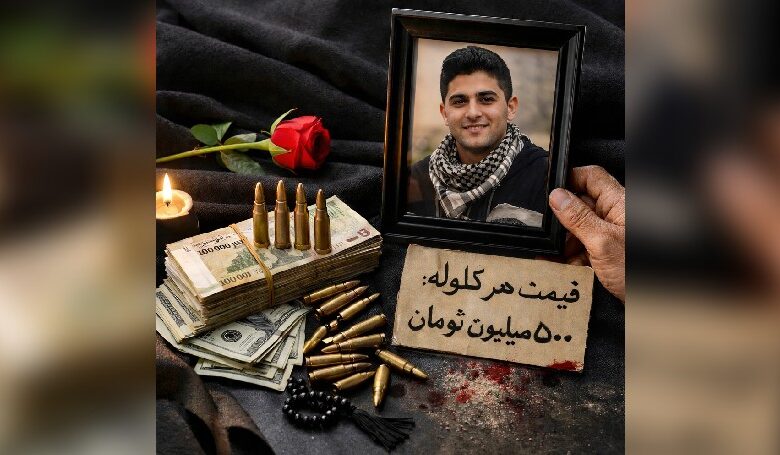
The price of bullets as a tool of repression is a shocking narrative of the hostage-taking of the bodies of the deceased by the Islamic Republic regime.
In the continuation of the bloody suppression of recent protests in Iran, multiple shocking reports have been published from different cities showing that the security and judicial institutions of the Islamic Republic regime have made the delivery of the bodies of protesters killed by bullets conditional upon payment of substantial sums; amounts that, according to families, have been demanded under the heading of “bullet costs” or “operational costs.”
Based on the accounts of bereaved families, security forces, after protesters are killed by military bullets or even buckshot, transfer the bodies of victims to security centers or forensic medical facilities and then inform the families that in order to receive the corpse, they must pay a significant amount for each bullet fired. In some cases, these amounts have been so high that families have been forced to sell assets or take out loans.
Human rights activists say this action is not merely a financial matter, but part of a systematic policy of intimidation and humiliation. According to them, the regime is using this method to prevent families from pursuing legal and media proceedings, to prevent the holding of public and protest ceremonies, and to impose the cost of protest on society even after death.
In many of these cases, families have simultaneously been under pressure to remain silent, undergo hasty burials, and sign commitment letters; commitments that prevent them from speaking to the media or holding memorial services.
Demanding money for the delivery of the bodies of the dead is not a new phenomenon in the Islamic Republic. Similar reports were published in previous protests, but in the recent wave of protests, the extent and nakedness of this action has drawn public attention more than before. Analysts believe that the severity of the crisis and the high number of casualties have driven the regime to maximize the use of psychological and economic pressure tools.
Human rights experts emphasize that making the delivery of the bodies of the deceased conditional upon payment of money is a gross violation of human dignity and the fundamental rights of families and can fall within the framework of inhumane conduct and collective punishment. This action is not only contrary to the government’s claimed domestic laws, but is in complete contradiction with international human rights standards.
In the view of observers, the demand for “bullet prices” carries a clear message: “The Islamic Republic regime wants to show that even after death, control, punishment, and humiliation continue; but in response, the publication of these narratives has become another symbol of the depth of the crisis of the legitimacy of governance and the accumulated anger of society, an anger and pain that money, threats, or forced silence will not eliminate.”