Abadan Under Pressure of Arrests; Protests Over Death of 13 Workers Met with Repression
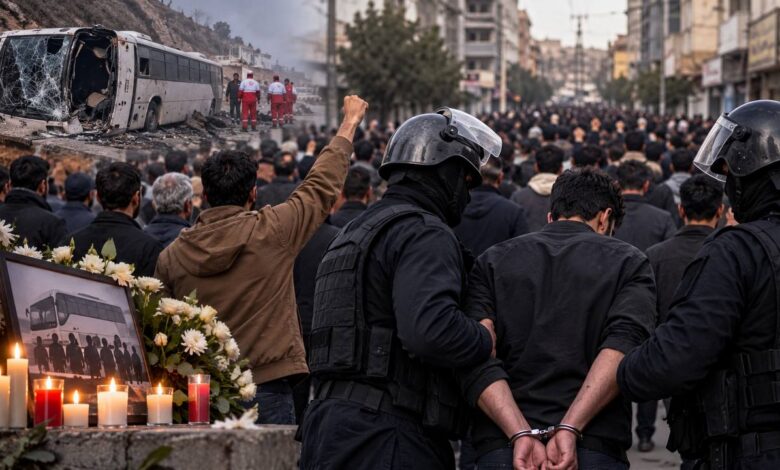
Following protests by residents of Abadan over the deaths of 13 workers and engineers in a bus accident carrying employees of Dehloran Petrorefinery, a wave of arrests continues. Reports indicate the arrest of two additional citizens at their workplaces and an increase in the number of detainees to at least 14 people; a security crackdown against residents demanding accountability for the deaths of their fellow citizens and the unsafe condition of roads.
According to published reports, on the afternoon of Saturday, November 30, security forces from the Islamic Republic’s information office raided the kiosk of Hamidrezza Shah-Mohammadi at Imam Hossein Square in Abadan and arrested him without presenting a court warrant. These forces simultaneously arrested Seyyed Hamzeh Hashemi, a merchant in the city, at his store on Bahar Street. According to sources, security forces used tear gas during Hashemi’s arrest.
In the continuing process of identifying those arrested in recent protests, the identities of Hossein Alizadeh and Mohammad-Hossein Kaviani have also been confirmed. Including these individuals and the two newly arrested, the number of detainees in recent days in Abadan has been reported as at least 14 people.
These arrests continue while clear information about the locations of detention, legal status, and charges against many of the detainees has not been released. The arrest of individuals at their workplaces without presenting court warrants and the use of tear gas to detain a merchant raise serious questions about respect for citizens’ rights and the appropriateness of security forces’ actions.
The root of Abadan’s protests traces back to a deadly incident that occurred on the evening of Saturday, November 23. A bus carrying employees of the Oil Industries Launch and Operation Company, working at the Dehloran Petrorefinery complex, overturned on the route between Dasht-Abbas and Mormuri. In this accident, 13 people died and 17 others were injured.
Three days after this tragedy, on Tuesday, November 26, hundreds of Abadan residents took to the streets protesting the poor condition of roads, lack of infrastructure, and what they considered negligence and mismanagement by officials. Part of the city’s market also joined the protesters and families of the deceased in a strike.
Reports from human rights organizations and media indicate that riot police attacked the gathering with tear gas, and there were also reports of buckshot being fired and protesters being wounded. Simultaneously, severe disruptions in internet access were reported.
During these protests, a number of citizens, including 15-year-old Sina Daroushi, were arrested. Later reports indicated the release of some individuals, including Sina Daroushi and Mohsen Bavier; however, concerns about the status of other detainees continued.
The scope of the bus accident also warrants thorough investigation and public disclosure of its findings. Yar-Allah Alfti, “Head of the Coordination Council of Islamic Labor Councils” in Ilam Province, stated in an interview with ILNA that preliminary investigations show the bus lacked a valid technical inspection certificate and its tires were worn and lacked standard grooves.
According to him, the bus belonged to a contracting company under contract with an oil company, and preliminary evidence suggests possible negligence by the contractor and weakness in the oil company’s oversight of employee transportation safety.
If this information is confirmed in formal investigations, the matter is not merely a road accident; rather, there must be clear accountability regarding the contractor’s responsibility, the oil company’s oversight, the technical condition of the vehicle, and the decision-makers who permitted such a bus to operate.
What has occurred in Abadan is an example of officials reversing priorities: following the deaths of 13 people in an incident with serious questions raised about vehicle safety and oversight, instead of focusing on identifying possible negligence and responding to families, security forces have targeted the protesters.
Demanding road safety, investigating workers’ deaths, and holding officials accountable are not crimes. Citizens have the right to question the factors that took their fellow citizens’ lives and to demand transparent investigations. Turning this demand into a security issue and arresting those who participated in protests neither restores the dead to life nor rebuilds public trust.
Moreover, the continuation of arrests without clear disclosure of detention locations and charges increases concerns about detainees being deprived of access to family and lawyers. Judicial and security authorities must immediately provide information about all detainees’ status and ensure their access to lawyers and families.
Abadan demands responsible answers, not security crackdowns. If contractor negligence or oversight failures occurred in the bus accident, those responsible must be identified and held accountable. Suppressing and arresting protesters cannot replace an independent investigation into the deaths of 13 workers. The deceased and their grieving families deserve truth and justice, not silence and security pressure.