Will civil disobedience in Iran bring new life to the people's rights movement and protest movement against oppression and discrimination?
The explanation and explanation of the concept of civil disobedience has been a subject of debate and controversy among many civil society activists and observers in Iran.
It can be said that civil disobedience refers to actions taken by citizens in open and declared defiance of a law, decree, or order issued or enacted by the government. Laws or decrees that serve the interests of power and are against the interests of citizens. By accepting such a definition, how and from what direction is it possible to explain and develop civil disobedience in Iranian society? How can examples of civil disobedience be examined and evaluated among individuals or different groups of society? How have past experiences of Iranian citizens and civil society under the name of civil disobedience been effective in developing this concept? Can experiences of civil disobedience in Iran be compared with historical examples in the world? Revisiting some important historical periods in the past few decades in which aspects of civil disobedience are well found can help explain this concept in the context of Iranian society. Undoubtedly, many examples of civil disobedience have occurred in Iranian society or among a group of civil activists over the past decades. Aspects of civil disobedience that, over the years, have largely prevented the government from implementing laws that were enacted against the will of citizens, such as the public's reaction to the law banning the use of satellites or women's resistance and defiance of the mandatory hijab law. It can be said that today, various forms of civil disobedience have gained more legitimacy in society and public opinion than ever before, and just as protest movements seek to strengthen their ties, the power of citizens to join various methods and techniques of civil disobedience has also increased.
Civil disobedience that led to widespread protests
The conflict between the interests of Iranian citizens and many of the laws enacted or government decrees that have negatively affected the lives of citizens has manifested itself in various forms over the decades of the Islamic Republic's rule in Iran, and as a result, it has led to many cases of society's reaction to these laws and defiance or resistance to those laws and decrees. This issue, namely, protesting the enactment of anti-freedom laws or the government's disregard for the legal rights of citizens, has turned into widespread and unprecedented protests at several important historical junctures; the protests of a section of the poor and marginalized people in Mashhad in 1992, the protests of January 2017 and November 2019 that took place in many cities in Iran, as well as the recent protests and strikes of teachers and retirees in Iranian cities.
Although the analysis of these protests in political literature has been less focused on civil disobedience, it is possible to examine these protests from this perspective by finding the lines and connections between these protests and legal matters. In fact, each of the aforementioned protests has its roots in opposition to legal matters; or in reaction to the enactment and implementation of a series of laws, orders, decisions, and decrees, or the failure to implement some laws that serve the interests of citizens.
On June 22, 1992, when municipal officials used bulldozers to demolish the houses of a number of marginal residents of Mashhad, citing Article 100 of the Municipalities Law (i.e., the demolition of unauthorized constructions), they attacked the houses of people in the "Koy Talab" area located on "Tabarsi" Boulevard. "Two children" from the residents of this poor and marginal area were killed, and this became an excuse for the residents of this area to take the body of one of the children and move towards the city center. During the conflict, a student who was walking from school to his house was shot and killed by security officers. The protest movement of the people of Mashhad soon reached the city center and the Mashhad governorate. People from other neighborhoods of Mashhad also joined the flood of people from the Talab neighborhood of Mashhad. The protesters occupied two police stations in the city and practically took control of the city. The protesting people then went to the municipality. The institution that, according to the protesters, had started the crisis.
The narrative of the widespread protests in Mashhad can be viewed from a different perspective; a large group of deprived people on the outskirts of Mashhad, who were enduring severe economic pressure and discrimination during those years, had engaged in civil disobedience, disregarding the laws related to construction. In other words, when these citizens saw that the government and executive agencies were ineffective in implementing the laws related to eliminating economic discrimination and providing housing (the third principle of the Constitution) and that the situation had become even more complicated by the enactment and implementation of stricter laws (such as municipal laws for housing construction), they decided to start building houses and shelters for themselves, albeit with minimal facilities. In contrast, government forces, ignoring this form of civil disobedience and without committing themselves to ensuring the people’s obvious rights, dealt with them in the most violent way possible.
The uprising of the people of Mashhad was suppressed after three days (and according to some, two days) of clashes between protesters and security forces who had come to Mashhad from the neighboring provinces of Khorasan. There are no exact figures on the number of arrests. Some say that more than 800 protesters were arrested, and some say that 300 people were arrested. The only official figure is the execution of four protesters, the news of which was published in Iranian newspapers at the time.
From this perspective, we can also examine the protests of January 2017 and November 2019; the main spark of the popular protests of January 2017 was in the city of Mashhad, where a group of people who lost money in a financial and credit institution gathered to protest the uncertain status of their funds. In fact, the demands of these protesters can also be reinterpreted by citing Article 9 of Article 3 of the Constitution, which requires the government to “eliminate unjustified discrimination and create fair opportunities for everyone, in all material and spiritual fields.” Protest rallies were soon sparked in many cities in Iran, and in a sense, this civil disobedience led to one of the most serious and widespread popular protests. Although the issue of credit and financial institutions and the laws related to them was not the main reason for the widespread protests, there is no doubt that these protests are related to the issue of implementation or non-implementation of the principles of the Constitution.
From this perspective, the widespread protests of November 2019 can also be examined; in fact, the basis of the November 2019 protests, which undoubtedly resulted in the most unprecedented suppression of protests in the past hundred years, was due to the government's sudden decision and decree to increase fuel prices in Iran. This decision, or rather, the government's decree, was met with a public backlash and ultimately met with the most severe form of repression and violence from the government.
In the late 1990s, teacher protests and strikes can also be examined from this perspective; the teachers' strikes in classrooms and the continuation and expansion of street protests were in fact a clear civil disobedience against the process of approving the teacher ranking laws in the Islamic Consultative Assembly. This is exactly the same as the pensioners' protests. That is, they protested against the conditions for approving the law on equalizing pensioners' rights and, of course, the inefficiency of the executive and government system in protecting citizens' capital in pension funds.
In all the examples mentioned, and of course some other forms of civil disobedience in various communities and groups in society, such as oil company workers and employees, truck drivers or ranchers and farmers, and even shopkeepers, the issue of confronting a law or government decision becomes a form of disobedience, and after the often violent response of government forces, the space for civil disobedience (in the form of protest or strike) becomes narrow and costly.
The need to examine some movements and protests among different groups from the perspective of civil disobedience and to pay attention to the confrontation of widespread public protests with the issue of discrimination and the law is important because it creates stronger ties among protests and strikes and increases the possibility of movements taking advantage of common methods of civil disobedience. This issue undoubtedly increases the effectiveness of civil disobedience and, of course, popular protests and forces the government to react.
In fact, it must be said that many of these historical events and widespread protests and strikes marked important and influential moments in the movement for demands, which are still, perhaps mistakenly, known only as "subsistence protests."
Other forms of civil disobedience
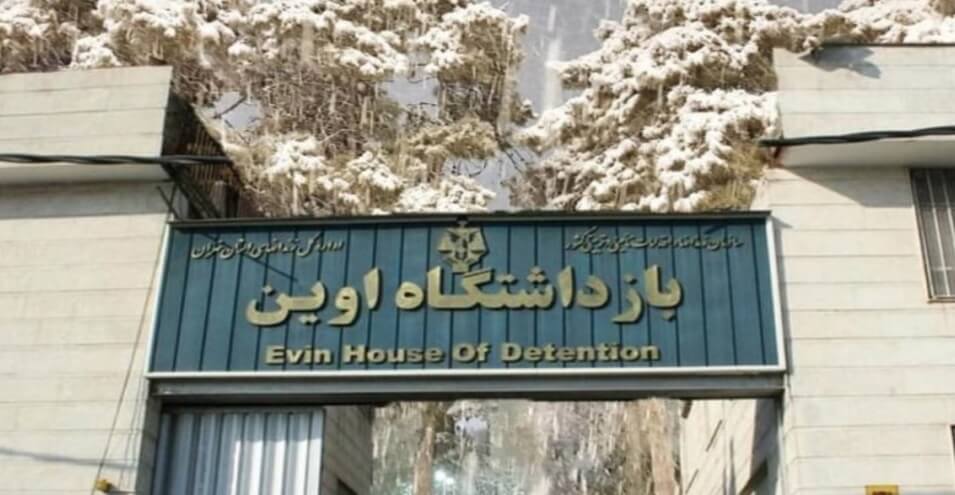
One of the most important examples of civil disobedience in recent years has been some individual actions or small groups of civil and political activists. In recent weeks, one example of this action has been seen in the announcement of the decision of two civil activists, Narges Mohammadi and Hossein Razaq. These two civil activists announced that they would defy the court order and the compulsion to go to prison. Narges Mohammadi had written on her Instagram page that she would use any means for civil disobedience and would refuse to go to prison until there was a problem with her bail.
Hossein Razaq also wrote in a tweet that "2 days ago, a notice of the execution of one of my sentences arrived with a deadline of 5 days to introduce myself for execution by March 19. But a judiciary that is an arm of repression and whose only asset is injustice, its sentences cannot be obeyed. I will not introduce myself anywhere."
At that time, Saeed Dehghan, a human rights lawyer and member of the International Bar Association, wrote on his Twitter page, in order to announce the defiance of these civil activists from going to prison and their civil disobedience, "This method, which is becoming widespread, is in fact the same philosophy as the new natural law, which emphasizes disobedience to immoral and inhumane laws."
Although this form of civil disobedience may not involve a large number of people, paying attention to it and giving it legitimacy can expose a larger community of citizens to the meaning of civil disobedience and its various forms. In other words, if we imagine that all political and civil activists who have to report themselves to prison refuse to do so, the civil disobedience movement will also gain identity in this regard.
It can be said that this form of civil disobedience, which is more visible on an individual level, is also seen in other sectors of society, although it may not be as much of a focus. For example, in previous years, there have always been artists and writers who have defied the legal procedures at the Ministry of Culture and Guidance in protest of restrictive laws on the creation and publication of their works.
But one form of civil disobedience that perhaps has more individual examples than collective examples (protests or mass strikes) is the issue of compulsory hijab and its continuous process by women in Iranian society. The establishment of the Revolution Street Girls Movement as a serious movement based on civil disobedience actually started as an individual movement, but gradually led the government to change the place that was reminiscent of this civil disobedience (the electrical distribution box on which the Revolution Street Girls stood) in any way possible.
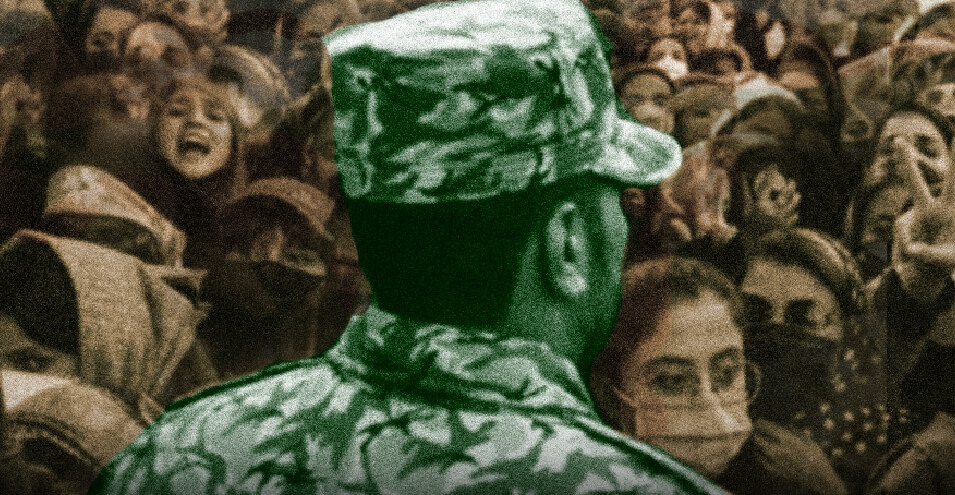
It can be said that the aspects of civil disobedience in the movement to protest against compulsory hijab have always been more progressive than other protest movements that rely on civil disobedience; in that they have always stood up to a completely discriminatory and pervasive law and, despite the heavy costs, have not only not backed down but have also become bolder. The connection of the hijab issue with other discriminations imposed on Iranian women over the past forty-odd years has increased the possibility of using civil disobedience methods in these cases. A recent example of this was the incidents and events at Mashhad Stadium and the ban on women from attending the stadium, after which military forces pepper-sprayed women who had purchased tickets for the match and were waiting to enter the stadium and violently dispersed them. It was after this that a flood of reactions came from many, and among them, players of the national football team also took a stand against the actions of the police and the ban on women entering the stadium. Even in the meantime, some former national team players announced that they would not watch a match in any stadium in Iran until women were allowed to enter the stadium.
These approaches, which by their very nature have the potential to become actions towards civil disobedience, show that in the current circumstances, the ground for civil disobedience is very ready, especially regarding discrimination against women.
Civil Disobedience in Iran and Global Examples
Undoubtedly, the cultural, social, and political conditions, and of course the confrontation of the government in any territory, cause the nature and form of civil disobedience. Regardless of the cultural and social characteristics, what is important in Iran after the establishment of the Islamic Republic system is the open and obvious opposition of the government to the creation and identification of civil society and parties. This issue has not only emptied the issue of civil disobedience in Iran of its partisan and political aspects and dimensions. In a sense, most of the forms of civil disobedience that we see in Iran are spontaneous and arise from communities, groups, and strata in society, and not from political and civil parties or associations. For this reason, it may seem a bit difficult to compare the types of civil disobedience in some countries where parties, associations, and unions are powerful with Iranian society. Nevertheless, some forms of civil disobedience in other parts of the world and at different historical periods can find similar examples in today's Iranian society.
Looking at the process of civil disobedience-based struggles in many countries that have finally succeeded in freeing themselves from the yoke of rulers and laws that are against the interests of their citizens, we realize that the process of victory on the path of civil disobedience is a long and, of course, costly one. Especially since the Islamic Republic of Iran has shown that it quickly chooses the most violent possible path in response to the civil disobedience method of struggle and engages in repression in all its dimensions.
What emerges from studying different forms of civil disobedience in different societies is the understanding that all these movements based on civil disobedience tried to increase the scope and impact of their disobedience with all aspects and possibilities, including common cultural and social backgrounds; for example, adopting methods such as "boycotting" stores that served only "whites" in South Africa during the apartheid era. In fact, this form of disobedience has a serious and obvious connection with the daily lives of all citizens. A form of civil disobedience that focuses on expanding and enlarging movements and protests actually uses civil disobedience for greater unity and not just for dialogue with the government or reaction to the law. Examples of this can be found in civil struggles based on disobedience or civil resistance in countries under communist rule in the early 1990s.
Perhaps one of the most famous of these movements took place in the Baltic region, and especially in Estonia, between 1987 and 1991. A movement called the Singers' Revolution sought the independence of the Baltic countries, and especially Estonia, from Soviet rule. The important point of this movement was its emphasis on cultural aspects, especially ancient and national celebrations and collective singing of Estonian citizens, which during the years of Soviet rule, holding some of these celebrations and singing some national songs had been banned and restricted. Over time, however, Estonian citizens who wanted independence used the opportunity to hold national celebrations to show their desire for independence and became increasingly widespread and strong to the point that Soviet forces were forced to use tanks to confront this movement. However, in the end, Estonia became independent and the Singers' Revolution came to an end. One of the important points about this movement based on civil disobedience is the use of cultural and ritual grounds. A point that has found clear examples in Iranian society in recent years, and in fact, many cultural and national ceremonies, such as Nowruz or the celebration of Cyrus Day, or other ceremonies tied to national culture and rituals, have been turned into grounds for showing their disobedience because the government is trying to destroy it.
Source: Iran Human Rights Campaign