EU calls for more coordination on refugee deportations
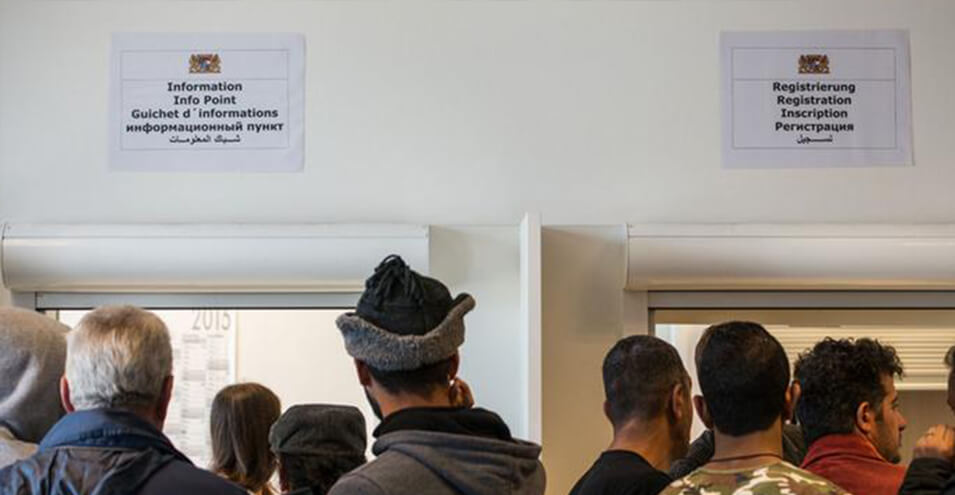
Dimitris Avramopoulos, the EU's migration commissioner, called for a unified policy on expelling asylum seekers from EU countries. Member states would be required to cooperate in expelling asylum seekers.
The European Commission has called for a common policy for member states to expel asylum seekers from EU countries. Dimitris Avramopoulos, the EU Commissioner for Migration, said that the issue of expelling asylum seekers is one of the most controversial issues related to migration.
The EU Commissioner for Migration continued to consider the expulsion of refugees as one of the most important pillars of the EU's migration policy. The European Commission has announced the exact number of refugees returned in 2016 as 45.8 percent and last year (2017) as 36.6 percent.
This statistic comes at a time when different EU member states differ widely in their approach to deporting refugees whose asylum applications have been rejected. The EU is now seeking to harmonize its rules on deporting refugees.
The European Union has prepared proposals on this matter. For example, member states should deport asylum seekers for at least three months to allow enough time for the administrative and legal procedures necessary for their deportation.
Member States are also obliged to cooperate in the expulsion of asylum seekers. In this way, these countries obtain the necessary information about each expelled asylum seeker, so that they know the identity of the person and the reasons for his or her expulsion.
Preventing “dangerous journeys” for asylum seekers
The European Commission also believes that there should be a simple and uniform procedure for deportation for asylum seekers who apply for asylum at EU borders and have their asylum application rejected there.
The European Commission has stated that the purpose of these new regulations is to provide signals from the European Union so that refugees know, before their dangerous journey to EU countries, that there are coordinated rules for their expulsion.
Currently, the deportation of refugees from European Union countries is being delayed because the sending of refugees' identity documents from their countries is being done with great delay.
The European Union Commission wants to prevent refugees from disappearing from society, living underground in these countries, and moving from one country to another if they delay submitting their identity documents in order to avoid deportation.
Strengthening the EU's land and sea borders
The European Commission also plans to strengthen the EU's border guards and asylum office. The number of officers deployed at EU borders is set to increase to 10,000 by 2020.
The rapid screening of asylum seekers, as decided at the EU summit in June, is to be carried out in centres outside the EU's borders, where it will be determined which migrants have the necessary grounds for asylum and which do not.
Source: DW