Ahmad Alam-ul-Huda: All of Iran's glory is for Afghanistan
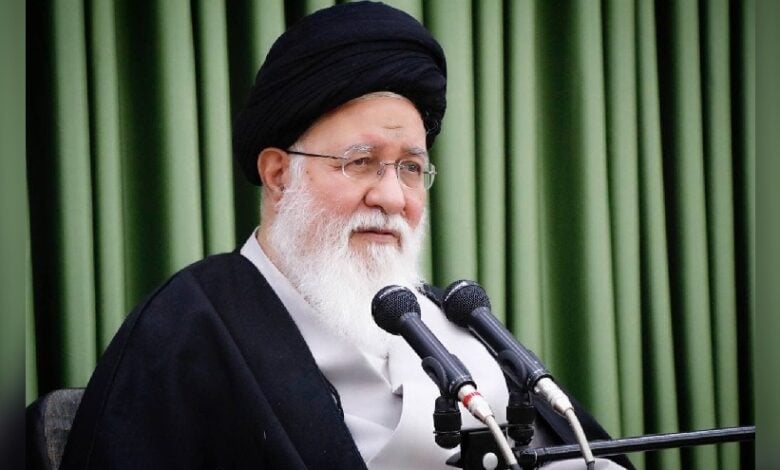
Ahmad Alam-ul-Huda said in his speech: "All of Iran's glory is for Afghanistan, and we are one with Afghanistan."
In a speech, Seyyed Ahmad Alam-ul-Huda, while attributing Iranian honors to Afghanistan, emphasized that Afghans and Iranians are one. He stated in this speech: "We are not separate from Afghans, but we are one blood, one element, and one race. All of Iran's honors in various fields of science and culture have all been from Afghanistan. In terms of scientific comprehensiveness, there has never been a man on earth like Ibn Sina, who was from Balkh, Afghanistan, and is considered an Iranian honor.
In the issue of comprehensiveness of science and art, there has never been a man like Farabi in any nation or community, and he is also from Afghanistan, who is considered the pride of our Iran. In the issue of poetry and literature, the only leader in this field is Rumi. He was one of the prides of Iran, and he is also from Balkh, Afghanistan.
In the field of authority and jurisprudence, Shiite seminaries still kneel at the table of principles of the late Akhund Khorasani and benefit from the scientific works and jurisprudential blessings of this great authority and master mujtahid. Akhund Khorasani was also from Herat.
"So all the glory of Iran is for Afghanistan, and we are not two with Afghanistan, there is no duality between Iranians and Afghans. Afghans and Iranians are one, and the enemy wants to create a distance between the two, and the enemy should not be allowed to do so."
Ahmad Alamul-Huda's words about Iranian greats that he attributed to Afghans have provoked reactions. One of these reactions is about "Avicenna", a physician, mathematician, physicist, astronomer, philosopher and musician who was born in Bukhara, and Bukhara is a city in Uzbekistan, not Afghanistan. Also, about Jalaluddin Mohammad Balkhi, known as Maulana, who was born in Balkh, "Ishaq Negargar", an Afghan writer and former professor of the Faculty of Language and Literature at Kabul University, says about Maulana: "We cannot say that when Maulana was born in Balkh, he is necessarily from Balkh. He was only born in Balkh, but he lived in Iran and he is necessarily from Iran. Maulana's homeland is the world of life, and in the world of life, there are no borders."
There are many other reactions to his words, stating that a Supreme Leader still does not know where Iranian greats were born or where they lived, and only repeats the text that was dictated to him, and this is one of the weaknesses of the country's leaders who know nothing about the history and culture of the country they rule.
Also, Alam al-Huda's words about Iran and Afghanistan being one came at a time when most Afghans in Iran, despite the promises made to them by the government, continue to live under pressure and are deprived of many of their civil rights, and in many cases, some of them have even been expelled from Iran and sent to their own country, Afghanistan. In some cases, when the Iranian government needs assistance regarding elections or to show the enemy that the Iranian government defends all minorities and has no problem with them, it speaks of its friendship with Jews, Christians, Zoroastrians, Sunni minorities, etc. to show that the system and its agents have no problem with minorities, but behind the scenes they harass, abuse, torture, and abuse them.