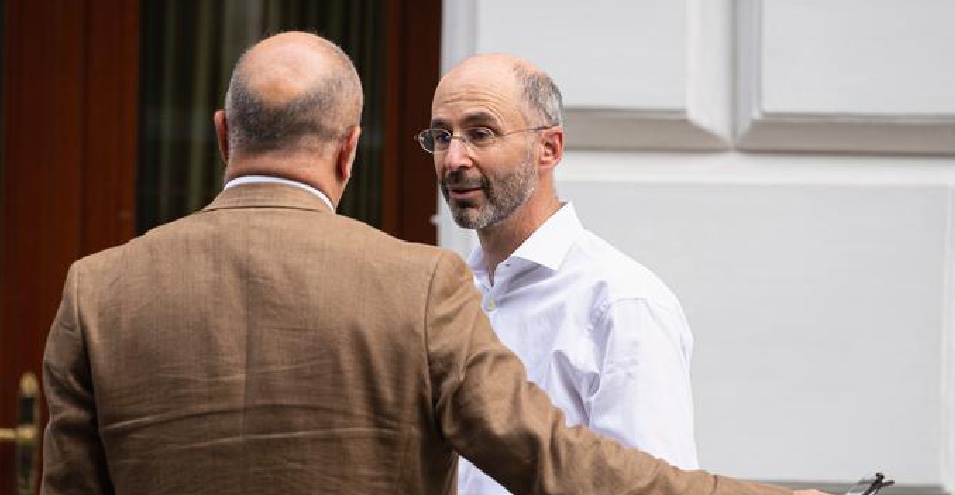
Protesting Disqualifications: From Rouhani to Ahmadinejad
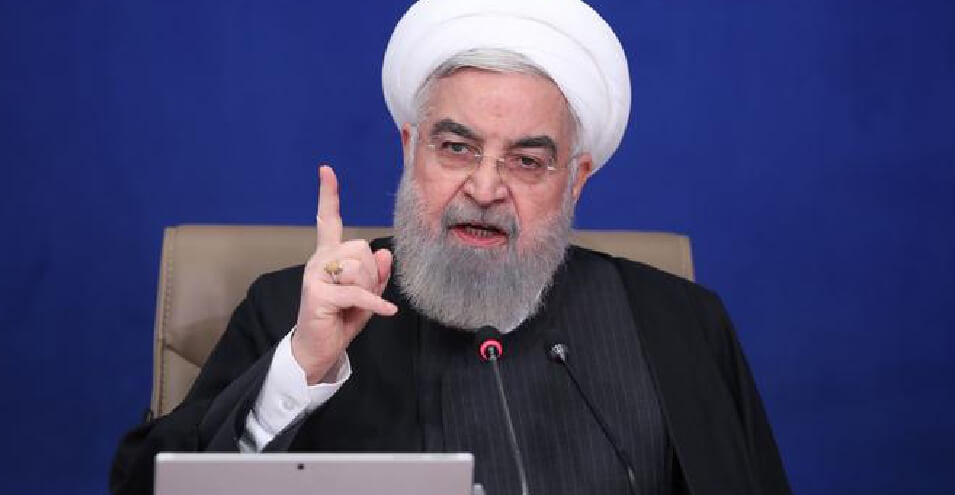
Hassan Rouhani, Mahmoud Ahmadinejad, and the Reform Front protested the widespread disqualification of presidential candidates. Rouhani said he had written to Ali Khamenei about the matter. Hassan Khomeini also said that “if I were in the place of the approved candidates, I would have withdrawn.”
Following the widespread disqualification of presidential election candidates in Iran, Iranian President Hassan Rouhani has written a letter to Supreme Leader Ali Khamenei.
Rouhani said in a cabinet meeting on Wednesday, June 25, that he had asked the Leader of the Islamic Republic to intervene in this matter “if he deems it appropriate.” Rouhani also said that every time the Guardian Council was warned about Article 113 of the Constitution, the Council did not accept the warning and based its own interpretation of this principle.
Article 113 of the Constitution states: "After the Supreme Leader, the President is the highest official in the country and is responsible for implementing the Constitution and heading the executive branch, except in matters directly related to the Supreme Leader."
This principle, of course, had another sentence before 2019 and the revision of the constitution, but this year and after the revision, this sentence was removed: "Regulating the relations between the three branches of government."
Also, in 2012, after repeated disputes between the presidents and the Guardian Council over the interpretation of this article, Ahmad Jannati, the secretary of the Guardian Council, wrote a letter in response to a question from Kadkhodaei, the spokesman for the council, regarding the interpretation of Article 113, based on which the scope of the president's authority was practically limited, to the point that many believe that this interpretation limited the president to only presiding over the executive branch of the cabinet and the council of ministers.
The problem of “the interests and dignity of the system”
In his speech to the government council, Rouhani pointed out the importance of the elections and the widespread participation of the people in them, saying: "The presidential elections are a very important issue, and it is not just about the nation voting just for the head of the executive branch."
Hassan Rouhani also said, without naming a specific person, "The president must represent the Iranian people in foreign negotiations. If, God forbid, there is a low turnout in an election and the people are not clear on issues, then what will be the national interest, security, and prestige of the regime in the world?"
Ebrahim Raisi, who many observers say is approved by the regime and the leadership and is likely to be the next president, is one of the most controversial figures in this election. He was a member of the so-called “Death Commission” that in 1988, in a few-minute trials, issued death sentences to about 4,000 prisoners who were serving their final sentences.
Some Iranian activists abroad are seeking to pursue this issue and ask European countries to issue a ban on the president's entry into Europe.
“The Reform Front no longer has a candidate”
The Iranian Reform Front issued a statement announcing that it had nominated nine candidates for the presidential election, all of whom were disqualified. Thus, the front has no candidates in this year's presidential election.
This front has accused the Guardian Council of "eliminating representatives of all the country's different political movements, except for one specific one, in a premeditated act."
The Reform Front statement said: "In our opinion, this action does not only mean the elimination of reformists, but its main message is the elimination of the people from the decision-making process in the country's affairs."
The Reform Front has considered the result of this action by the Guardian Council to be minimal public participation in the elections and ultimately holding elections "with a particular taste," and wrote: "We are giving this report to the great people of Iran so that, as the main owners of the country, they can be informed of our efforts and the destruction of others."
Mostafa Tajzadeh, Mahmoud Sadeghi, Masoud Pezzekian, Mohammad Shariatmadari, Mohsen Hashemi, Abbas Akhundi, Mostafa Kawakbian, Eshaq Jahangiri, and Zahra Shojaei were the nine candidates of the Reform Front for the presidential election, all of whom were disqualified.
"If I were the confirmed candidates, I would have withdrawn."
Hassan Khomeini, the grandson of Ruhollah Khomeini, who himself refused to register to run for president after Ali Khamenei banned him from doing so, has also reacted sharply to the Guardian Council’s widespread disqualifications. The Jamaran website quoted him as saying that such approaches indicate that “the spirit of anti-people and anti-republican thinking is breathed into the bodies of the enemies of the people, and some unknowingly accept it in their souls.”
He called the Guardian Council's approach problematic for those who have passed through the filter of this institution, saying: "Of course, in the meantime, the electoral competitors who passed through the gate safely have also been harmed, and if I were in their place, I would withdraw because the government that emerged from these elections is not capable of solving any problems."
“The credibility of the Guardian Council is being questioned”
Mahmoud Sadeghi, a former member of the Islamic Consultative Assembly and one of the disqualified candidates of the Reform Front, wrote in a statement he issued on the matter: "Unfortunately, the Guardian Council's narrow-minded and biased approach in reviewing the qualifications of candidates and eliminating the main rivals of the fundamentalists, especially the reformist candidates, destroyed the opportunity for meaningful competitive elections and deprived the majority of the Iranian people of an active participation and a worthy choice."
He considered the continuation of this situation to be "dangerous" for the credibility of the Guardian Council and even the elected president.
Sadeghi also referred to the objection of Sadegh Larijani, who is himself a member of the Guardian Council, as well as Ebrahim Raisi's implicit criticism of the non-competitiveness of the elections, and said: "If this process was only criticized by political activists in the past, now it has been criticized and objected to in the most explicit way possible by a member of the Guardian Council, and has forced even the most acceptable qualified candidate to admit that the existing list is non-competitive."
After announcing the names of those confirmed as qualified, Ebrahim Raisi wrote on Twitter: "Since yesterday evening when I learned of the results of the qualification process, perhaps you and the gentlemen themselves are not aware, I have made calls and am conducting consultations to make the election scene more competitive and participatory."
After the disqualifications were announced, Sadegh Amoli Larijani said that he had always defended the performance of the Guardian Council, but this action “left no room for defense.” Sadegh Larijani’s brother, Ali Larijani, who was the speaker of the Islamic Consultative Assembly for eight years and is currently a senior advisor to the Leader of the Islamic Republic, has also been disqualified by the Guardian Council.
Ahmadinejad and the “Danger of a Hungry Uprising”
Mahmoud Ahmadinejad, who served two consecutive terms as president and was openly supported by Khamenei after the controversial 2009 elections, has also been disqualified by the Guardian Council.
He claimed on his Telegram channel that the night before the announcement of the names of the approved candidates, Hossein Nejat, the commander of Tehran's Sarallah headquarters and in fact the head of Tehran's security, went to his home on behalf of the Revolutionary Guards and informed him of his disqualification.
According to this Telegram channel, Sardar Nejat asked Ahmadinejad to "be silent and supportive" and said he "has no desire to arrest his supporters, who are Hezbollah and revolutionary individuals."
Ahmadinejad said he would neither confirm nor remain silent about his disqualification. "Do they expect me to cheer for them because of my own disqualification?" he said.
Mahmoud Ahmadinejad, as usual, continued to criticize the Rouhani government, saying: "During my government, the people of Iran were satisfied, happy, and hopeful for the future, but now they are in a very bad situation."
He said, "I feel the danger of the hungry rising more every day than yesterday."
However, he blamed the current situation not only on the government but also on the entire regime, saying: "If I am disqualified and the situation worsens, which it will 100 percent, the people will no longer see it through the government's eyes, but will only see it through the government's eyes."
Complaint about the IRGC
In another part of his writing, Mahmoud Ahmadinejad explicitly stated that he had the support of the IRGC during his presidency and that he had also strongly supported this military institution. He wrote: "During the ninth and tenth governments, I provided a lot of assistance to the IRGC in various ways and was repeatedly criticized for this by political groups and opposition groups at home and abroad. But the Rouhani government cut off the assistance and imposed restrictions."
He then complained about the IRGC for not reacting to the Rouhani government's statements against the two Ahmadinejad governments. He continued: "I always thought about the IRGC's children. Even when the IRGC's intelligence department didn't have the money to pay the personnel's salaries on Eid, I gave them money. But instead, Mr. Baghaei, who had taken the trouble to do this, was arrested and convicted on false charges of misappropriation of public funds, and they inflicted on him a disaster that made him take dozens of nerve pills a day and unable to maintain his balance while walking."
Ahmadinejad wrote at the end of his Telegram post: "I am confident that the country can be saved and I am fully capable of the work and I have a plan and I know how to run the country."
The two Ahmadinejad administrations saw the heaviest US sanctions imposed on Iran. During these two periods, oil prices reached their highest levels in years. Compared to the administration of Mohammad Khatami, known as the Reform government, where oil prices fell to $10 per barrel, the Ahmadinejad administration faced a record price of $147 per barrel of oil, and the average oil price during his eight-year term was between $100 and $110.
According to OPEC, during Ahmadinejad's eight years as president, Iran earned more than $618 billion from oil exports. This is while the total oil revenue earned during the Ali Akbar Hashemi Rafsanjani government, known as the "Construction Government," did not exceed $141.7 billion. The total oil revenue of the Reform Government was $157.2 billion.
Source: DW