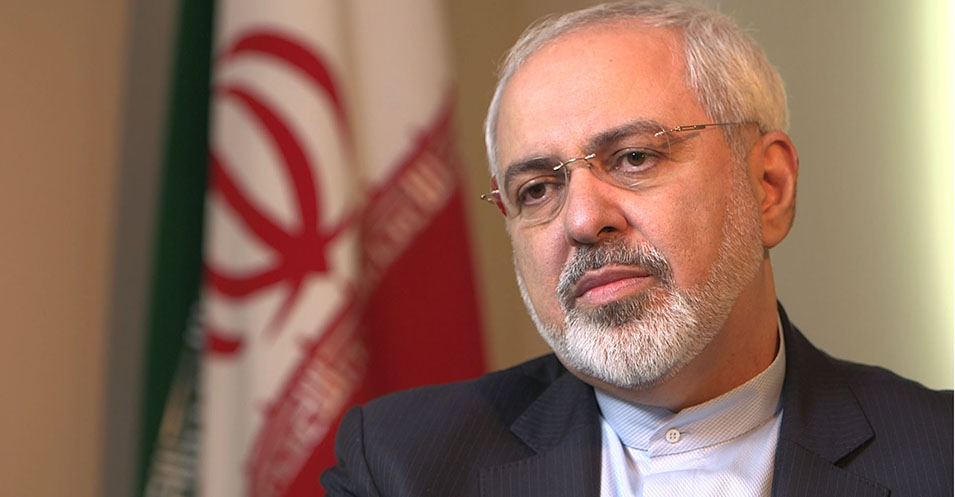
Iranian news agencies say that on Wednesday, the Islamic Republic's Foreign Minister strongly objected to "four anti-Iranian clauses and one clause against Lebanon's Hezbollah" in the draft declaration of the Organization of Islamic Cooperation summit, but the Saudi delegation, accompanied by a number of countries, "prevented the opening of a discussion on these clauses."
Iranian news agencies, including the state-run IRNA news agency, reported on Wednesday, April 15, citing "informed sources" that Mohammad Javad Zarif considered "four anti-Iranian clauses and one clause against Lebanon's Hezbollah" in the draft declaration of the summit of Islamic leaders to be "contrary to the spirit of Islamic solidarity and in line with the interests" of Israel.
According to this report, however, the Saudi Arabian delegation, along with a number of countries, "prevented the opening of discussions on these clauses" of the Islamic Summit Declaration.
The draft of this declaration was prepared during a meeting of senior experts from the member states of the Organization of Islamic Cooperation in Jeddah in March of last year, and the Iranian delegation was unable to attend the meeting due to the failure to issue visas by the Saudi Arabian government.
Without mentioning the details of the declaration, IRNA news agency emphasized that "the adoption of anti-Iranian and anti-Hezbollah clauses in Lebanon demonstrates the instrumental misuse of the Organization of Islamic Cooperation by Saudi Arabia and some aligned countries for their destructive political goals."
According to the report, the Iranian Foreign Minister said at the meeting that condemning Lebanon's Hezbollah would "only please" Israel.
The Gulf Cooperation Council had previously designated Lebanon's Hezbollah, which is backed by the Islamic Republic of Iran, as a terrorist group, following the attack on Saudi diplomatic missions in Iran and the severing of ties between the two countries.
At the same time, the Iranian Foreign Minister said that "problems and differences between countries should be resolved through bilateral talks, rather than dragging bilateral issues into multilateral meetings."
The Organization of Islamic Cooperation summit is held every three years, and more than 30 leaders and senior officials from predominantly Muslim countries are scheduled to attend this year's gathering in Turkey on Thursday and Friday.
The issues of Syria and Yemen are among the issues that are expected to be raised at the upcoming meeting. Iran is one of Bashar al-Assad's most important supporters in Syria, while most Arab countries, as well as Turkey, are opponents of Mr. Assad.
There are also deep differences between Tehran and Riyadh and its allies on Yemen, with Iran accused of supporting the Houthi rebels and objecting to Saudi Arabia's military intervention in Yemen.
The Libyan crisis, Afghanistan, and the recent tensions between Armenia and Azerbaijan are among other issues that the leaders of the predominantly Muslim countries of the Organization of the Islamic Conference are addressing.
Meanwhile, the Iranian President said before traveling to Istanbul that "today in the Islamic world we are facing the problem of terrorism, extremism, and sectarianism, and unfortunately, the aggression of some countries against other countries."
Hassan Rouhani emphasized that Iran has helped Iraq and Syria in the fight against "terrorism."
The Iranian president arrived in Istanbul on Wednesday night to attend the Organization of Islamic Cooperation summit, and was welcomed by Turkish Economy Minister Mustafa Alitas.
Before Mr. Rouhani left for Turkey, Saudi Arabia's King Salman had visited the country with a 300-member delegation. The Hurriyet newspaper says Ankara has been preparing to host the Saudi king for a week. Turkish President Recep Tayyip Erdogan personally went to King Salman's funeral.