"Amir Hossein Mousavi" Behind Closed Doors of Justice in Iran
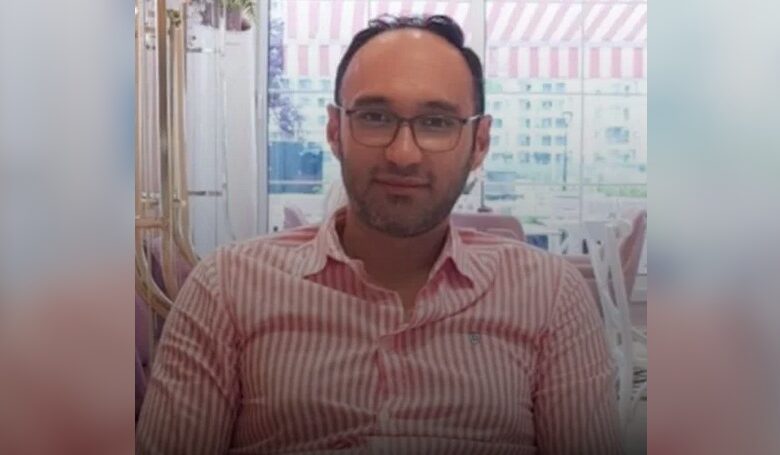
The forced confession of "Amir Hossein Mousavi" is a sign of the government's continued case-building behind closed doors of justice.
The broadcast of Amir Hossein Mousavi's forced confessions by the Islamic Republic Radio and Television once again exposed the repetitive cycle of scenario writing and case building against critical citizens and religious and political minorities.
In a program broadcast last night on Iranian state television, Mousavi was accused of "creating chaos," "having ties to Israel," and several other charges, but observers say these confessions were obtained under pressure and in inhumane conditions.
Sources close to the case have confirmed that during his detention, he was deprived of his most basic legal rights, including access to a lawyer, contact with his family, and the right to a fair defense, and spent almost the entire period of his detention in solitary confinement.
In some of the reactions, social media users rightly noted that: "People no longer believe these lies and this door will not always turn on its heel."
Broadcasting confessions on television is not a new phenomenon in the Islamic Republic. Since the 1980s, it has become a well-known tool for legitimizing political and religious repression. The victims of this policy include not only political activists, but also followers of religious minorities, journalists, and even ordinary citizens whose only crime is to have a different voice.
International human rights organizations have repeatedly emphasized that televised confessions in Iran are obtained as a result of torture, psychological pressure, threats, and isolation, and have no legal validity. Amnesty International noted in a recent statement that: “The broadcast of forced confessions on Iranian state television is part of a machine of repression aimed at humiliating and silencing dissent, not at serving justice.”
Security in Iran today has become a rare commodity for minorities and dissidents. Baha'is, Christians, Dervishes, Kurds, Baluchis, women activists, and political protesters all face threats of arrest, torture, and profiling in some form.
Amir Hossein Mousavi’s forced confession is just one of hundreds of examples of an endless project of organized repression, a project in which the state media plays the role of the propaganda arm of the security institutions. “In the Islamic Republic, the media is not a tool for informing, but a tool for extracting confessions and instilling fear,” says an independent political analyst. “Every time official television shows a face, the audience knows that behind that image is a cell, torture, and forced silence.”
More than anything, broadcasting such confessions deepens public distrust of Iran's judicial system and national media.
In a society where justice has been silenced and faith in human dignity has been questioned, it is the moral mission of all of us to be the voice of political and ideological prisoners; because until the voices of the oppressed are silenced, no one will be safe, not minorities, not majorities, not even those in power today.