US and German criticism and concern over Simorgh satellite launch
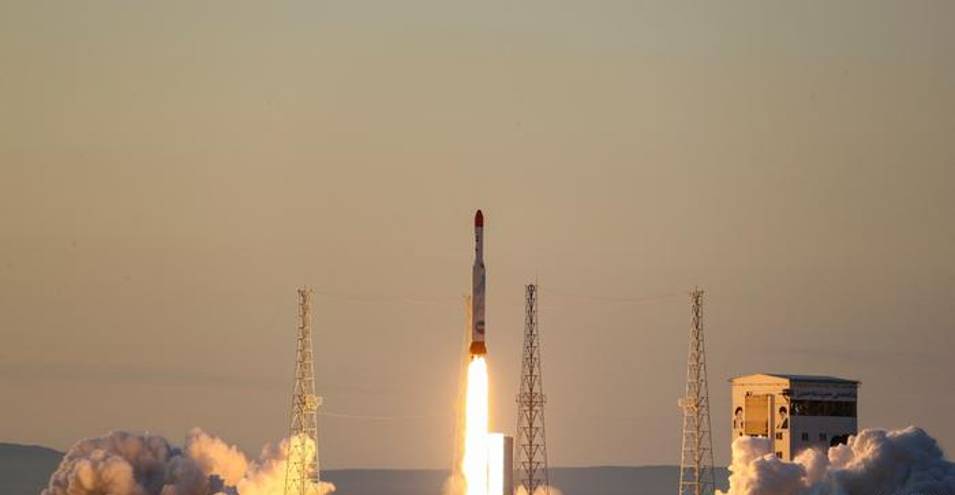
Iran announced the “successful launch” of a Simorgh satellite-carrying missile, coinciding with the Vienna talks. While world powers have called the move a violation of a Security Council resolution, Iran’s deputy defense minister said more missiles would be launched soon.
On Thursday, January 29, while talks to revive the JCPOA were underway, Iran announced the launch of the "Simorgh" satellite-carrying missile.
The launch, which Iran claims was successful, has been criticized by countries including Germany and the United States, who are concerned that Iran is conducting missile tests under the guise of a satellite program.
A US State Department spokesman said Iran's development of satellite-carrying missiles raises significant concerns about nuclear proliferation, calling such actions a violation of a United Nations Security Council resolution on the 2015 nuclear deal.
Germany has also called on Iran to stop sending satellite-carrying missiles. A German diplomat said the launches could be used to test ballistic missile technology and carry nuclear weapons.
The diplomat called on Iran to refrain from these activities and to remain committed to the obligations of the Security Council resolution.
But a few days after the launch of Simorgh 6, and while there is no specific and reliable news about its placement in orbit, Mehdi Farahi, the Deputy Minister of Defense of the Islamic Republic, announced that Iran will launch other satellite carriers by the end of the year, on the occasion of the "Fajr Decade".
He said that this time the "Simorgh 6" satellite carrier will be used, which has more advanced technology than previous types.
The Islamic Republic's Ministry of Defense has a history of four failed satellite launches.
The Islamic Republic's long-range missile program has always been a contentious issue with Western countries that are parties to the 2015 nuclear deal.
The Ministry of Defense and the Aerospace Organization of the Islamic Republic of Iran's Revolutionary Guard Corps have increased the number of missile tests and military exercises since the start of the JCPOA revival talks in Vienna, and this issue has repeatedly faced heavy criticism, even within Iran.
In response to these criticisms, IRGC spokesman Brigadier General Ramadan Sharif claimed on Tuesday that the missile tests and the negotiations to revive the JCPOA are unrelated, adding: "When the enemy realizes Iran's power, it will focus on the negotiations, as it is not like they want to take something and leave."
Source: DW