Arrest of the director of the "Hamdam" rehabilitation center, following opposition to turning disabled children into human shields
The revelations about the security forces' exploitation of children and patients as human shields paint a disturbing picture of the Islamic Republic's instrumental use of the people and the arrest of dissidents.
Reports from the city of Mashhad have revealed a shocking incident at a center for children with disabilities, an event that has once again raised concerns about the use of civilians, especially vulnerable groups, as tools by the Islamic Republic's security structures.
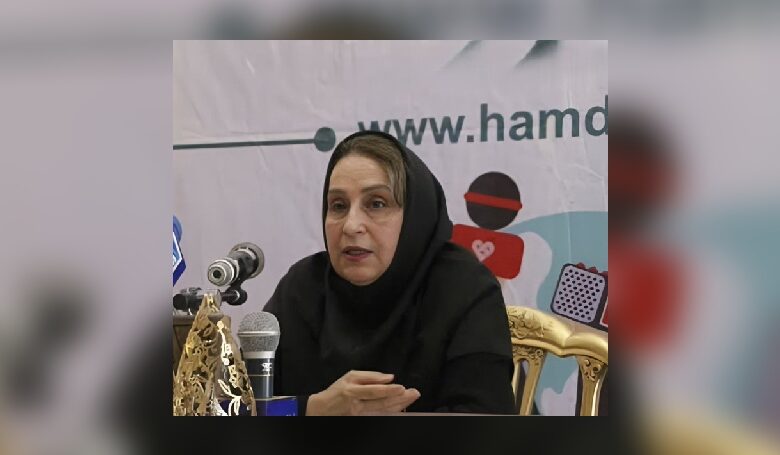
According to these reports, Zahra Hojat, the director of the Hamdam Rehabilitation Center, who has been working for years in the field of caring for and supporting girls with disabilities, has been arrested and transferred to an unknown location after opposing the request of the Revolutionary Guards to be stationed at the center. This action has provoked widespread reactions among human rights activists and child advocates.
Citing published reports, the Iranian Human Rights Documentation Center has stated: “The arrest of Zahra Hojjat, a well-known figure in the field of supporting girls with disabilities and the head of the Hamdam Rehabilitation Institute in Mashhad, has raised widespread concerns about her condition and whereabouts.” The organization also added: “Due to her years of continuous activity in the care, education, and support of children with special needs, she has become known among supporters of this field as the ‘Mother of 400 Girls.’”
However, what makes this case so sensitive and revealing are the reports that indicate the intention of the IRGC forces to establish themselves in this center. According to information published by the Committee for the Release of Political Prisoners, these forces intended to use the space of this institution and the presence of hundreds of disabled children as a cover for their security purposes; an action that, if carried out, would effectively turn these children into “human shields.”
The center's director's outspoken opposition to such a plan led to his arrest, and since his arrest, no clear information has been released about his health or whereabouts. This is despite human rights organizations emphasizing that detaining individuals for the purpose of preventing child abuse is a clear violation of human rights and basic moral principles.
Hamdam Rehabilitation Center is one of the few centers that provides round-the-clock care to approximately 400 physically disabled and unaccompanied girls. Over the years, the center has been known as a refuge for the most vulnerable segments of society, and any military or security use of it has raised deep concerns at the national and international levels.
Such government actions, if approved, could be part of a broader pattern of exploiting civilian spaces, including schools, hospitals, and charity centers, to create human shields and propaganda in the face of external pressure. In such a situation, any damage to these centers could be used as a tool to accuse other parties in the international arena.
In addition to directly threatening the lives of children and patients, this approach raises serious questions about compliance with international obligations to protect civilians. Human rights organizations have called for immediate clarification of Zahra Hojjat’s situation and for guarantees that support centers are not used as targets or military cover.
While the fate of the detained director remains shrouded in mystery, the case has become a symbol of the deeper challenges that exist between humanitarian activities and security interventions in government structures; a challenge that, above all, targets the lives and dignity of the most vulnerable members of society.