We cannot claim to be administering justice by kidnapping, torturing, extracting forced confessions, framing political opponents, and imposing government lawyers on them.
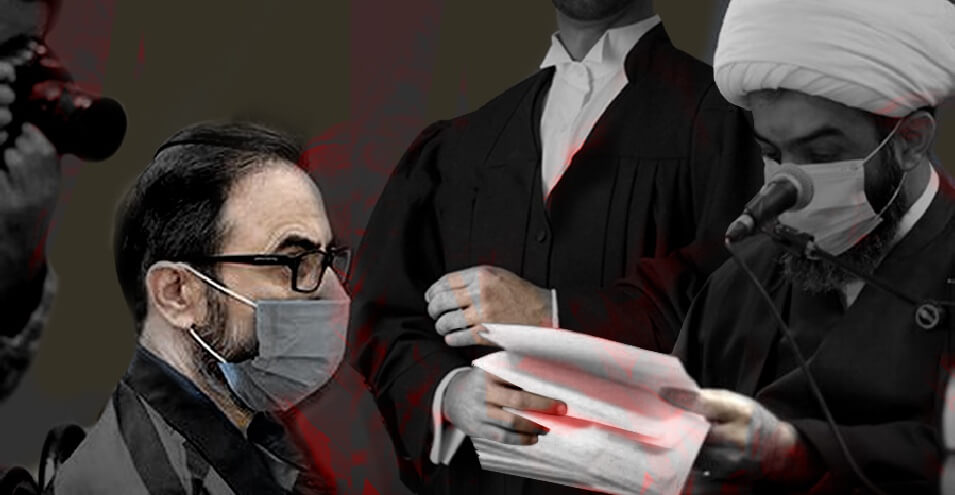
How are the discriminatory and illegal practices of the Islamic Republic of Iran's judicial system applied to opposition and critical political activists who are kidnapped by security forces and put on trial in Iran?
By what methods and techniques does the security apparatus impose its desired and inverted narrative of the case of political activists living outside Iran on the judicial system? How do propaganda apparatuses and media close to the government help impose this narrative on public opinion? What does the similarity of the government's confrontation with the case of political activists who were kidnapped from outside Iran's borders and brought to Iran emphasize and pay attention to? It seems that kidnapping political activists opposing and critical of the Islamic Republic from neighboring countries of Iran, trying them unfairly and illegally, and issuing heavy and predetermined sentences, has become a common trend in the Iranian judicial system. The issuance and execution of the death sentence of Ruhollah Zam, a journalist and political activist who was taken from France to Iraq and kidnapped in this country by the security forces of the Islamic Republic of Iran, has increased concerns about the outcome of the trial of Habib Asyoud (Chaab), a political activist and dual Iranian-Swedish citizen. Asyoud was kidnapped in Turkey in November 2020 by the security forces of the Islamic Republic of Iran and sent to Iran. A look at the trial process of Habib Asyoud's case, and especially his appointed lawyer's statements that he would not seek an "acquittal" due to his client's confession, shows how the judiciary behaves in a completely discriminatory and illegal manner, at the behest of the security institutions, and how the fate of defendants who have been arrested for a criminal act (kidnapping) is decided by security institutions, not the judiciary.
From kidnapping and torture to case-building
The criminal practice of "kidnapping" opponents and critics of the Islamic Republic of Iran in other countries and then trying them in Iran has been growing in recent years in the context of decisions by security and intelligence agencies and institutions, and has become a serious policy to eliminate opponents and political activists abroad. The latest example of this was the attempt by the Islamic Republic's security forces in the United States to kidnap Masih Alinejad, which was exposed and thwarted before it could be implemented. However, in the past few years, the security agencies of the Islamic Republic of Iran have kidnapped several opposition figures in neighboring countries; Rouhollah Zam, a journalist and political activist, was kidnapped in Iraq, Habib Asyoud, a political activist, was kidnapped in Turkey, and Jamshid Sharmehed, an opponent of the Islamic Republic, was kidnapped in the United Arab Emirates. Of these, Rouhollah Zam was executed after an unfair and non-transparent trial. So far, two sessions of Habib Asyoud's trial have been held, but still, nearly two years after Jamshid Sharmehed's kidnapping in the UAE and his transfer to Iran, there is no news of when his trial will be held.
Torture, forced confessions, case-making, and planning by media outlets close to the security forces to impose the government’s narrative on these individuals in public opinion and the deprivation of their right to a lawyer of their choice are processes that have been repeated throughout the stages of their arrest and trial. A process that actually links various aspects of discrimination and pressure on these detainees; from the criminal act of kidnapping to the imposition of heavy punishments. Each of these three political activists fell into the trap of the security and intelligence forces of the Islamic Republic and were kidnapped in a separate way. However, it is almost certain that the security forces of the Islamic Republic of Iran were following a predetermined plan in the kidnapping of Ruhollah Zam and Habib Asyoud. After Ruhollah Zam’s execution, many stories emerged about the role of the security forces in convincing him to travel to Iraq and then to be kidnapped by the security forces. A similar process was also published about the kidnapping of Habib Asyoud in Turkey.
About a month after Habib Asyoud's kidnapping, reports emerged that Habib Asyoud had been lured from Sweden to Istanbul by a woman, where he was kidnapped and taken to Iran with the help of a well-known drug trafficker.
The next step taken by the security forces after kidnapping and arresting these individuals was to obtain a forced confession. The insistence of the security forces on recording and recording confessions from these individuals as soon as possible after their arrest (kidnapping) and transfer to Iran is evident in all three cases. The first forced confessions of Ruhollah Zam were published as soon as the news of his kidnapping and arrest was published. A confession that specifically mentions the role of the French government’s security forces. This was also the case for Habib Asyoud; ten days after the news of Asyoud’s arrest was published, on the evening of November 11, 2019, the state television of the Islamic Republic of Iran broadcast parts of his forced confessions. In a part of the film broadcast by the Islamic Republic of Iran, it is said that European governments, including Denmark and Sweden, were aware of Asyoud’s “military and separatist activities” against the Islamic Republic.
Given the Islamic Republic of Iran's dark history of inflicting extensive physical and mental torture on political prisoners and dissidents and critics in custody, it is impossible to imagine obtaining such forced confessions without the use of torture on the detainees. The emphasis on cases such as the support of Western government security forces in the forced confessions of these individuals shows how the foundation for building a case and ultimately announcing a court verdict is predetermined.
Imposing the security apparatus' narrative of the case; from forced confession to television series
What the security apparatus gains from broadcasting and emphasizing forced confessions, apart from the impact on the judicial process of the case, also has an important impact on public opinion. This is why the security apparatus does not stop at broadcasting forced confessions on television, but uses all its advertising resources, from TV series to news documentaries, to impose and justify its narrative of the criminal act of "kidnapping" and illegal "case-making." The broadcast of a series in the fall of 2020 called "Safe House" on Iranian television, with the theme and focus of the activities of intelligence and security forces, and the linking of part of the story of this series to the case of Jamshid Sharmehed, a dual Iranian-German political activist who had been kidnapped and transferred to Iran a few months earlier, was an unprecedented example of case-making and a clearly illegal act in the course of the case of this citizen imprisoned in prison. In one of the final episodes of the series, intelligence officers who have traced the security case to its highest levels and beyond Iran’s borders, arrest a key figure in the opposition groups in a neighboring country and show him some photos to obtain additional information. The arrested individual, upon seeing a photo of Jamshid Sharmehed, a dual Iranian-German prisoner, says that he is “Jamshid Sharmehed, the head of the Iranian Royal Society and has many secret activities and works with both Israeli and American intelligence services.”
The release of these images, when no trial has yet been held for Jamshid Sharmehed, and given that the case is in the preliminary investigation stage and is effectively individual interrogations, is a clear violation of a principle in the preliminary investigation stage that emphasizes “confidentiality.” Article 96 of Iran’s Criminal Procedure Code emphasizes that “the publication of images and other details related to the identity of the accused is prohibited by the media and law enforcement and judicial authorities in all stages of the preliminary investigation.”
Habib Asyoud's trial is a clear example of discrimination and illegal proceedings
More than a year after Habib Asyud was kidnapped in Turkey, the trial of this political activist began on January 18, 1402, and two sessions have been held so far. A look at the indictment and the proceedings of Mr. Asyud's trial show the forms of discrimination and pressure exerted on these defendants and during the trial.
The text of the indictment issued by the Tehran Public and Revolutionary Prosecutor's Office was published by the judiciary earlier in November of this year. The indictment of this Iranian-Swedish citizen stated that "according to the defendant's statements and the available evidence, he is accused of corruption on earth by forming and managing a group called Harakat al-Nidal and planning numerous operations to destroy public property and carrying out several bombing operations since 2005 in various places in Ahvaz and Khuzestan province." In the indictment, Asyud is introduced as an employee of the Swedish Labor Office and is accused of "terrorist activities supported by intelligence and espionage services under the umbrella of Swedish support."
The Iranian government has accused Habib Asyoud of involvement in the attack by four gunmen on a military parade of the Islamic Republic of Iran in the city of Ahvaz on September 21, 2018. In the first hearing, the court listed “espionage and acts against public and national security” among the defendant’s other charges. The prosecutor also claimed that “the terrorist operation was carried out with financial support from Saudi Arabia,” and that “holding dozens of rallies in some European countries,” “contacting the Saudi regime to create insecurity in the country,” “attempting to convert to Islam by producing thousands of hours of content,” and “attempting to unite separatist groups” were among the actions that the group under Habib Asyoud’s supervision had carried out inside and outside the country.
After the first court session, Rasoul Taqdosi, the attorney assigned to Habib Asiwud’s case, said that because “his client confessed and we have accepted it, we are not seeking the defendant’s acquittal.” The statements made by this attorney assigned by the judiciary to Habib Asiwud and his comments that violate the law and the defendant’s rights clearly show how illegal and showy the trial process and holding of the trial are. Saeed Dehghan, a human rights lawyer and member of the International Bar Association, wrote on his Twitter page, referring to Mr. Asiwud’s attorney’s comment that he would not pursue an acquittal, “If the government considers someone a terrorist, why doesn’t it try the defendant publicly with his independent and chosen attorney in a legal court, so that everyone can forget about the kidnapping and sympathize with his punishment! With a lawyer who still doesn’t know that forced confessions in solitary confinement are not “confessions,” they are not a “conviction!”
Iranian laws repeatedly refer to the conditions of “confession” and the issue of forced and tortured confessions; Article 38 of the Constitution prohibits the use of any form of torture to obtain confessions and information, or Article 218 of the Islamic Penal Code explicitly states: “If the accused claims that his confession was obtained through threats, intimidation, or torture, the said claim is accepted without the need for witnesses or oaths.” Or Article 169 of the same law emphasizes that not only is obtaining a confession under duress, coercion, torture, or mental or physical abuse void of value and validity, but it also obliges the court to re-investigate the accused. It is also emphasized in the same law that “a confession is valid in Sharia law if it is made before a judge in court.”
Apart from these cases, in the trial of Jabeb Asiwand, other cases of discrimination against this defendant were also evident; Arash Sadeghi, a former political prisoner, published a photo from Habib Asiwand's trial, in which court officials placed a photo of one of the teenagers killed in the attack on the military parade in Ahvaz on the table in front of Mr. Asiwand. He wrote on his Twitter page: "This is a symbolic image that must be reproduced, a photo of a child who was killed in the ISIS attack on the Ahvaz parade has been placed in front of a kidnapped defendant. With this image, this court is devoid of the credibility of justice, advocacy, and impartiality." In a text, he addressed the ambiguities and the government's inverted narrative of Habib Asiwand's role in the Ahvaz parade attack, and emphasized the acceptance of responsibility for that attack by the ISIS group and the statements of media close to the government that this issue is true, writing, "Habib Asiwand has nothing to do with the attack that ISIS claimed. "He is a helpless defendant who has neither a lawyer of his choice nor the possibility of legal action."
The denial of the right to choose a lawyer and the imposition of appointed lawyers by the judiciary on activists and political opponents who were abducted by security forces and transferred to Iran had previously been raised during the kidnapping and detention of Jamshid Sharmehed, an Iranian-German citizen imprisoned in Iran, and had increased concerns about the manner in which this case was handled.
Source: Iran Human Rights Campaign