Protecting children's privacy in the labyrinth of custom and Sharia
Instead of pursuing the case, the whistleblower who reported the rape of a little girl is being asked to resign due to “enemy abuse.” Everyone talks about the need for children to be educated, but education is being prevented. Who is to blame? The perpetrators, the whistleblowers, or the obstacles to education?
Mohammad Javad Abtahi, a representative from Khomeini Shahr, Isfahan, in the parliament, yesterday, in a surprising letter, instead of following up on the rape of an Afghan girl in his constituency, called for the dismissal of the head of Iran's emergency services for reporting the news to the media.
In a letter to the head of the Iranian Welfare Organization, Abtahi said that the media coverage of this news by the head of the emergency department has led to “misuse by the enemies” and, in his words, their “smearing” against the Islamic Republic system. The representative of Khomeini Shahr called the media coverage of the gang rape of an Afghan girl by the head of the Iranian social emergency department a “clumsy act” and called for his “immediate dismissal” “to reduce the inflammation and tension” in the city. Abtahi’s letter, the image of which was published in the media and social networks yesterday, is dated June 13 (one day after the head of the emergency department confirmed the news).
Mahmoud Sadeghi, a reformist member of parliament, wrote on Twitter today, Thursday (June 7), that Abtahi, in contact with him, "vehemently and fiercely" defended the content of his letter and considered the disclosure of this news, especially because the location of the incident is named after the founder of the Islamic Republic, to be a "counter-revolutionary abuse."
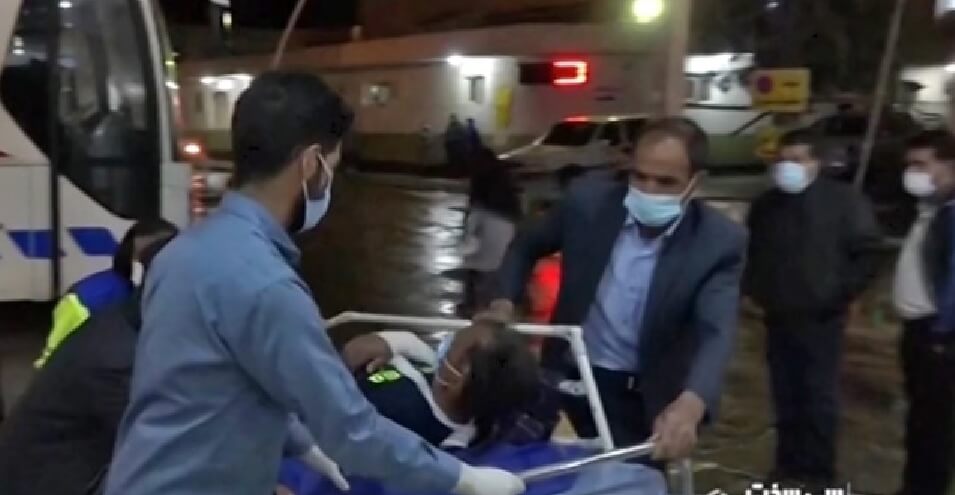
Reza Jafari, head of Iran’s Social Emergency, confirmed last Saturday (June 3) the news of the gang rape of “Baharah,” a five-year-old Afghan girl in Khomeinishahr, Isfahan, by three men, saying: “The case of child abuse concerns an Afghan girl who was kidnapped last week while she was playing in front of her house, and her half-dead body was found in a ruin a few hours later.” The Afghan embassy in Iran also confirmed the news, and the country’s foreign minister has tasked its ambassador to Iran with following up on the case.
The Afghan refugee girl has been discharged from the hospital after treatment, and the “perpetrators” of the rape have not yet been arrested. This news, following the repetition of such shocking incidents, occupied public opinion and sparked a wave of protests, especially on social networks. It was then announced that the gang rape was not true and that the case had only one accused. “Bahara” is the third Afghan girl to be a victim of sexual rape in the past two years.
Shortly before the rape of this little girl, the news of a group of students from Moein High School in western Tehran shocked public opinion to the point that the government, parliament, and judiciary intervened in the matter, and the Leader himself issued a decree to "enforce divine limits."
But Khamenei's response apparently was not convincing to public opinion, and some voices implicitly and many social media users explicitly spoke of the government's dual behavior towards these types of crimes, and they also brought up the case of Saeed Toosi, a Quran recitation instructor and one of the reciters close to the Supreme Leader's household, who was accused of sexually assaulting his students. The plaintiffs had reported the influence of the Khamenei household in the case and its effect on Saeed Toosi's "acquittal."
Increasing violence against sexual assault-related crimes
According to experts, child abuse, sexual assault, and rape are much more common than the statistics provided by official institutions. But a brief look at just the confirmed news about child rape in recent years shows that it is spreading on the one hand and becoming more violent on the other.
The body of Amir Mehdi, a 9-year-old boy who had gone out shopping in January 2012, was found near Tehran, having been raped.
Nine-year-old Mohammad Reza was murdered in Tehran in November 2014 after being raped. The killer, who had taken Mohammad Reza to his home under the pretext of taking him to the mourning shrines, slit his throat after the rape and left his body on the side of the street. Hossein was an eight-year-old boy in Zanjan who was strangled “with a zipper” after being raped in December 2014.
In August 2015, a 20-year-old young man raped an 8-year-old girl in a school bathroom and strangled her by wrapping a scarf around her neck. At the same time, in Sabzevar, the 17-year-old cousin of a 6-year-old girl named “Mahdiyeh” took her to the outskirts of the city and strangled her after raping her.
In May 2016, in Varamin, 16-year-old Amir Hossein raped and murdered a 6-year-old Afghan girl, Setayesh, and poured acid on her body. In August 2016, in Sonqor, a man who was planning to rape Hanana strangled her with a cloth after noticing the girl’s restlessness and fearing that his intention would be revealed. “Kiana” was a girl who was kidnapped by her uncle’s husband in Neyshabur in October 2016 and raped and murdered.
In June 2017, a man in the neighborhood of “Athena’s” father’s shop in Dasht-e-Moghan raped a 7-year-old girl after imprisoning her in his shop, then murdered her and hid her body in a sack and a plastic barrel. In July 2017, it was revealed that “Kimiya’s” stepfather in Karaj had murdered the girl after repeatedly raping her. In October 2017, “Ahora’s” stepfather raped the 3-year-old boy in Rasht and then killed him by repeatedly banging his head against a wall.
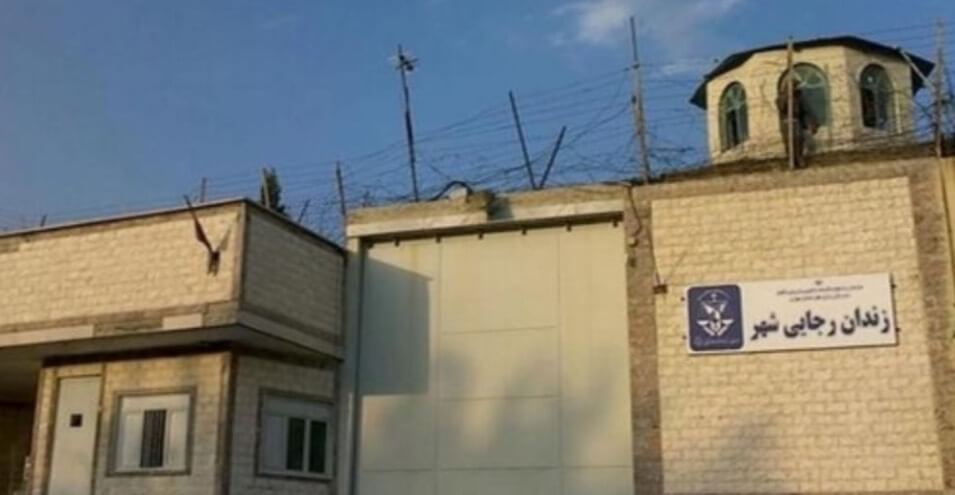
In April of this year (2018), a man confessed that after raping "Nada," he murdered the 7-year-old Afghan girl and left her body in a garbage bag in the Rajai Shahr town of Mashhad.
The latest example of child abuse that has been widely reported was the sexual assault of at least 30 students, all around 14 years old, at a certain school in western Tehran. The school's principal is accused of offering cigarettes, alcohol, and "pornographic films" to students, forcing them to have sex, and sexually abusing them.
An "eternal" bill
Before the recent painful incident in Khomeini Shahr, the rape case at Moeen School led to the re-submission of the "Children and Adolescents Protection Bill," and Mohammad Reza Aref, head of the Omid parliamentary faction, announced "follow-up" to pass it; a bill that has been languishing in the parliament for more than six years.
The laws in Iran to protect the rights of children and adolescents are incomplete. These incomplete laws were passed 26 years after the Islamic Republic was declared. This mundane nature has led the judiciary and the government to consider passing a bill through the parliament, despite the law on the protection of children and adolescents passed in 2002. This bill, which was initially submitted to the government by the judiciary in May 2009, was sent from the government to the parliament in November 2011, more than 6 years ago, with some changes, but to this day, it has not yet made it to the open floor of the parliament.
Many experts and civil society activists believe that the passage of such a bill, despite all its shortcomings, could have eliminated many problems related to the violation of children's rights and prevented widespread child abuse in society to some extent.
Child labor, marriage, and the buying and selling of children, along with sexual abuse, exploitation, and rape, are phenomena that have become the focus of public opinion and mass media in Iran, especially with the recurrence of crimes related to children. A series of painful incidents have also served as a catalyst, making the protection of children's rights and a more serious confrontation with the phenomenon of child abuse increasingly a civic demand.
The Child Protection Bill provides for severe penalties for all forms of child abuse, including “heavy fines and even long-term imprisonment.” The bill provides for imprisonment of between six months and 25 years for various levels of child abuse, including buying and selling children or trafficking their body parts, using them for prostitution and pornography, or creating grounds for suicide in children and adolescents, in addition to fines.
Soheila Jellodarzadeh, a member of the Social Affairs Commission of the Islamic Consultative Assembly, said on Thursday that the bill has "finally" left the Judiciary Committee and is now "on its turn to reach the floor of the Assembly."
Unclear definitions
Sexual abuse, harassment, violence, and rape still lack clear definitions in Iranian law. Shahindokht Molaverdi, the Iranian president’s assistant for civil rights, said on June 29 that “our current laws do not provide the necessary deterrence against sexual harassment; sexual harassment is neither defined nor is there a specific punishment for it.”
One reason for this ambiguity is the “barrier of Sharia law” to the passage and implementation of civil laws. In the Islamic state of Iran, all laws must conform to the precepts of Shiite Islam. For example, although child rights advocates consider child marriage to be an example of “sexual abuse,” Sharia law sets the age of puberty for girls at 9 years. However, in Iran, marriage is legal for girls from the age of 13 and for boys from the age of 15. Of course, marriage for girls and boys before these ages is also permitted “with the permission of a guardian and with the determination of the court, subject to the best interests of the child.”
To this problem must be added the “morals” and social and cultural taboos of Iranian society, which affect both the difficulty of passing civil laws and sex education and enlightenment regarding sexual harassment and assault. According to Soheila Jellodarzadeh, in Iran the phenomenon of sexual harassment is dealt with “confidentially.”
In no society, of course, are people considered "responsible," and "those in charge" are in their positions precisely for this reason, to take on the "responsibility" of carrying out highly responsible matters.
Religious rule versus civic education
In his initial reaction to the recent “bitter and shameful crime” at Moein School in west Tehran, Iranian Education Minister Mohammad Bathaei said, among other things, “We have started educating families, and we are also strengthening the education of students.”
However, enlightening about sexual relations and informing and preparing children and adolescents to recognize sexual abuse are among the issues that face government obstacles in Iran.
The daily programs of the Islamic Republic of Iran Broadcasting clearly show that the government model in this area is the same “privacy” that the member of the Parliament’s Social Commission has spoken about. Ms. Jellodarzadeh says: “If people want to govern society with restrictions, taking into account the human spirit of escaping restrictions and seeking freedom, they will definitely make the problem bigger. Today, in order to overcome existing problems, they must use the engine of awareness and inject awareness into society.”
Soheila Jellodarzadeh is referring to UNESCO’s Education 2030 document, the same controversial document that so angered the Islamic Republic’s Supreme Leader, Ali Khamenei, that he ordered its cancellation, saying, “This is the Islamic Republic.” Noting that UNESCO “is definitely under the influence of world powers,” Khamenei emphasized that the Islamic Republic “will not bow to such documents and will not surrender to them.”
Iranian fundamentalists, many of whom, according to their own statements, are unaware of the full content of this 368-page document, launched such extensive propaganda against it that even one of them (Hossein Ali Haji Deligani, a member of parliament), after the scandal of the assault on students at a certain school, said that this incident was the "fruit" of the 2030 document, which is being implemented "in a haphazard manner" in some schools, including the West Tehran school.
The UNESCO Education 2030 Agenda, adopted by the UN High-Level Conference of Member States in September 2015, aims to improve the quality of education in different countries. The document was adopted under the title “Towards quality, equitable and inclusive lifelong learning for all.”
Among the issues addressed in this document is combating educational inequalities between women and men. In addition to emphasizing gender equality in education, the 2030 document also emphasizes sex education in schools in its basic strategies section. It seems that the sensitivity of the Leader of the Islamic Republic towards this document also stems from this; where civil laws do not meet the “Shari’a” expectations of the religious government.
Source: DW