Coronavirus crisis: 620 medical staff infected in just 2 Tehran hospitals
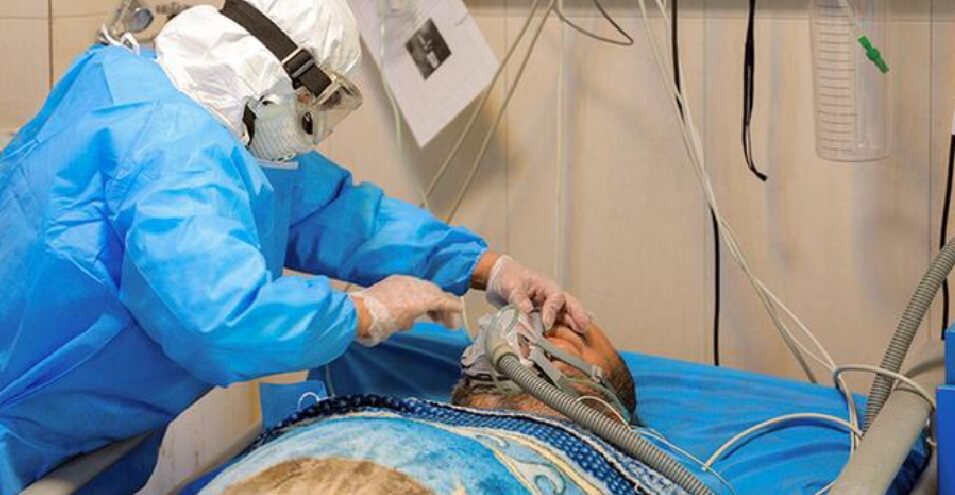
The number of coronavirus victims in Iran has exceeded 29,000, and Tehran hospitals are experiencing their most critical days. At Sina Hospital alone, 400 people, about a third of its medical staff, have so far been infected with COVID-19.
Warnings about fatigue and burnout of medical staff in Iranian hospitals have been repeated for months, but apparently the situation in the Tehran metropolis is worse than in other areas.
The head of the Medical System Organization warned at a ceremony on Tuesday, October 12, referring to the fatigue of medical staff, that treating coronavirus in the intensive care unit (ICU) is not possible, but rather that prevention should be considered.
According to ISNA news agency, Mohammad Reza Zafarghandi said at the ceremony: "Some decisions were not made in an expert manner, such as the reopening of schools with the requirement of in-person attendance or the announcement of protocols that were not mandatory to comply with."
Health Minister's claim about coronavirus management
At the same time as these remarks, Health Minister Saeed Namaki claimed in a conference at the Oil Ministry building that Iran will undoubtedly be "among the world's leaders in managing the coronavirus in the very near future."
Despite this claim, the head of the Medical System Organization accused officials of ignoring the warnings and said: "The coronavirus is a global disease, but the death toll among the people and medical staff in the country is unacceptable, and this issue should have been addressed in advance. Sufficient warnings were given, but they were not heeded."
On Tuesday, Alireza Zali, commander of the Tehran Province Coronavirus Response Headquarters, and the directors of two major hospitals in the capital presented statistics on coronavirus-related infections and deaths among medical staff, which, contrary to the Health Minister's statements, raises concerns about the future of "coronavirus management."
One-third of Sina Hospital staff infected
Zali says that so far, 200 medical staff who contracted COVID-19 have lost their lives. Mohammad Talebpour, head of Sina Hospital, also says that about a third, or 400, of the hospital's 1,200-strong staff have been infected with the coronavirus.
Hossein Badakhshan, director of Modares Hospital in Tehran, also announced that 220 employees of the hospital have been infected with the coronavirus, and said that since the beginning of October and the start of the third wave of the coronavirus outbreak, the number of visits and hospitalizations of coronavirus patients in the hospital has increased "suddenly and exponentially."
He told ISNA: "All beds allocated to coronavirus patients, both in the regular and special wards, have been filled. We had even considered a number of additional beds alongside the regular beds, which have also been filled."
The head of Sina Hospital also told ILNA News Agency, "Because we have been at peak for a long time," the hospital's beds are always full, and in fact, "all of our beds have been fully occupied for about a month."
The number of victims has exceeded 29,000.
This sharp increase in cases and hospitalizations in recent weeks has also been reflected in official statistics. According to a spokesperson for the Ministry of Health, 4,108 new COVID-19 patients were identified in Iran in the 24 hours ending at noon on October 12.
Sima Sadat Lari says that 254 patients with COVID-19 have died in the past 24 hours, bringing the number of victims to 29,079.
In the past nine days, there have only been two days where the number of new cases has been slightly below 4,000, and on the other days, it has been higher. This trend has not been seen in the nearly eight months since the official confirmation of the coronavirus outbreak in Iran.
This unprecedented trend is also visible in the number of deaths. In the past 10 days, only one day has the number of victims been slightly below 200, and in that time the record for deaths in a single day has been broken several times.
Fivefold increase in hospitalizations
The Minister of Health says that fifty days after the outbreak of the coronavirus in Iran, the number of victims reached 30 people per day, but in subsequent waves, "components took effect so that we went from 30 deaths per day to triple-digit deaths."
He did not elaborate further on these components, but the head of the Military Medical Organization and the directors of Sinai and Modarres hospitals cite a lack of attention to prevention and a lack of strict supervision over the implementation of health guidelines as one of the factors behind the sharp increase in cases and hospitalizations.
In addition, the increasing number of critically ill patients requiring hospitalization and the filling of the capacity to accept coronavirus patients in most hospitals and clinics have presented the healthcare system with serious challenges.
The head of Sina Hospital says that at the beginning of the coronavirus outbreak, 10 out of every 100 people who visited the hospital were critically ill, but now 50 of the same number are critically ill and require hospitalization.
Warning of 600 to 700 deaths per day
At the same time, Talebpour told ILNA that this does not necessarily mean that the disease is becoming more severe, because currently those whose condition is not acute and who are in better conditions "are not willing to come to the hospital" and continue their treatment by visiting the doctor's office.
Citing a Health Ministry estimate, he added: "If the situation continues like this for another year and a half, we will have 600 to 700 deaths per day and a total of about 300,000 deaths due to Corona."
Mohammad Talebpour says that if people do not have "superior will" and health systems are not strengthened, we will witness "massive deaths," and this could happen not only in Iran but also in other countries.
The head of Sina Hospital noted that many countries that focused on health have been more successful in controlling the coronavirus than countries that focused on treatment.
He believes that in Iran, too, more work should be done to prevent people from getting infected, "otherwise, even if the number of hospitals increases tenfold, the situation will still be difficult when the epidemic is not controlled."
Source: DW