The dollar price exceeded 25,000 Tomans and the euro exceeded 29,000 Tomans.
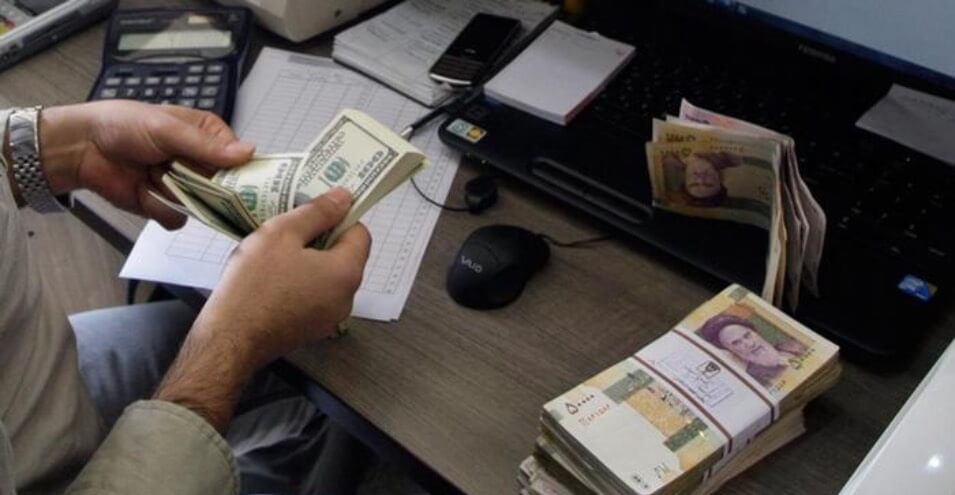
The renewed increase in the dollar price in the Iranian currency market indicates the failure of the Central Bank of Iran's policy of injecting foreign currency into the market. The dollar-rial exchange rate has once again risen after a brief decline in the last days of August.
The dollar supply rate in the open market reached more than 25,000 tomans (25,250) on Tuesday, September 8. Thus, the upward trend of the dollar price in the Iranian currency market has continued.
According to statistics published by the "World of Economics" magazine, the dollar exchange rate against the rial has increased by about 600 tomans in the past two days.
This is despite the fact that the monetary and fiscal policy pursued by the Central Bank of the Islamic Republic in relation to controlling the dollar-rial exchange rate has not been responsive to the developments in the Iranian currency market.
It is said that the Central Bank had once again injected billions of dollars into the Iranian foreign exchange market to contain the rise in the dollar's value.
$280 billion injection
Abdolnaser Hemmati, the governor of the Central Bank, announced three months ago (June 3) that this financial institution had injected an amount equivalent to $280 billion into Iran's foreign exchange market in the past 15 years.
Even the injection of such a huge amount into the foreign exchange market has not been able to prevent the upward trend of the dollar exchange rate in the Iranian foreign exchange market in recent years. For example, the selling rate of the dollar in 2005 (15 years ago) was about 900 tomans.
The injection of dollars into the Iranian currency market is taking place at a time when Iranian President Hassan Rouhani has repeatedly stated that "we have no intention of putting our hands in the pockets of the central bank." This is despite the fact that injecting foreign currency into the market is effectively "putting our hands in the pockets of the central bank."
Hemmati had this to say about the Central Bank's monetary and financial policy and the injection of dollars and foreign currency into the Iranian market:
"We have injected $280 billion into the foreign exchange market over the past 15 years, or an average of $18 billion per year, to control the exchange rate, so it is natural that much of this currency has left the country as capital. All of these facilities purchased abroad were due to these currencies, meaning cheap currencies and rents."
In other words, despite the annual injection of $18 billion in foreign exchange into the Iranian market, the value of the dollar has increased 27 times in this 15-year period.
The euro exchange rate also reached 29,382 Tomans on Tuesday, September 8. The prices of other foreign currencies, including the UAE dirham and the Turkish lira, have also shown an upward trend.
The coin also became expensive.
Houshang Shishebaran, head of the Isfahan Gold and Jewelry Union, has linked the increase in the price of foreign currency as well as the price of gold and jewelry in Iran to sanctions and the coronavirus pandemic.
Referring to the increase in the price of gold and jewelry in Iran, he said that the market has stagnated and that "sales of gold and jewelry have practically reached zero."
This is despite the fact that despite the “stagnation” of the gold market, the price of each coin increased by 200,000 tomans on Tuesday, September 8, compared to the previous day. Currently, the price of the coin in Iranian markets has reached 11,600,000 tomans.