Recognizing the Charter of Cyrus the Great is a historic step for cultural heritage and human rights
The Charter of Cyrus the Great was recognized as one of the world's first charters in the field of human rights and respect for cultural diversity, which is a historic step for cultural heritage and human rights.
In an event that many have described as an important step in recognizing the world heritage of justice and tolerance, the "Cyrus the Great Charter" was recognized at the 43rd UNESCO General Conference in Samarkand, Uzbekistan, as one of the first charters in human history that emphasizes the principles of freedom, justice, tolerance, and respect for cultural diversity.
This decision was approved at the official UNESCO meeting on Thursday, November 6, equivalent to 15 Aban. According to the approved resolution, the Cyrus Charter is a document that, more than two thousand five hundred years ago, explained values that today lie at the heart of the universal concept of human rights.
In the resolution, UNESCO described the Cyrus Charter as “a fundamental document in the history of human civilization” and stressed that the concepts inspired by it should be disseminated in educational, cultural and human rights programs. The organization also announced that it would use the Charter as a model for promoting intercultural dialogue, mutual respect and sustainable peace.
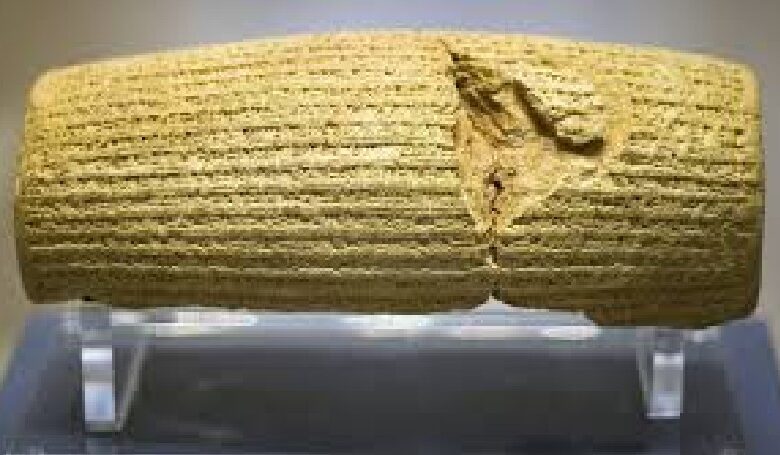
The Cyrus Cylinder, or "Cyrus Cylinder," is a clay tablet discovered in 1879 in the Babylonian region (now in Iraq). The artifact is now housed in the British Museum and is written in Akkadian and cuneiform.
In this historical document, Cyrus the Great (founder of the Achaemenid Empire) after conquering Babylon, issues a decree to release a group of captives and rebuild temples and places of worship. Researchers believe that this text is the first example of a government decree that emphasizes religious freedom, respect for the beliefs of others, and the rights of conquered peoples. Among these groups were the Babylonian exiled Jews, who, according to historical sources, were allowed to return to their homeland by order of Cyrus.
In 1971, the United Nations published the full text of the Charter in six official languages, and a copy is kept at the organization's headquarters in New York. Since then, the Cyrus Charter has been recognized in many academic and human rights circles as "the first known charter of human rights."
Cultural and religious experts see UNESCO's decision as a sign of the connection between ancient values and modern human concerns. At its time, the Cyrus Charter emphasized principles that are echoed in international human rights texts today, including the right to freedom of religion and thought, personal security, and the prohibition of slavery and discrimination.
Some observers believe that the Cyrus Cylinder can serve as a bridge between different cultures, especially in a region that has seen centuries of religious and ethnic tensions. They believe that reinterpreting the message of peace and tolerance in an ancient text can inspire contemporary efforts for religious freedom and interfaith coexistence.
Following this resolution, UNESCO has been mandated to incorporate the concepts derived from the Cyrus Charter into educational and cultural programs. The aim of this action is to expand education that familiarizes young people with the historical roots of the concepts of human rights and respect for cultural differences.
A UNESCO cultural official said on the sidelines of the meeting that this decision is "a tribute to a heritage that transcends time and geography and upholds common human values."
This is the first time an ancient Iranian document has been recognized globally as a charter related to human rights. Cultural observers see the move as an opportunity to showcase an aspect of Iranian civilization that is based on human dignity and peaceful coexistence.
Some commentators believe that the recognition of Cyrus' Charter is not only an honor for Iranian history, but also a reminder of the responsibility of today's societies to uphold freedom and justice; principles that Cyrus the Great had emphasized centuries ago.
The adoption of this resolution in Samarkand is a reminder of the age-old bond between culture, faith, and humanity. The Cyrus Cylinder, with its timeless message of freedom and respect, continues to inspire nations in their steadfast search for justice and peace.
By recognizing this ancient document, UNESCO has taken another step towards recognizing the universal and spiritual values of humanity, values whose roots must be sought in the clay tablet of Cyrus and in the free and justice-seeking spirit of man.