The Islamic Republic is using children for ideological service.
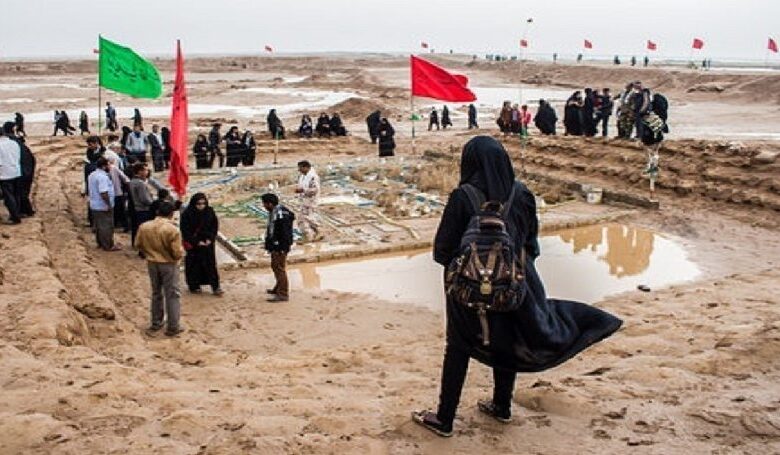
Sending hundreds of female students to war zones is a symbol of the ideological abuse of children in Iran and a clear violation of the Convention on the Rights of the Child in the "Rahian Noor" camps.
In a move that is considered a clear violation of Iran's international obligations, the Islamic Revolutionary Guard Corps has dispatched 350 female students from the city of Yasuj to operational areas of the Iran-Iraq war as part of a project called "Paths of Light."
According to Mustafa Masnavi, commander of the Kohgiluyeh and Boyer Ahmad Conquest Corps, these students left for the south of the country in 10 convoys for three days, and more than 6,000 other male and female students are scheduled to be sent to these camps in the coming weeks.
The Universal Declaration of the Rights of the Child (1989), which Iran acceded to in 1994, prohibits the recruitment of children under the age of 18 in any form of military or paramilitary activity. However, the Islamic Republic has repeatedly been accused of exposing children to ideological indoctrination and violent images related to war under the guise of cultural or religious beliefs.
Amnesty International and Human Rights Watch (HRW) had previously warned that the "Path of Light" camps and similar programs are part of the regime's policy to institutionalize a culture of martyrdom and military obedience in the younger generation, a policy that contradicts Articles 38 and 39 of the Convention on the Rights of the Child on the Protection of Children from War and Violence.
Independent experts believe that the forced or quasi-forced sending of students to these camps is a clear example of the instrumental use of children for political and ideological purposes. A recent report by the Human Rights Activists in Iran (HRA) stated: “The Islamic Republic of Iran exploits children to reproduce military and ideological models, including through paramilitary training, religious propaganda, and sending them to war zones with the aim of establishing the official narrative of war and martyrdom.”
In addition to the ideological content, there are also safety concerns about these camps. In recent years, several fatal accidents have been reported, including the overturning of a bus carrying students on the Rahian Noor route, which resulted in the deaths and injuries of dozens of people.
Human rights analysts believe that the main purpose of such camps is not to teach history, but to mold the minds of teenagers towards the government’s ideology. According to a researcher at the Iranian Human Rights Documentation Center: “The Islamic Republic has transformed religious identity into a tool of control and social mobilization by using the concepts of martyrdom and jihad. Children who are not yet able to separate ideology from faith are exposed to indoctrination.”
UN experts have previously warned about child rights violations in Iran and called for an immediate end to any use of children in activities related to military or paramilitary forces. UNICEF has also repeatedly stated that schools and training camps must be safe environments free from political and religious pressure.
While the Islamic Republic calls the sending of these students a “cultural act to promote sacrifice and resistance,” international institutions consider it a clear violation of children’s rights and religious exploitation of them. The continuation of such a trend could lead to international complaints against Iran under the Optional Protocol to the Convention on the Rights of the Child on the Involvement of Children in Armed Conflict, a document to which Tehran, although a signatory, has not actually adhered.