New Zealand imposes new sanctions on Iranian officials in moral response to bloody crackdown on protesters
New Zealand's new sanctions against Iranian officials following the bloody crackdown on protesters send a clear message about defending human dignity and fundamental freedoms.
In response to the widespread suppression of popular protests in Iran, the New Zealand government approved a new package of sanctions against dozens of Islamic Republic officials; a move that is being interpreted internationally as a show of solidarity with other Western democracies.
According to an official announcement from Wellington on Wednesday, February 25, 2020, 40 officials involved in the crackdown on protesters have been banned from entering New Zealand. The decision includes members of the Islamic Revolutionary Guard Corps (IRGC) as well as senior government and judicial officials.
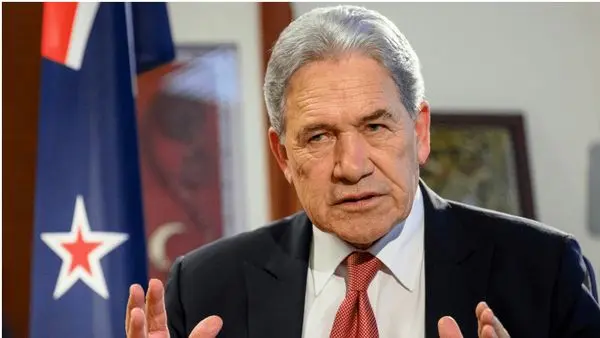
New Zealand Foreign Minister Winston Peters said in explaining the decision: “It was horrifying to see the brutal killing of thousands of protesters in Iran.” He also went on to emphasize the fundamental rights of citizens, adding: “Iranians have the right to protest peacefully, to enjoy freedom of expression and to access information. These rights have been brutally violated.”
For Christian media and institutions defending religious and civil liberties, this stance is a reminder of the principle of inherent human dignity; a principle that is also rooted in Christian teachings and considers freedom of conscience, expression, and the right to peaceful protest to be part of God-given human rights.
Among the sanctioned individuals are names such as "Ismail Khatib", Minister of Intelligence, "Eskandar Momeni", Minister of Interior, and "Mohammad Movahedi Azad", Attorney General of the country; figures who, from Wellington's perspective, have played a role in the decision-making structure or implementation of repression.
In addition, the New Zealand government announced that three Iranian citizens have also been placed under restrictions for their involvement in the Islamic Republic's destructive activities abroad. The sanctioned individuals will not be allowed to enter New Zealand nor will they be able to transit through its territory.
With this decision, New Zealand joins countries such as the United States, the European Union, Australia, the United Kingdom, and Canada that have increased punitive measures against Tehran in recent months.
Wellington had previously, in three separate rounds, targeted 55 Iranian officials with travel bans over human rights abuses. 29 Iranian citizens and 19 entities affiliated with the Islamic Republic have also been sanctioned for supporting Russia's military campaign against Ukraine.
This trend indicates that New Zealand's foreign policy, which usually emphasizes multilateralism and respect for international law, has adopted a tougher approach towards Iran.
The New Zealand Foreign Minister continued his stance, saying: "Iran's destabilizing activities fall far outside the bounds of acceptable government behavior. Today's actions send a clear message that those who act with callous disregard for human life have no place here."
He also stated: "New Zealand will continue to act carefully and in coordination with its partners whenever it witnesses behavior that undermines international law and regional stability."
For many observers, the sanctions are not just a diplomatic move, but a sign of moral accountability for widespread human rights abuses. In a climate of reports of widespread detentions, torture, and restrictions on civil liberties, Wellington’s decision sends a symbolic message about the importance of justice and accountability in the international arena.
The new sanctions, although limited in nature to travel bans, along with similar measures by other countries, increase political and prestige pressure on officials in the Islamic Republic; pressure that, according to its supporters, aims to defend human lives and preserve freedoms that, from the perspective of many faith communities, are considered part of the divine dignity and honor of man.