In an unprecedented move, the British government banned the Quds Day march in London.
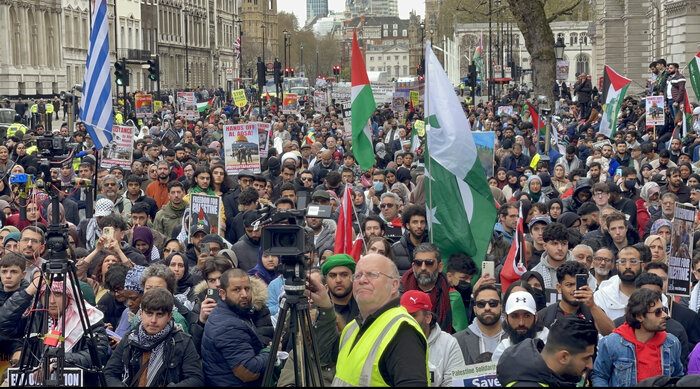
The British government has banned a Quds Day march in London, citing the risk of "public disorder" and following controversy over the organizers' support for Ali Khamenei, a decision that marks the first ban on a protest march in the country's capital since 2012.
The British Home Office has agreed to a request from London's Metropolitan Police to prevent a so-called "Quds Day" march from being held in the country's capital, a move that officials said was aimed at preventing "public disorder."
The march was scheduled to take place in central London on Sunday, March 15, but security officials warned that due to the political situation and tensions, there was a possibility of clashes between different groups and opposing protesters. Accordingly, the London police asked the government to revoke the permit for the rally, and the Home Office agreed to this request.
In a statement released on the matter, the British Home Secretary said: "I am satisfied that, given the scale of this gathering and the holding of several counter-protests, and in the context of ongoing conflicts in the Middle East, this action is necessary to prevent serious public disorder."
He also warned that if a rally is held in a static manner, the police can impose strict conditions on it and any hateful or provocative actions will be dealt with legally.
One of the main factors behind the mounting pressure to cancel the rally was the stances and statements made by some of its organizers. Reports indicated that the organizers had supported Ali Khamenei, the former leader of the Islamic Republic of Iran, which was seen in the British political environment as a sign of alignment with the Iranian government.
Critics say the Quds Day march has been marred by controversy in previous years. According to London police, in previous editions of the rally, people have been arrested for supporting banned organizations or committing hate crimes and anti-Semitism.
Before the decision was announced, a number of MPs from both major British parties (Labour and Conservative) had called for the march to be banned, arguing that holding such a rally could endanger public safety, given the regional tensions and the heated political climate.
Ultimately, after security checks and a formal request from the Metropolitan Police, the government agreed to ban the march.
The British government's decision is also notable from another perspective. This is the first time since 2012 that London police have succeeded in using legal powers to ban a protest march in the capital.
The Metropolitan Police stressed that the request to ban the rally was not made lightly and was based solely on a security assessment of the risk of clashes between different groups and counter-protests.
In contrast, the organizers of the march have condemned the government's decision as political. According to them, Quds Day marches have been held in London for decades and the organizers claim that the event has usually been peaceful.
Despite the ban on marches, reports indicate that there is still a possibility of limited, static gatherings under heavy police supervision; gatherings that, if held, will be under full control of security forces, according to officials.