North Korea threatens to cancel meeting with Trump if unilateral pressure for denuclearization is applied
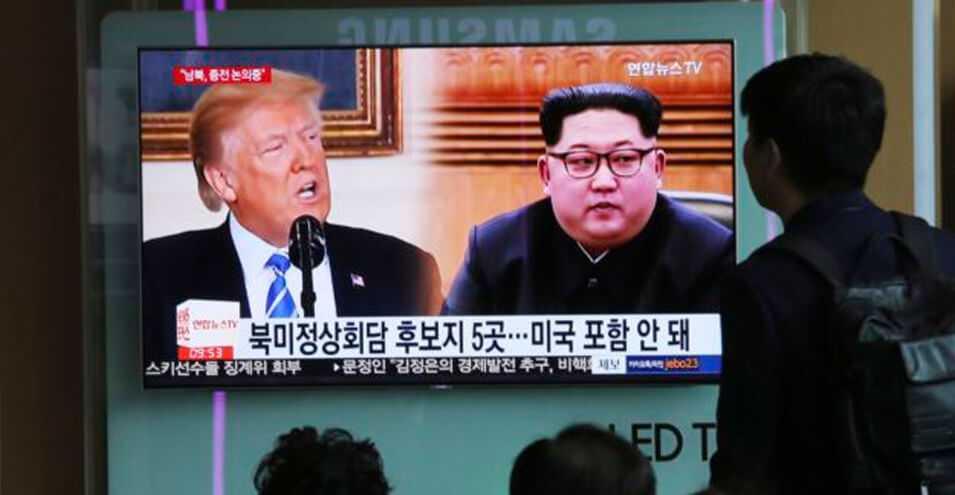
North Korea's vice foreign minister says Pyongyang will reconsider upcoming talks with the United States if pressure continues to pressure his country to "unilaterally" give up its nuclear weapons.
On May 16, North Korean Vice Foreign Minister Kim Kye-gwan told the country's official news agency, "If (the US) wants us to engage in negotiations that completely sideline us and unilaterally demand that we abandon our nuclear weapons, we will no longer be interested in negotiations."
Kim Kye-gwan added that in such circumstances, "it is obvious that we will reconsider our response to the upcoming negotiations with the United States."
"If the Trump administration enters into negotiations [with North Korea] with a sincere commitment to improving relations, it will receive an appropriate response from us," he says.
Donald Trump tweeted on May 11: "The meeting between Kim Jong Un and I will be in Singapore on June 12th. We will both be trying to create a special moment for world peace."
The North Korean Deputy Foreign Minister has also criticized the statements of John Bolton, the US President's National Security Advisor, and other US officials about the need to pursue the "Libya option" regarding North Korea's nuclear arsenal and to commit to Pyongyang's "complete and irreversible denuclearization."
The North Korean official was referring to Washington's demand for the complete abandonment of nuclear weapons as a first step, followed by the suspension or lifting of sanctions. South Korean media outlets in recent weeks have quoted officials from that country as saying that North Korea has two options: one is for the US government to offer a suspension for a suspension, similar to the nuclear talks with Iran, meaning that the nuclear program and sanctions would be lifted step by step, or it could ask Pyongyang to completely and irreversibly abandon its nuclear program and then benefit from the suspension or lifting of sanctions after verifying this.
Not long ago, Japan's state news agency reported that US government officials had told Tokyo that they wanted the second option.
Mr. Trump's national security adviser, John Bolton, said last week that the US government's withdrawal from the JCPOA would signal that the US would not accept "unsatisfactory" proposals and plans and would strengthen the US position. "I think the message to North Korea is that the president wants a real deal," Mr. Bolton said.
Mr. Trump is a staunch critic of the Iran nuclear deal and has withdrawn his administration from the Joint Comprehensive Plan of Action. He has called for reforms to the deal, including to prevent Iran from obtaining a nuclear weapon irreversibly and indefinitely and to allow for extensive inspections of Iranian facilities. Tehran has opposed renegotiating the deal.
A senior Trump administration official told reporters when the US president agreed to talk to the North Korean leader, "All options are on the table and our position on the North Korean regime will not change until we see serious steps towards denuclearization. What we are looking for is serious steps towards denuclearization."
The latest comments from the senior North Korean government official came hours after Pyongyang said it was suspending planned talks with Seoul over joint South Korean-US military exercises, which South Korea's defense ministry said would take place.
Source: Radio Farda