Producer Farahbakhsh attacks women protesting sexual violence: "Flog them"
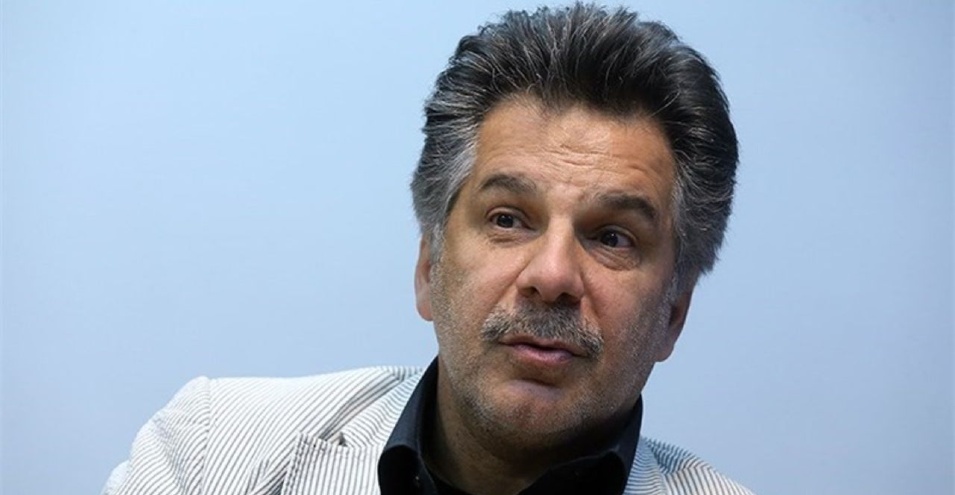
Hossein Farahbakhsh, a prolific producer in Iranian cinema, called for "lashing" female filmmakers who have protested against "sexual violence, harassment, and blackmail" in the cinema and theater fields and demanded an end to it.
This male Iranian cinema producer, in the "Cinema-Ma'yar" radio program, which examined the statement of female filmmakers and its ramifications, called the protest action of female filmmakers "dirty betrayal" that "has caused the dignity of cinema to be lost."
In this program owned by the Iranian Broadcasting Corporation, he continues, in a harsh tone and aggressive language, calling for the trial and flogging of 800 female filmmakers who have called for improving the current conditions of cinema by drafting a "legal code" and requesting its approval and implementation by the cinema house.
The beginning of the public and collective protest by women involved in Iranian cinema dates back to mid-April of this year. Dozens of Iranian female filmmakers issued a statement protesting the prevalence of "sexual violence and harassment" in their workplace and calling for punishment for violators.
In a late response to this statement, the Cinema House declared the "Protection Council" responsible for handling "any behavior that is contrary to cultural norms and professional ethics of cinema professionals."
However, in response to the Cinema House's statement, women protesting sexual violence announced that the institution lacked the "necessary independence" to handle such cases and that some of its members had "actively suppressed the narratives of female filmmakers." They then formed a committee to address "sexual harassment and violence" in the fields of cinema and theater, and put the issue of drafting a legal regulation aimed at protecting women on the agenda.
The regulations for women filmmakers, which were recently finalized with the assistance of five lawyers, do not limit themselves to sexual violence, but also consider other types of violence, including physical, verbal, psychological, and economic.
The protests of women involved in cinema and theater and their pursuit of improving working conditions, along with widespread support, were also met with criticism from figures close to the government. Among them, Mohsen Mahdian, CEO of the Hamshahri Institute, had previously called these protesting women “national neoliberal parrots” in a note and wrote that “since Iranian cinema became Hollywood, its discrimination and aggression have reached us.”
In recent months, many critics of the protest actions of female artists have either denied the moral corruption in the fields of cinema and theater or have considered women to be the main culprits of the current situation.
The most recent and harshest reaction, however, came from Hossein Farahbakhsh, a producer who himself has previously been accused of "rape" and assaulting at least one female actress.
On a radio program, Hossein Farahbakhsh called the protesting women's crime "spreading prostitution" and said: "Who values and respects them enough to include these words in their contract as a producer?"
Mr. Farahbakhsh further emphasized that "we do not recognize these women" and "the cinema house has a board of directors and a system, what do we need to allow these 800 people to come!"
Stating that "they are wrong to tarnish our reputation," he goes on to claim that "cinema is the cleanest of all the pillars of this country."
The producer also blamed female filmmakers for the issue of sexual assault and rape, saying: "If someone wants to make a mistake and then regrets it, it's not sexual assault, it's that person's stupidity."
Continuing the pressure on protesting female filmmakers, in recent months a number of men accused of assault and rape in the cinema and theater fields have filed complaints against some female actors. Among them, Taraneh Alidoosti, an actress and member of the Independent Committee to Follow Up on "Violence, Harassment, and Sexual Blackmail" in Cinema and Theater, announced on July 28 that Habib Rezaei and Mehdi Koushki, among the actors accused of sexual harassment, have filed complaints against her.
Somayeh Mirshamsi, the assistant director who accused famous actor Farhad Aslani of "sexual harassment" in April of this year, also announced on June 13 that the actor had filed a complaint against her at the Cinema House.
Source: Radio Farda