The Chaharshanbe Suri incidents left 9 dead and around 1,900 injured.
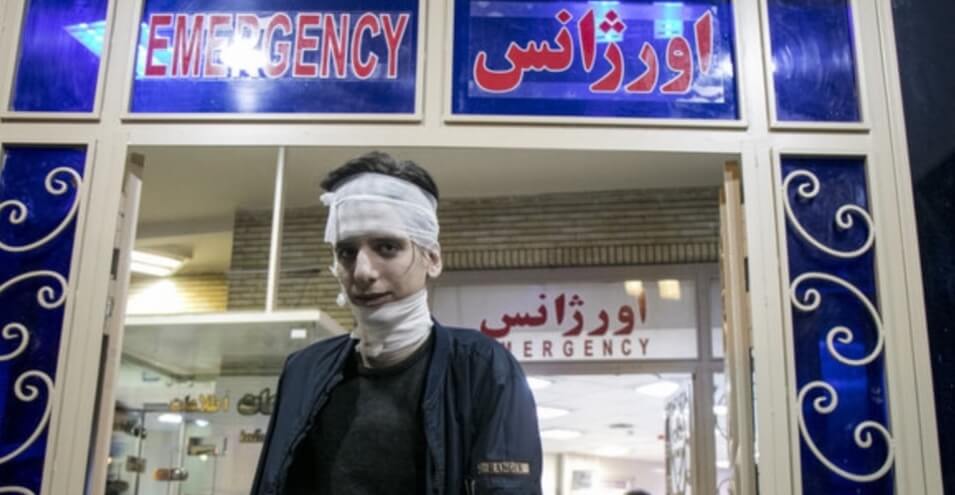
The spokesman for Iran's emergency services announced on Wednesday, March 17, that the events of last night's Wednesday of the Fourth of July left 9 dead and nearly 1,900 injured and wounded.
He had previously said that since the beginning of March this year, at least "eight people" have died in connection with the "Charshanbeh Suri incidents" and "70 people" have had their limbs amputated.
Mehr News Agency quoted Mojtaba Khalidi as saying on Wednesday: "In the ceremony held on Wednesday at the end of this year, 1,894 people were injured, 131 had their limbs amputated, and unfortunately, 9 people died."
He added: "527 people suffered eye injuries, compared to 512 last year. Also, 131 people had their limbs amputated this year, compared to 193 last year."
According to the emergency official, "70 percent of the injured were using flammable materials and 30 percent were pedestrians and rescue workers."
Mr. Khalidi announced the highest number of injured in Tehran, East Azerbaijan, Kermanshah, and Markazi provinces.
Mojtaba Khalidi said: "Tehran province with 553 people, Tabriz with 185 people, and Kermanshah with 140 people had the most injuries related to the incidents on Wednesday, the end of the year."
Every year, as the last Wednesday of the year approaches, many cases of explosives explosions are reported in the country. Last year's Chaharshanbe Suri incidents in Iran left two dead and 751 injured.
Last year, the majority of casualties were from Tehran, East Azerbaijan, and West Azerbaijan provinces, but the Iranian Ministry of Health announced that the number of casualties in Wednesday's accidents had decreased compared to previous years.
Last year, the number of fatalities was two, but in 2018, the number was six, the same as this year's number of fatalities as of Tuesday evening.
Chaharshanbe Suri is celebrated every year on the last Tuesday night of the year. According to Kourosh Niknam, a Zoroastrian monk, five days before Nowruz, the people of Iran would light fires to attract the spirits of the deceased to them, and on the first day of Nowruz, they would take this fire to rooftops or high places to chase away the spirits.
Lighting fires, light displays, or setting off firecrackers at various celebrations is also common in some other ancient cultures on the Asian continent. People in mainland China celebrate the New Year - which marks the beginning of spring in the Chinese lunar calendar - with fireworks and firecrackers to scare off a mythical "monster" and have a good year.
Diwali or Deepavali, one of the most important and prominent Hindu festivals, also comes with housewarming and a display of lights. The word "deepa" in Sanskrit means lantern or lamp, and the festival symbolizes the victory of goodness and knowledge (light) over evil and ignorance (darkness).
Source: Radio Farda