Blackouts: The War of Gold between the IRGC and the Government
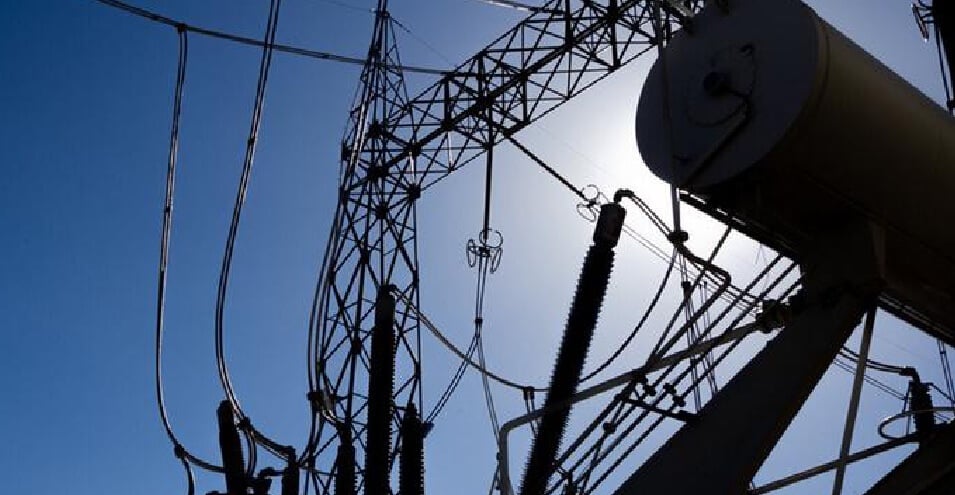
Widespread blackouts in Iran over the past few days come as the government claims cryptocurrency miners are disrupting the country's electricity supply. The media and some members of parliament close to the IRGC are blaming the deterioration of the power grid for the blackouts.
Mohammad Hassan Metwalizadeh, CEO of Tavanir Company, says that during the company's efforts to collect cryptocurrency mining centers, they were "shot at."
At the same time, during a government meeting, assistance was sought from the Ministry of Intelligence and the Economic Security Police to combat cryptocurrency mining.
Last week, blockchain analytics firm Elliptic released a report estimating that 600 megawatts of electricity are used annually in Iran to mine $1 billion worth of Bitcoin.
Such a huge amount of income, equivalent to four months of the Armenian government budget or two months of the Afghan government budget, cannot be the work of ordinary people. It has previously been reported that the IRGC, in collaboration with Chinese miners, has set up large cryptocurrency mining farms in Rafsanjan and other parts of the country and is using cheap electricity in the country.
Metwalizadeh's words about "shooting at Tavanir Company agents" and the Ministry of Energy's request for assistance from the Ministry of Intelligence also indicate that their opponent is the Revolutionary Guard Corps.
But what is surprising in his words is the figure given for the electricity consumption of cryptocurrency mining farms.
He says 2,000 megawatts are used to mine Bitcoin in the country, more than three times the Elliptic Institute’s estimate.
If the Iranian government exported this amount of electricity, it would earn over $2.2 billion, and if this figure is correct, the annual income of Iranian miners from mining Bitcoin is actually over $3 billion.
Metwalizadeh says that licensed miners consume about 300 megawatts of electricity, and the rest of the electricity used to mine cryptocurrencies is unlicensed.
This amount of electricity consumption is equivalent to 3.5 percent of the country's total electricity consumption and more than 10 percent of the household electricity consumption of 30 million household subscribers.
According to an assessment by the International Energy Agency, Iran had about $52 billion in hidden subsidies in the electricity sector in 2019.
This means that if Iran exported all of its electricity to foreign markets instead of consuming it domestically, it would earn $52 billion more. Cheap electricity has made the cost of mining Bitcoin in the country very low, and even foreign miners, such as Chinese companies, have come to Iran to mine cryptocurrency.
What the government doesn't say
Government officials and the Ministry of Energy have always boasted about the country's "85,000 megawatts of electricity generation capacity" in recent years. However, detailed statistics from the Ministry of Energy show that the country's actual electricity generation capacity is 64,000 megawatts.
In fact, many old power plants that were decommissioned years ago are included in the "generation capacity" statistics, but the country's operational electricity generation capacity is 21,000 megawatts less than this figure.
On the other hand, when we talk about operational capacity, we consider the country's electricity production potential at its best, and this figure does not mean the country's actual electricity production. Last year, the country's highest electricity production was on August 31, and it was less than 58,000 megawatts.
The discrepancy between the operational agreement and the country's actual electricity production is due to the fact that the country's power plants, with a capacity of 12,000 megawatts, produced only 9,000 megawatts of electricity last year due to a lack of rainfall, and this year, Iranian officials say this figure has been halved. The suspension of operations for repairs at thermal power plants is another factor in the discrepancy between the country's operational and actual electricity production.
Therefore, while the country's peak electricity consumption has now reached 55,000 megawatts (3,000 megawatts less than the peak consumption in 2019), the country has faced widespread blackouts.
But what the government fails to mention regarding the blackouts is that nuclear power, which Iran claims to be trying to develop and which has cost the Iranian nation hundreds of billions of dollars over the past decade due to sanctions, accounts for 1% of the country's total electricity production.
On the other hand, according to the Ministry of Energy's own statistics, the rate of electricity losses in the country's old and worn-out electricity transmission and distribution system is more than 10 percent, equivalent to the electricity production of 10 nuclear power plants the size of the Bushehr power plant.
Last year, about 40 terawatt hours of electricity were lost in the country's distribution network, equivalent to one-third of the country's household electricity consumption.
On the other hand, the Iranian government had set a target of launching 4,800 megawatts of new power plants last year, but only 38 percent of this plan was achieved. In 2019, less than half of the country's electricity growth plan was achieved, and as a result, the country faced a power shortage last year as well, and the government more than doubled electricity imports to 2.7 TWh.
The natural growth in the country's electricity consumption is five percent annually, and the government should be building new power plants at the same rate, but it has not done so in the past few years.
Also, thermal power plants that operate on gas, fuel oil, and diesel fuel account for 85 percent of the country's total electricity production, but their average efficiency is very low, less than 39 percent.
With the help of foreign companies, Iran could convert old power plants with outdated technology into combined cycle power plants and increase their efficiency to above 44 percent, but sanctions and the government's lack of planning have prevented this.
On the other hand, 36 percent of the country's electricity is used in the industrial sector, and the efficiency of this sector is also very low and practically wastes a large portion of the country's electricity.
With 300 sunny days, Iran is one of the rare countries in the world for producing solar energy, but the share of clean energy in the country's electricity production portfolio does not even reach one percent. The operation of thermal power plants with highly polluting fuels such as mazut (furnace oil) not only wastes the country's capital, but also endangers the health and lives of citizens.
According to the Paris climate agreement signed by the international community in 2016, the Iranian government was supposed to reduce its greenhouse gas emissions by 4 percent, but statistics from the Global Carbon Project show that Iran's greenhouse gas emissions increased by 20 percent from 2016 to 2019, reaching 780 million tons. Iran is the sixth largest emitter of greenhouse gases in the world.
Iranian officials do not mention this issue and do not explain why, while there is a suitable platform for producing clean and renewable energy such as solar electricity, they insist on producing nuclear electricity, the cost of which is almost the same as solar electricity. Finally, after 20 years and a cost of $8 billion to build the Bushehr power plant, whose fuel was also purchased from Russia for the next 15 years, they insist on a nuclear program and uranium enrichment, and finally, the share of nuclear energy in the country's total electricity production is only 1 percent.
Source: DW