A collective request from lawyers and political prisoners to cancel a resolution of the Supreme National Security Council
A number of lawyers, former and current political prisoners, and families of political prisoners have written a letter to Ebrahim Raisi, President of the Republic, Chairman of the Supreme National Security Council, and Head of the Judiciary, calling for the cancellation of a "secret" resolution of the Supreme National Security Council regarding political prisoners.
The signatories of this letter say that in the repeated appeals of the families and lawyers of these political prisoners to the judiciary to follow up on the status of "security prisoners", fictional officials and prosecutors make the use of all legal facilities, electronic shackles and handcuffs, the right to conditional release, and granting leave to political prisoners subject to the approval of the judicial authorities in charge of the case, such as the Ministry of Intelligence and the IRGC Intelligence Organization, which "goes against the principle of judicial independence, and in many cases has led to violations of the rights of political prisoners inside and outside prison and the imposition of psychological and emotional pressure on their families."
The authors of this letter further cite as an example the correspondence of Amin Vaziri, the deputy prosecutor overseeing political prisoners. In a correspondence dated 18 Mehr 1401 regarding the granting of sick leave to a political prisoner, this judicial official wrote: “According to the resolution of 1331/100/D/85/M dated 18/5/2006 of the Supreme National Security Council and also the circulars of the Attorney General’s Office, obtaining an expert opinion from the case officer (Ministry of Intelligence or IRGC Intelligence Organization) is necessary in order to grant sick leave to security (political) convicts.”
The signatories of this letter have introduced themselves as lawyers for former and current political prisoners and the families of political prisoners, and say: "Like any fair-minded citizen, they see the provisions of the resolution dated 18/5/2006 of the Supreme National Security Council and the circular of the Attorney General of the country, which was the basis of the security institutions to control the fate of political prisoners, in clear conflict with the vital and extremely important principle of judicial independence and consider it illegal."
The authors of this letter have stated: "The violation of Article 176 of the Constitution, which considers the duties of the Supreme National Security Council to be determining the country's defense and security policies and consequently does not give that council the authority to legislate on the most detailed judicial issues (matters related to the prosecution), is among the reasons why the aforementioned resolution is illegal."
At the end of this letter, the head of the Supreme National Security Council and the head of the Judiciary are asked to "revoke the aforementioned resolution of the Supreme National Security Council, as well as similar secret directives issued by the Attorney General or any other authority or institution, and notify it to the entire judiciary and security institutions; after many years, implement the principle of judicial independence in the country's judiciary to achieve justice and respect for human rights and equality for all political and non-political prisoners."
The judiciary is one of the three branches of government of the Islamic Republic of Iran, and is referred to in the country's constitution as an "independent" institution that is tasked with "supporting individual and social rights and being responsible for realizing justice."
This is despite the fact that, according to the constitutional amendment approved in 1989, the head of this body is appointed by the Leader of the Islamic Republic and is in practice considered part of the apparatus under the Leader's supervision.
Last month, the UN General Assembly condemned the gross and systematic violations of human rights in Iran in a resolution.
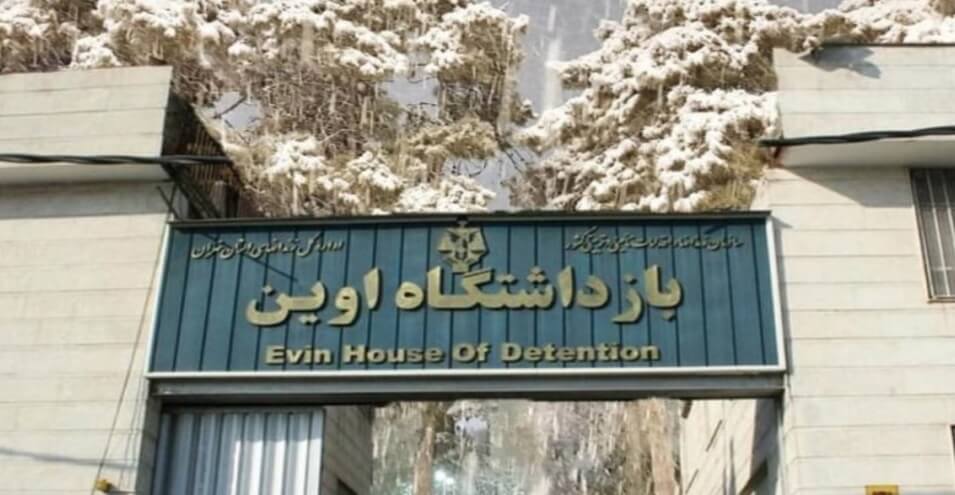
The resolution cited a very worrying number of death sentences, widespread and systematic arrests and arbitrary detentions, deliberate denial of prisoners' access to medical treatment and services, ill-treatment of prisoners in Evin Prison, harassment and intimidation of opponents and human rights defenders, the use of torture to extract confessions, and suspicious deaths of prisoners.
Source: Radio Farda