Crosses to be Installed in All State Offices in Bavaria, Germany
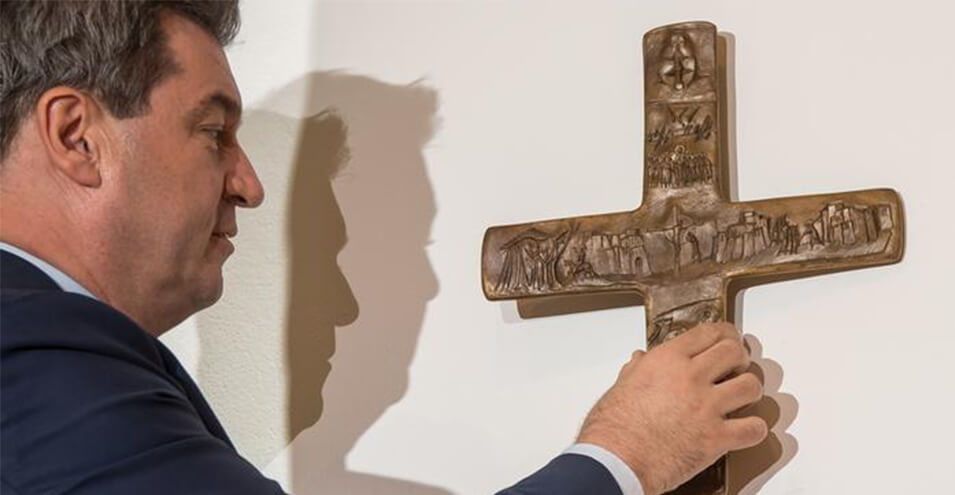
Based on a decision by the Bavarian state government, crosses are to be installed in all state offices in the state as a “symbol of cultural identity.” The leader of the Free Democratic Party has described this measure as a form of “Erdoğanization” of politics in Bavaria.
The Bavarian state government’s decision regarding the mandatory installation of crosses in state offices has become controversial and sparked debate. Several politicians and even religious figures in Germany have criticized this decision.
The “Tagesschau” website, affiliated with Germany’s ARD television network, is among the media outlets that has published a report on the Bavarian state government’s decision and the reactions it has provoked.
Based on the Bavarian state government’s decision, crosses are to be installed in the entrance halls of all state offices starting from June 1st. The Bavarian government has also recommended that local and regional authorities follow this policy.
Instrumental Use of Religion
Christian Lindner, Secretary General of Germany’s Free Democratic Party, has compared the Bavarian state government’s decision to the actions of the Erdoğan government, stating that just as Erdoğan exploits Islam for political purposes to advance his policies, the Bavarian state government is likewise using Christianity as a tool to achieve its objectives.
In recent weeks, Horst Seehofer, Secretary General of Germany’s Christian Social Union Party who heads the Bavarian state government, as well as Markus Söder, the state’s Prime Minister, have repeatedly addressed religious matters. For example, both have repeatedly emphasized that Islam does not belong to Germany and that Germany is a Christian nation.
The “Spiegel Online” website has also assessed the Bavarian state government’s resolution regarding the installation of crosses in state offices as a continuation of the same policy.
The Cross as a Cultural Symbol
In the Bavarian state government’s resolution, the cross is referred to as a symbol of cultural identity. Michael Heinig, head of the Protestant Church Law Institute in Germany, in response to this matter, has stated that while the decision of Prime Minister Markus Söder’s government does not violate Germany’s constitution, it is nonetheless a controversial measure.
Michael Heinig, referring to the 1955 ruling of Germany’s Federal Constitutional Court, considers the cross a symbol of Christian religious belief and therefore believes that the cross is a religious symbol and not a cultural symbol.
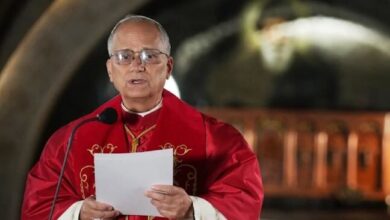
Burkhard Hose, dean of the University of Würzburg, also believes that the cross should not be used as a tool for pursuing sectarian policies and nationalist self-interest.
Source: DW