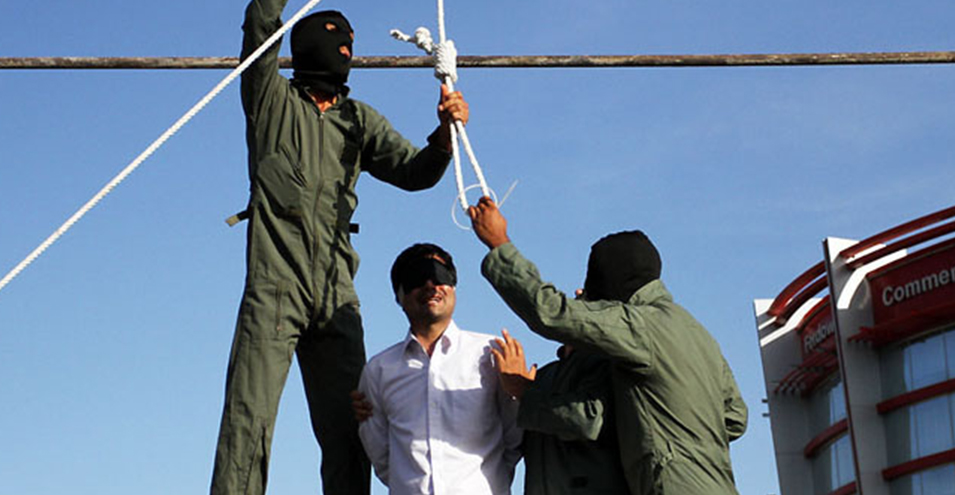
The head of the "Death Commission" defends the executions of 1967: "There were new conspiracies at work"
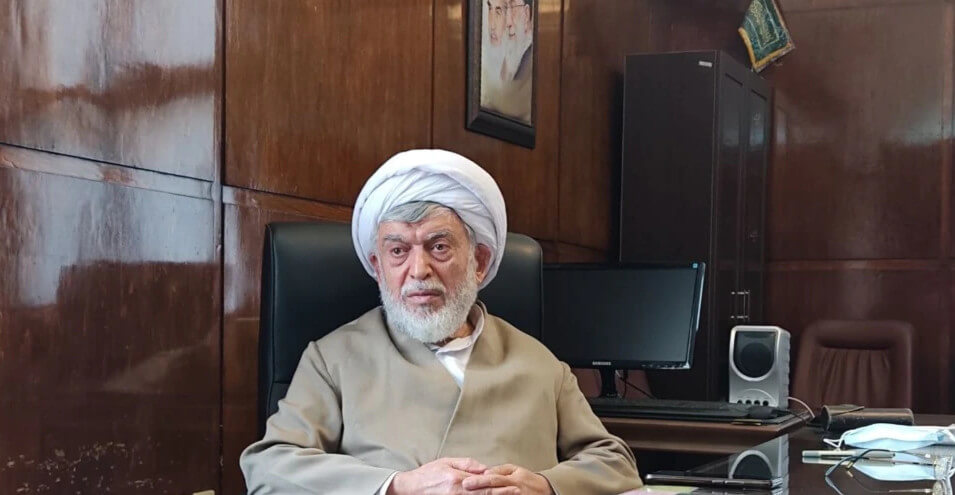
Hossein Ali Nayiri, the Islamic Republic's religious leader at the time of the summer 1988 executions, who, according to witnesses at Hamid Nouri's trial, headed the group known as the "Death Commission," once again defended the executions and accused the executed of preparing "new conspiracies."
These statements were published at a time when the Swedish judiciary is scheduled to issue the final verdict in the case of Hamid Nouri, accused of participating in the execution of political prisoners in the summer of 1988, in three days.
The Islamic Republic has strongly reacted to the holding of Nouri's trial and has called for the defendant's release.
In an interview with the website of the Islamic Revolution Documents Center, Nayyari said in response to why political prisoners were retried in 1988 and many of them were executed: "They were not tried for the same case. They caused a riot in the prison again."
He accused the executed of creating "organizational relationships" and "new organizations" inside the prison, as well as "obtaining information from outside the prison," and continued: "The atmosphere in the prison was in their hands, and therefore new conspiracies were at work. It was not that they just wanted to spend their time in prison."
Nyeri also accused the executed of "childish obstinacy" and also of attempting to cause "economic damage to the system" by cutting telephone wires and breaking light bulbs.
In the summer of 1988, a four-member group, on the orders of Ruhollah Khomeini, the leader of the Islamic Republic at the time, re-tried and executed thousands of political and ideological prisoners who were serving their sentences in prisons on political charges.
The bodies of the executed, who were mostly imprisoned members of the People's Mojahedin Organization and leftist prisoners, were secretly buried in mass graves.
More than three decades after these executions, Islamic Republic authorities are still destroying the Khavaran Cemetery, the most famous burial site of these executed people.
Hossein Ali Nayiri, Morteza Eshraqi, Ebrahim Raisi, and Mostafa Pourmohammadi were the four judicial officials and the main figures of this "death commission."
In the same year, Hossein Ali Montazeri, the then deputy leader of the Islamic Republic, met with them and called their actions "the biggest crime in the history of the Islamic Republic" and the individuals themselves "criminals."
Eshraghi is now a lawyer, Raisi is the President of the Islamic Republic, Pourmohammadi heads the Islamic Revolution Documents Center, and Nayiri is the head of the Judicial Disciplinary Court.
Emphasis on Khomeini's role and the fact that the principle of the system is in danger
Hossein Ali Nayiri also emphasized, in an interview with the Islamic Revolution Documents Center, Khomeini's role in the executions of the 1960s, especially the executions of 1988.
He described the conditions of the 1960s as "special conditions" and the state of the country as "critical," and said: "If it weren't for the Imam's decisiveness, maybe we wouldn't have this security at all. Maybe the situation would have been completely different. Maybe the system wouldn't have survived at all."
Defending the rulings that he and his other accomplices issued in the 1960s, this high-ranking judicial official of the Islamic Republic added: "A firm ruling must be made. The one who runs the court and has the issues in his hands must wrap up the issue. In these circumstances, it is not possible to run the country with 'I will sacrifice myself for you'."
Referring to the practice of Mohammad Mohammadi Gilani, the first Islamic Sharia ruler of the Islamic Republic, Nayeri generally defended the judges of the Islamic Republic who issued death sentences based on "correct procedure."
He, who is also a judge, said: "If someone is careful and runs the court properly, they will not regret it. Assuming there was an execution, it was their right. A person who was killed should be executed, and a person who committed an injustice should be punished."
Nayeri referred to a piece of advice from Mohammadi Gilani in this regard, who said: "If someone deserves to be executed, then let them be executed."
Although the website of the Islamic Revolution Documents Center described Nayri's statements as his "first statements" about the 1967 executions, this is not the first time that this judicial official of the Islamic Republic has publicly commented on the matter.
In an interview with the "Holy Defense" news agency in September 2014, he said about these executions: "I was aware of the cases of the Hypocrites and the leftists, and I can tell you that the Hypocrites were much worse than the leftists."
Hossein Ali Nayiri was appointed Deputy Chief Justice of the Supreme Court during the presidency of Mohammad Yazdi in the judiciary and served in this position for more than two decades, from 1989 to September 2013. He has been the Chief Justice of the Supreme Judicial Court since September 2013.
In the summer of 2016, after the publication of a controversial audio file by Hossein Ali Montazeri about the 1967 executions, public attention was once again drawn to these executions, and Ali Motahari, the then Vice-Speaker of the Islamic Consultative Assembly, asked members of the death squad, including Nayeri, to explain the matter.
Ebrahim Raisi, whose role in these executions was discussed, especially during the previous two presidential elections in Iran, has also defended these executions.
After winning the presidential election, Raisi, in his first press conference as president-elect, "proudly" defended his role on the death squad, saying, "If a prosecutor defends people's rights and the security of society, he should be praised and encouraged."
The Islamic Republic has so far refused to provide a detailed report on the 1967 executions and has not allowed human rights activists to conduct independent investigations into the matter.
This is despite the fact that Ali Khamenei, the leader of the Islamic Republic, has firmly defended the performance of the Islamic Republic's judicial system.
In a speech to his supporters, Khamenei said: "If you do not narrate the truth, the enemy will replace the oppressor and the oppressed with lies and distortion."
Source: Radio Farda