Reuters: US imposes new sanctions on Iran
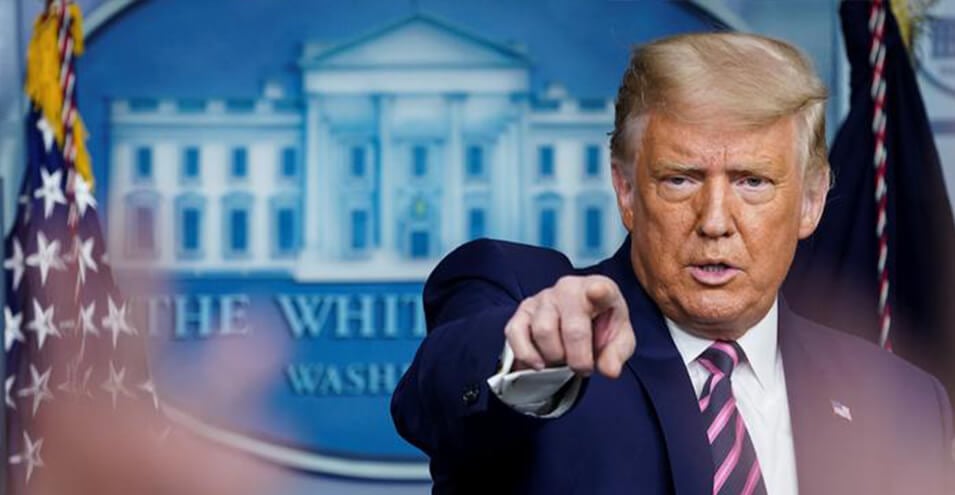
According to an exclusive report by Reuters, citing a US government official, the United States will announce new sanctions against Iran on Monday, September 21. The sanctions target dozens of individuals linked to the Islamic Republic's military and nuclear programs.
Reuters news agency reported, citing a senior US government official, that the United States plans to announce new sanctions on Monday, September 21, against a number of officials and organizations related to the Islamic Republic's nuclear and military programs.
Reuters declined to reveal the name of the senior American official in its exclusive report on the matter.
The senior official told Reuters that the list of sanctions that the United States intends to announce includes the names of "a number of scientists as well as military and weapons institutions."
Without providing details or specific evidence, he added, "Iran could obtain the nuclear material needed to produce an atomic bomb by the end of this year (2020), given the provocative expansion of its nuclear activities."
The American official noted that the basis for this estimate is based on information obtained by the United States, including through the International Atomic Energy Agency.
The International Atomic Energy Agency has said that the Islamic Republic has gradually increased its uranium enrichment following the US withdrawal from the JCPOA in 2018.
According to the IAEA, Iran is currently enriching its uranium to 4.5 percent, a level that violates the 2015 nuclear deal. The IAEA also recently announced that Iran's low-enriched uranium stockpile has increased to ten times the permitted limit.
According to Reuters, as part of his efforts to increase pressure on the Islamic Republic, US President Donald Trump also plans to issue an executive order to punish those who trade conventional arms with Iran.
The Security Council's arms embargo against the Islamic Republic ends on October 17 of this year, and the body has opposed the US government's request to extend it.
Other signatories to the nuclear agreement, including Germany, Britain, and France, have also expressed their opposition to this US demand, although at the same time they have expressed concern about the role and activities of the Islamic Republic in the region and emphasized that negotiations should be entered into with Iran in this regard.
Reuters also reported that the new US sanctions are part of the US's "trigger mechanism," through which Washington intends to reinstate Security Council sanctions against Iran.
Yesterday, US Secretary of State Mike Pompeo issued a statement officially announcing the return of all UN sanctions against Iran.
Following this action, UN Secretary-General Antonio Guterres, in a letter to members of the Security Council, emphasized in relation to the US's announcement of the "trigger mechanism" that "there is uncertainty" in this regard and that he will not take any action at this time due to the uncertainty in the situation.
In an email to Reuters, an Iranian official at the United Nations called the announcement of the return of all US sanctions against the Islamic Republic baseless and called it "propaganda" that "should be considered part of the US election campaign."
Iranian President Hassan Rouhani also made it clear on Sunday, in his first reaction to the activation of the trigger mechanism by the United States, that Iran would not "submit to bullying."
At a cabinet meeting, he described Washington's efforts to restore sanctions as a failure and noted: "If the five countries that remained in the nuclear deal today comply with all the agreements and principles we committed to in this agreement, we will also fully return to our commitment."
The Islamic Republic has announced that the condition for adhering to the JCPOA is the continuation of economic and banking cooperation between the three European countries that are parties to the nuclear agreement with Iran.
Although European countries have opposed the US withdrawal from the JCPOA and the imposition of US sanctions against Iran, as US threats to reimpose sanctions against the Islamic Republic intensify, major European and German companies have ended their cooperation with Tehran.
European countries have clearly stated that they are unable to support international companies, especially those operating in the United States, and that such companies must make decisions based on their own interests.
Source: DW