Hypocrisy in the Shadow of Repression: From "The Peace of Christ" to Evin Prison
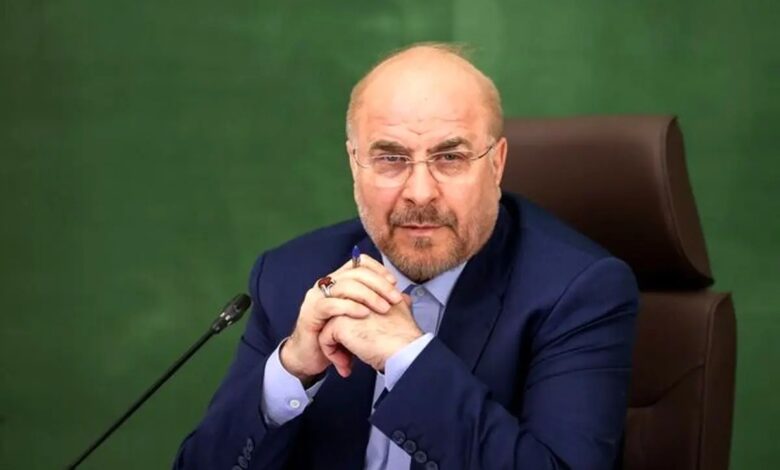
Mohammad Bagher Ghalibaf speaks of the peace of Christ while Christians in Iran continue to be under pressure, arrest, repression, exile, and oppression.
As pressures and restrictions against Christians continue in Iran, recent statements by Mohammad Bagher Ghalibaf, the speaker of the Islamic Consultative Assembly, have once again exposed the deep gap between official rhetoric and reality on the ground. Ghalibaf posted a message on the social network X about the magnificent funeral ceremony at the Church of the Holy Virgin Mary in Isfahan for “Havans Simonian,” an Armenian citizen in Isfahan who died during the bombing, writing: “May his noble soul rest in eternal peace in the loving arms of Jesus Christ.”
He also described the sacrifice of this Armenian citizen as a sign of the unity of all Iranians in defending the homeland. This is despite the fact that this same government official has been present for years in structures that have systematically restricted religious freedoms, especially for Christians.
According to available reports, at least 16 Christian citizens are imprisoned in Evin Prison for their religious beliefs and peaceful activities, bringing the total number of Christian detainees nationwide to more than 48. These arrests are often made without judicial transparency and on vague charges such as “acting against national security.”
This situation continues even as official religious minorities such as Armenians and Assyrians suffer from structural discrimination in areas such as employment, inheritance, and judicial rights. In practice, despite legal recognition, these groups also do not enjoy equal rights with other citizens.
Qalibaf, who has a long history in the security and law enforcement structures of the Islamic Republic, has played a role in the processes of suppressing civil liberties, both as commander of the police force and as speaker of the parliament. The passage of "Article 500-bis" of the Islamic Penal Code during his presidency has provided a new legal tool for pressuring religious activists, including Christians.
This is despite numerous reports from the past showing that he played a role in suppressing student protests during his previous responsibilities and was even accused of issuing violent orders against protesters; an issue that now stands in clear contrast to his seemingly sympathetic rhetoric about the "peace of Christ."
The Islamic Republic not only does not recognize unofficial Christian citizens, but it also targets their contact with Armenian and Assyrian Christians. Meanwhile, individuals such as Hagop Gochumian and Joseph Shahbazian have faced heavy prison sentences for their peaceful religious activities.
In addition, there have been reports of the killing of at least 21 Christian citizens, including Armenians, during the nationwide protests; statistics that show that the repression is not limited to detention.
In such circumstances, the occasional references to religious minorities by the Islamic Republic's officials seem more like part of a propaganda narrative than a change in approach. Qalibaf had previously spoken of all religions and religious minorities during the election campaign, but these statements have not in practice changed the situation of these groups.
In this regard, Article 18 had previously emphasized in a statement: "We emphasize the urgent need to protect the lives of civilians in our country and other war-torn territories, and we call for ensuring the security of prisoners, especially prisoners of conscience and political prisoners."
All of this evidence shows that there is a deep gap between the official discourse about unity and peace and the reality of Christian life in Iran; a gap that cannot be filled with symbolic messages and requires fundamental changes in governance policies and approaches.