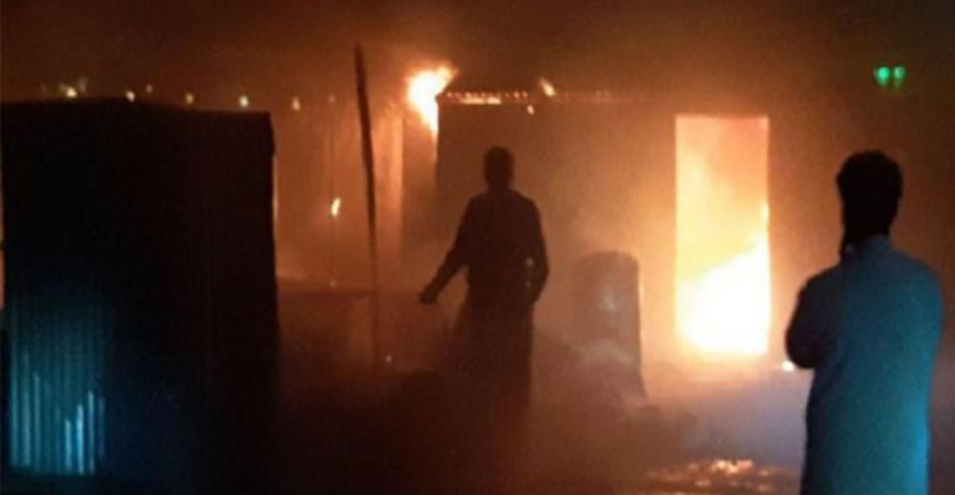
Zagros is burning due to lack of facilities and inconsistencies.
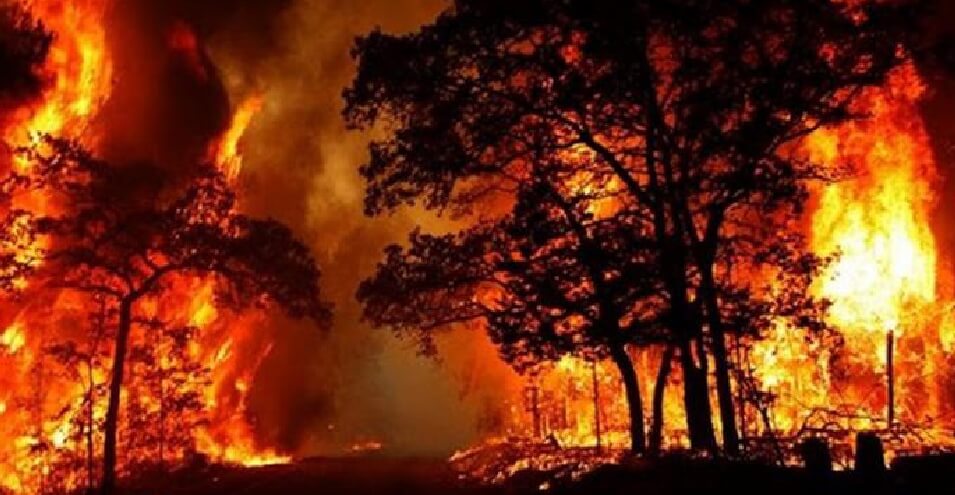
Officials in Kohgiluyeh and Boyer-Ahmad provinces say the fires in the Narek Zagros highlands have been contained, but the fire in the Khami protected area is still burning. Experts say there have been delays in containing the fire and a lack of helicopter and water-carrying aircraft.
The fire on the heights of Mount Narek in Gachsaran, which started on Thursday night (July 8), has been contained after three days, according to officials in Kohgiluyeh and Boyer-Ahmad provinces.
Alireza Atabek, the governor of Gachsaran, said that the fire had been controlled in several stages, but it flared up again due to the high altitude, steep slope, difficult passage, and strong winds.
According to this official, the cause of the widespread fires in the Gachsaran highlands will be announced after the necessary experts conduct the necessary tests.
Khami Protected Area Continues to Burn
While officials say the fire in the Narek highlands has been contained, the fire in the Khami Protected Area in Kohgiluyeh and Boyer-Ahmad Province, which began on July 9, has still not been contained.
According to officials, the difficult terrain of this mountainous area, the intense heat, and the strong winds have made it difficult to contain the fire.
Atabek, noting that the Narek fire was "contained with the cooperation of natural resources, environmental, public and service agencies in Gachsaran and various cities in the province," announced the dispatch of forces to extinguish the fire in the Khami Mountain Protected Area, which, according to him, is being carried out "using four helicopters."
“Delay in Fire Containment: Lack of Coordination Between Devices”
Ahmad Rahmani, a faculty member at the Iranian Forest and Rangeland Research Institute, referring to the delay in controlling recent fires and emphasizing the difficult access to these areas, said: "To control fires in such areas, sufficient equipment such as helicopters and water planes must be used." According to him, however, due to the lack of facilities in this area, "volunteers and NGO forces are forced to deliver equipment and facilities, including shovels, picks, and water, to the firefighting forces by donkey under difficult conditions."
Meanwhile, the governor of Gachsaran says that the conditions at the high altitudes are such that helicopters cannot be used for water spraying, and only human power, even in difficult conditions, can prevent the flames from spreading.
The delay in controlling the fires in parts of the Zagros region comes despite the fact that, according to local news agencies, a forest fire forecast map was published last month. These maps predicted, among other things, that some parts of the Zagros region were in critical conditions with a high risk of fire.
A member of the Forest and Rangeland Research Faculty, emphasizing the need for facilities in addition to forecasting, considers the continuation of fires in the Zagros regions for several days as an indication of the lack of necessary coordination between agencies and the timely and necessary dispatch of helicopters to difficult-to-reach areas.
The contribution of Zagros to Iran's nature and resources
The Khami Mountain Protected Area, with an area of more than 25,000 hectares, is located between the cities of Gachsaran and Basht in the south of Kohgiluyeh and Boyer-Ahmad provinces. The Khami area, which is part of the mountainous and forested Zagros region, was added to the list of protected areas 20 years ago with the aim of supporting the animal population of leopards, goats and ibex, rams and ewe, and partridges.
According to the website of the Natural Resources and Watershed Management Department of Kohgiluyeh and Boyer-Ahmad Province, this Zagros-based province has 1,426,300 hectares of national resources, of which 53 percent of the total area of the province is forest and 34 percent is pasture.
The Zagros forests constitute about 40 percent of the country's total forests. Kohgiluyeh and Boyer Ahmad provinces account for 20 percent of the Zagros forests among the Zagros provinces of Iran. Oak, beech, maple, ash, hawthorn, and wild pear species are some of the plant species of the Zagros.
According to environmental activists in Iran, recent fires have destroyed vast areas of ancient oak trees and animal species in the Zagros.
Source: DW