Air pollution losses in Tehran: $2.6 billion per year
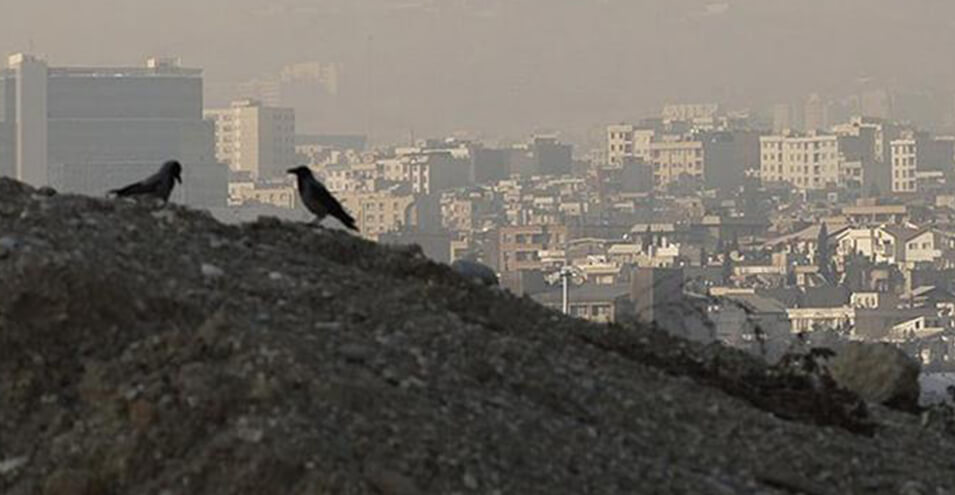
Air pollution and closures in major cities continue while the annual loss of each Tehran citizen from pollutants is $300, equivalent to the cost of a year's subsistence subsidy, and the number of deaths due to pollution in Iran as a whole is 33,000 per year.
Shina Ansari, Director General of Environment and Sustainable Development of Tehran Municipality, citing a World Bank report, has announced the economic consequences of air pollution for Tehran citizens at $2.4 billion. A figure that, considering Tehran's population of 8.7 million, is equal to $300 per year. A figure equivalent to almost half of the amount allocated in the 2019 budget for development projects.
The official was reminded of this on November 12, at a time when the air quality in the capital or other Iranian metropolises had not reached dangerous levels and the stench was not bothering Tehran residents. In November two years ago, Vahid Hosseini, then CEO of the Tehran Air Control Company, had said that the economic cost of Tehran's air pollution was 12 to 15 billion tomans, a figure equivalent to the municipality's budget.
There are scattered studies of the economic costs of air pollution in Iran. According to Mohsen Tabatabaei, secretary of the Iranian Urban Economics Scientific Association, the cost of air pollution in 2012 was 6.67 trillion tomans, based on actual prices adjusted for inflation. Alireza Raisi, Iran’s deputy health minister, recently cited the World Health Organization’s estimate of the related economic losses, saying that air pollution contributes to more than 33,000 deaths in the country annually.
Pollutants; fuel or vehicle
The World Bank announced in 2016 that 21,000 people die annually from pollution-related complications in Iran. According to the same bank, the cost of air pollution for the Middle East and North Africa is $9 billion, with Iran and Egypt bearing the brunt.
The latest report by the Majlis Research Center cites statistics from the Iranian Ministry of Health that 4,000 to 5,000 Tehran citizens die annually due to inhaling particulate matter.
The simplest explanation for the economic losses caused by air pollution is reduced labor production and productivity, decline in education and public health, and increased medical costs.
The World Health Organization says that governments are directly responsible for air pollution and have a duty to take three urgent steps in this regard: creating green belts in the outskirts of cities, stopping the traffic of low-quality and smoke-producing vehicles, and preventing the emission of dangerous gases and controlling factories.
In the discussion of air pollution in Iran, the most emphasized issue is the quality of gasoline consumed and the quality of cars. The National Petroleum Products Refining and Distribution Company dismisses the fuel issue and reminds that trucks, buses, and minibuses that emit smoke use diesel and that gasoline for cars is standard. The head of the Environmental Organization accuses the automakers, and the secretary of the Automobile Manufacturers Association cites problems of sanctions and lack of communication with foreign component manufacturers to standardize sensors.
Many environmental experts believe that Tehran's air pollution is the result of government mismanagement and industry profiteering.
Source: DW